Stainless Steel Cookware Blog & Insights
Kitchenware Industry News and Guides
Cookware Manufacturing Insights
Industry Insights & Updates

Cookware Blog & Insights

Expert articles, wholesale sourcing guides, product developments, and technical manufacturing trends from Adil Stainless Steel.

0%

Choosing the best induction stainless steel cookware for 2026 takes more than picking the shiniest set. The base must respond to a magnet, sit flat, and spread heat evenly across the cooking surface. A simple magnet test helps confirm compatibility. Yet compatibility alone says little about everyday performance.

The U.S. Department of Energy’s Energy Saver guidance explains that induction heats cookware directly, rather than heating a burner first. The American Council for an Energy-Efficient Economy also identifies induction as an efficient cooking method. These points make cookware construction especially important: a responsive magnetic exterior, a heat-spreading aluminum or copper core, and a stable base can help reduce uneven browning. Small details matter. A warped pan can wobble; a thin handle can become uncomfortable during a long simmer.

This guide compares cookware by induction compatibility, heating consistency, construction, handling, and value. It considers practical details, too: whether a lid fits securely, whether a pan feels balanced when full, and how easily food releases during routine cooking. A polished finish can still disappoint. Price and brand reputation are useful clues, not proof of performance. No single set suits every kitchen, and published guidance cannot replace hands-on testing across different cooktops. The recommendations therefore focus on verifiable specifications and clear trade-offs, helping readers choose cookware that fits their burners, recipes, and budget.
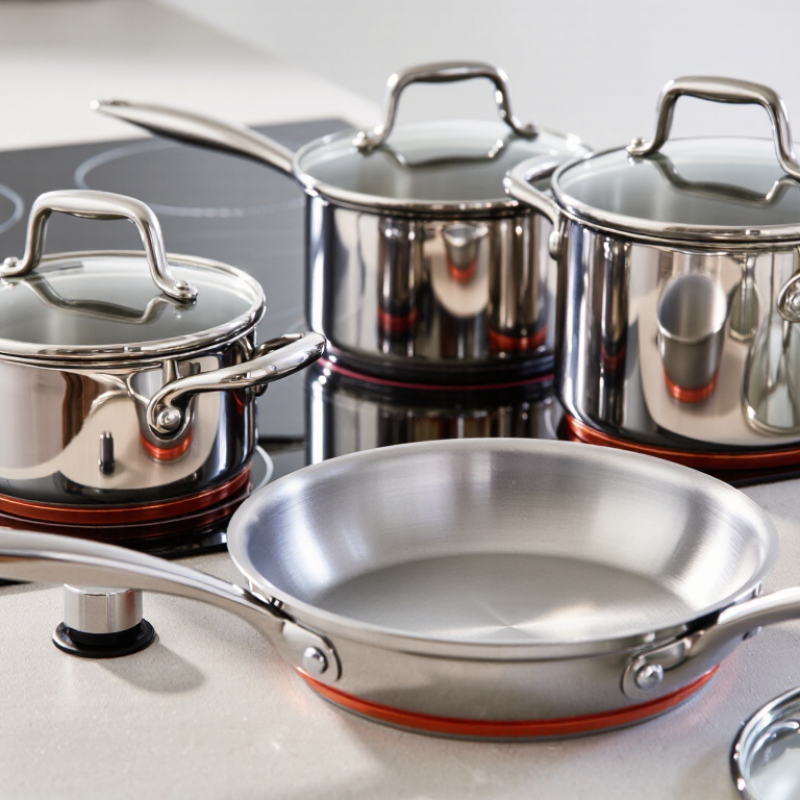
Which Induction Stainless Steel Cookware Is Best for 2026?

How Induction Stainless Steel Cookware Works

Induction cooktops heat stainless steel cookware through magnetism, not a glowing burner. Beneath the glass surface, an electric coil produces a rapidly changing magnetic field. When a compatible pan sits above it, that field creates electrical currents in the pan’s base. The metal resists those currents, producing heat directly in the cookware. No flame is involved.

Not every stainless steel pan works. Some stainless alloys are weakly magnetic or nonmagnetic, so manufacturers may add a magnetic steel layer to the base. A quick home check is simple: place a refrigerator magnet against the underside. If it holds firmly, the pan is generally induction-compatible, though your cooktop’s manual is the final check. A flat base also helps maintain steady contact and heating.

In everyday cooking, the pan heats quickly, while the cooktop surface warms mainly from contact with the hot cookware. That can make simmering responsive, but it also means a high setting may scorch food before you expect it. Thick, well-made bases often spread heat more evenly than thin ones, although construction varies. One small frustration: stainless steel can develop hot spots, especially with uneven contact. Stirring sauces and using moderate heat can help. The pan’s magnetic base matters; its shiny finish does not.

Which Induction Stainless Steel Cookware Is Best for 2026?

How induction works—and why cookware construction matters.

Induction uses a changing magnetic field to heat a magnetic pan base directly. Stainless steel grade 430 is magnetic; grade 304 is generally not, so a 304 stainless-steel pan needs a magnetic base layer to work on induction. Aluminum and copper conduct heat well but are not magnetic on their own. The chart shows approximate thermal conductivity at room temperature, not induction compatibility; actual values vary with alloy and temperature.

Which Materials and Designs Ensure Induction Compatibility

Induction cookware works only when its base responds to a magnetic field. For 2026, look for stainless steel with a magnetic outer layer, often marked 18/0, or a clearly stated induction-ready construction. Many stainless pans use a layered base: magnetic steel outside, with aluminum or copper inside to spread heat. That combination can warm food more evenly without making the entire pan magnetic. Check the underside. An induction symbol helps, but a small magnet is a useful backup test. Place it against the flat cooking surface, not the sidewall.

Base design matters as much as the alloy. Choose a thick, flat base that sits flush on the glass cooktop; a warped pan may heat unevenly or fail to register. Match the base diameter to the marked cooking zone, since a narrow disc can leave the edges cooler. Riveted handles and balanced weight improve control, though heavy pans can be awkward to lift. Small differences count. I would still check the pan in person when possible; product descriptions do not always make base construction clear.

Tips: Test with a fridge magnet before buying, and check that the pan sits level. If your cooktop has small zones, compare their diameters with the pan’s base—not its rim. A compatible pan can still disappoint if the fit is poor.

How to Compare Cookware Sets by Performance and Durability

Which Induction Stainless Steel Cookware Is Best for 2026?
How to Compare Cookware Sets by Performance and Durability

Compare the construction, not just the piece count. Stainless steel conducts heat less efficiently than aluminum, so many induction-ready pans use an aluminum core between steel layers. ASM Handbook material-property tables put common 300-series stainless steel near 16 W/m·K at room temperature; aluminum alloys commonly exceed 150 W/m·K. That gap helps explain why a fully clad pan can heat more evenly than a thin, steel-only pan. Still, construction diagrams do not prove cooking performance.

Check the base for flatness and full induction contact. A warped pan may rock on the cooktop and heat unevenly. Look for a thick, bonded base or continuous cladding, securely attached handles, and smooth interior seams. ASTM A240/A240M sets requirements for stainless steel plate, sheet, and strip; it does not certify a pan’s heat distribution or lifespan. Useful distinction. A set’s durability also depends on how its handles, joints, and cooking surfaces hold up to repeated heating and washing.

When comparing sets, test a skillet with a shallow layer of water: note how quickly bubbles spread, and whether one area boils first. It is a simple check, not a laboratory result. Heavier cookware can feel sturdy, but weight alone does not guarantee even heating. Ask whether the maker publishes independent thermal testing, material specifications, or dishwasher-cycle results. NSF/ANSI 51 addresses materials used in food equipment; it is a useful safety reference, but not a ranking of cookware performance.

Which Cookware Options Suit Different Kitchens and Budgets

Which Induction Stainless Steel Cookware Is Best for 2026?

The best set depends on your kitchen, cooking habits, and budget—not the number of pieces in the box. For a small household, a stainless-steel skillet, saucepan, and stockpot may cover everyday meals. Check that each pan has a flat, magnetic base and suits your induction cooktop. A magnet test is useful, but your cooktop manual is the better reference. That detail matters.

For a tighter budget, choose fewer well-made pans with comfortable handles and sturdy bases. A larger household may benefit from a broader set, especially when cooking several dishes at once. If you often make sauces, look for a saucepan with a pouring rim. For searing, consider a skillet with enough room to keep food in a single layer. Sets can look like savings, though unused pieces still take up cupboard space. I’d check replacement costs and storage before buying; it’s easy to overlook both.

Tips: Match pan sizes to your burners, and avoid letting empty stainless steel heat for too long. Preheat gradually, then add oil and food. If food sticks, the pan may be too cool—or simply too crowded. A little trial and error is normal.

How to Choose the Best Induction Set for Your Needs in 2026

Choosing an induction set starts with your cooking habits, not the number of pieces in the box. A small household may need a 9- or 10-inch frying pan, a lidded saucepan, and a medium pot. For batch cooking, prioritize a larger stockpot and a second pan. Check the base. A magnet should cling firmly to the cookware’s underside, but that test does not guarantee even heating. Look for a flat, broad base that matches your cooktop’s heating zones. A pan that is too small may heat less consistently.

Material affects weight, responsiveness, and upkeep. Stainless steel with an aluminum or copper core can spread heat more evenly than a thin, single-layer base. Fully clad construction is worth considering if you cook often, though it can cost more and feel heavier. Handles should feel secure and stay comfortable to grip; try lifting a filled pot if you can. Check whether lids fit well and whether the pieces suit your storage space. It is easy to overvalue a large set. A few useful pans often beat several pieces you rarely reach for. Also check care instructions: some cookware tolerates the dishwasher, but hand-washing can help preserve its finish.

FAQS

How does induction heat stainless steel cookware?

A coil beneath the glass creates a changing magnetic field. The pan’s compatible base converts that energy into heat. No flame.

Can every stainless steel pan work on induction?

No. Some stainless steel alloys are not magnetic enough. Check the underside with a refrigerator magnet; a firm hold is a useful sign.

What other checks help confirm compatibility?

Look for an induction symbol and check your cooktop manual. A flat base matters too. The magnet test is not a guarantee.

Why does a flat, thick base matter?

It helps the pan sit evenly and transfer heat steadily. A warped base may heat unevenly or fail to register. Small details.

Why might food scorch quickly in a stainless steel pan?

Induction can heat the pan quickly. High settings may scorch food before you expect, so use moderate heat and stir sauces.

How can I reduce hot spots while cooking?

Keep the pan level on the cooking zone. Stir sauces, avoid overcrowding, and choose a sturdy base. Still, hot spots can happen.

What cookware should a small household consider?

A skillet, saucepan, and stockpot may cover everyday meals. Match each base to your cooking zones, not just the pan’s rim.

Are larger cookware sets always better value?

Not necessarily. Extra pieces can fill a cupboard without being used. Check storage space, handle comfort, and replacement costs before buying.

Conclusion

Choosing the best induction stainless steel cookware in 2026 starts with understanding how induction works: a magnetic field heats compatible cookware directly, so the base must contain magnetic material and make steady contact with the cooktop. Look for clearly stated induction compatibility, a flat, stable base, and a construction that balances magnetic stainless steel with layers that spread heat evenly. A well-designed handle, secure rivets, and a practical range of pot and pan sizes also contribute to everyday usability.

When comparing sets, consider how evenly they heat, how comfortable they are to handle, and how well their finishes and construction stand up to frequent cooking and cleaning. A smaller household may need only a few versatile pieces, while a larger kitchen may benefit from a broader set. Compare useful pieces and build quality against your budget rather than choosing by set size alone. The right cookware is the one that suits your cooktop, cooking habits, storage space, and long-term needs.

Evelyn

Evelyn

Evelyn is a dedicated marketing professional with a deep understanding of the company’s products, customers, and industry landscape. With a strong background in market research, content strategy, and customer communication, Evelyn transforms complex product information into clear, practical, and......