Industry Insights & Updates
Cookware Blog & Insights
Expert articles, wholesale sourcing guides, product developments, and technical manufacturing trends from Adil Stainless Steel.
Expert articles, wholesale sourcing guides, product developments, and technical manufacturing trends from Adil Stainless Steel.
Fresh produce needs more than a quick rinse. A dependable colander should drain efficiently, feel stable over a sink, and withstand repeated washing. That is where stainless steel colanders can earn their place in a busy kitchen. But shiny metal alone proves little.
The need is practical. A CDC analysis published in MMWR, using 2015 survey data, found that only 12.2% of U.S. adults met fruit intake recommendations, while 9.3% met vegetable recommendations. Those figures do not measure kitchen equipment, of course. They do show why convenient produce preparation matters. Small details count.
This 2026 guide compares colanders by construction, drainage, capacity, handle comfort, stability, and ease of cleaning. It considers fine perforations for rinsed grains, wider openings for pasta, and raised bases that keep food above pooled water. Not just shine. A well-made bowl should sit securely while a heavy batch of noodles drains, without sharp edges or awkward handles getting in the way.
The CDC figures are older, and eating habits vary widely. A colander cannot make produce healthier. Still, the right design can make routine washing and draining less frustrating. Our recommendations focus on practical features and verifiable product details, while noting where long-term durability is difficult to judge from specifications alone. That uncertainty deserves a place in any honest buying guide.
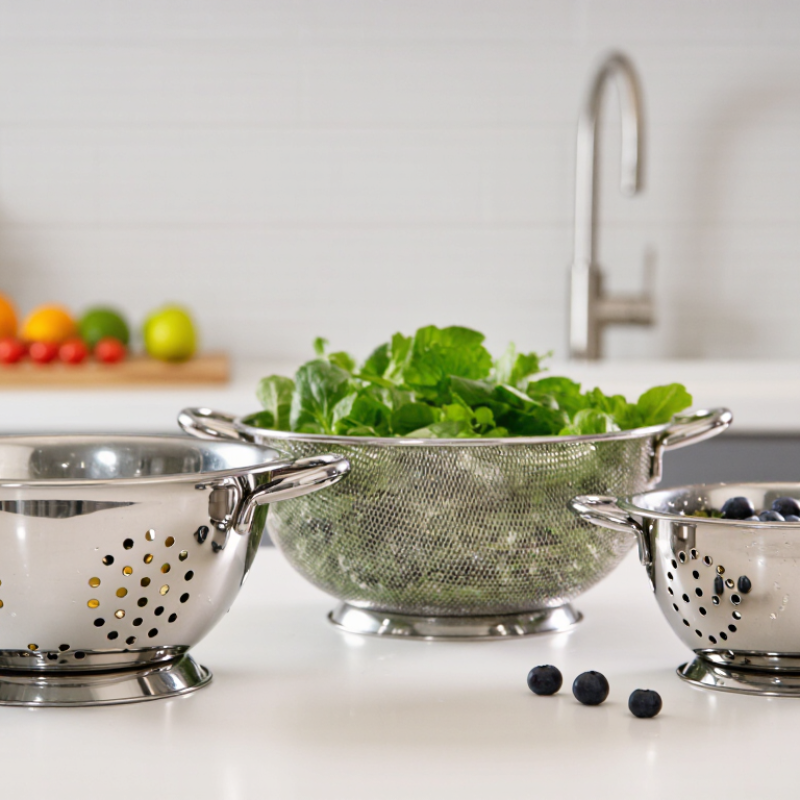
A stainless steel colander is a perforated bowl that lets water drain while holding food in place. Its holes create many small exit points, so rinsing vegetables or draining cooked pasta takes only a few seconds. The bowl’s curved shape guides water toward the openings, while handles help you lift it from the sink. Some models have a raised base, keeping the food above pooled water. That small gap matters.
Colanders work best when their openings match the food. Larger holes drain pasta quickly but may let small grains escape; fine perforations are more useful for rinsing berries or lentils. Check the fit. A colander should sit securely in or over the sink, especially when it holds a heavy potful of noodles. Pour slowly to avoid splashes, and keep fingers clear of hot steam.
Stainless steel is sturdy and generally resists rust, but it is not impossible to stain or damage. Rinse away salty or acidic food, then dry the colander if it will be stored for a while. Scrub around the rim and handles, where food residue can collect. It is easy to overlook those spots. A lightweight colander feels convenient, though a very thin one may wobble under a full load; the best choice depends on what you drain most often.
Its perforated bowl lets water drain while keeping food inside. Use it to rinse vegetables or drain pasta. Quick and simple.
Small holes help retain rice, quinoa, and small pasta. Larger holes drain leafy vegetables quickly but may let grains escape. Check the fit.
Make sure the colander sits securely in or over the sink. Pour slowly, and keep your fingers clear of rising steam.
Rinse away salty or acidic residue, then dry the colander before storing it. Scrub around the rim and handles, where food can linger.
Yes. It keeps food above pooled sink water. That small gap matters.
Handles can make a full bowl easier to lift, even with damp hands. Over-sink designs save counter space, but measure your sink first.
Fine mesh can hold berries and small ingredients, and strain broth. It drains more slowly, and bits may collect near the rim.
Match its capacity to your usual meals: compact for berries, larger for pasta. Check its footprint against your sink. I still forget that part sometimes.
Stainless steel colanders make it easy to drain pasta, rinse produce, and wash other foods while allowing water to pass through their perforated surfaces. When choosing one, consider capacity, hole size and placement, rim shape, handle comfort, stability, and the quality and thickness of the steel. These details affect how efficiently the colander drains, how securely it sits over a sink or bowl, and how comfortable it is to lift when full.
Common designs include bowl-shaped colanders, models with extended handles, and versions with a base or feet; each offers different advantages for storage, handling, and sink use. To evaluate the best stainless steel colanders in 2026, compare their drainage, sturdiness, balance, ease of cleaning, and fit for your everyday tasks. Rinse the colander promptly after use, wash it thoroughly, dry it to limit water spots, and store it where its shape and handles will not be damaged.