Stainless Steel Cookware Blog & Insights
Kitchenware Industry News and Guides
Cookware Manufacturing Insights
Industry Insights & Updates

Cookware Blog & Insights

Expert articles, wholesale sourcing guides, product developments, and technical manufacturing trends from Adil Stainless Steel.

0%

Stainless steel frying pans are valued for their durability, responsive cooking, and ability to handle high heat. Yet choosing one is not as simple as picking the shiniest pan on the shelf. Construction, weight, handle comfort, and compatibility with your cooktop can all affect daily use. A thick, layered base may spread heat more evenly, while a lighter pan can feel easier to lift and maneuver. Small details count.

This guide to the top 10 best stainless steel frying pans compares practical features that matter in real kitchens, including materials, sizes, oven-use guidance, and care requirements. It also considers how each pan may suit different cooks, from someone making eggs on a quiet weekday morning to a home cook searing vegetables for dinner. Stainless steel can stick when food or cookware is handled poorly, so technique matters too. Preheating and using enough oil can help, but results vary by recipe and stove. No pan is perfect.

Product specifications can clarify construction and compatibility, but they cannot predict how a handle will feel in your hand or how much weight you will enjoy lifting. Use the comparisons as a starting point, and check current manufacturer details before buying. The best choice is the pan that fits your cooking habits, budget, and cleanup preferences—not simply the one with the most features.
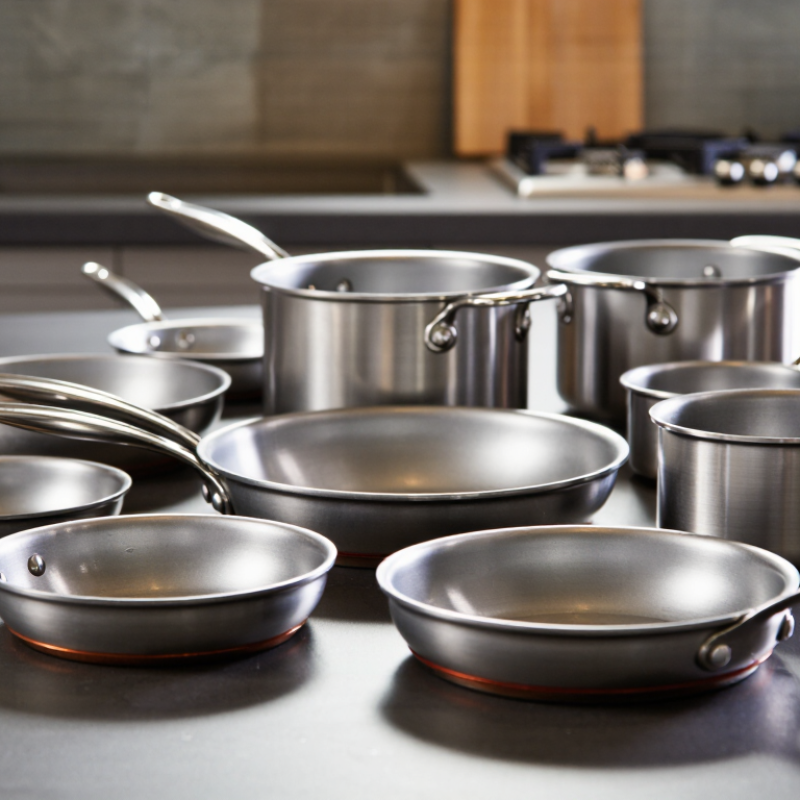
Top 10 Best Stainless Steel Frying Pans for Every Kitchen

Stainless Steel Pan Basics: Type 304 Contains 18–20% Chromium

Type 304 stainless steel is popular in frying pans because its chromium content supports corrosion resistance. ASTM A240/A240M specifies 18–20% chromium for Type 304, alongside 8–10.5% nickel. Chromium helps form a thin, protective surface layer when exposed to oxygen. That layer can renew itself after minor surface damage. In a kitchen, this matters when a pan meets water, acidic tomatoes, or repeated washing. The detail is less glamorous than a mirror finish, but more useful.

Numbers help, but they do not tell the whole story. The International Stainless Steel Forum’s Stainless Steel in Figures 2024 reports 58.4 million tonnes of global stainless-steel production in 2023. That scale reflects stainless steel’s broad industrial use, not a guarantee that every pan uses Type 304. Check the product specification for the grade and cooking surface. A magnet test is not definitive; some 304 surfaces may show slight magnetism after forming. I would not judge a pan by that alone. Also inspect the rim and interior: a polished exterior can hide a different cooking surface. Small scratches are normal. Deep pitting is not.

Clad Construction: 3-Ply and 5-Ply Pans Pair Steel with Aluminum

A stainless steel frying pan’s layers affect how it heats, not just how it looks. In a common 3-ply design, an aluminum core sits between stainless steel layers. Aluminum moves heat efficiently, while the cooking surface stays durable and nonreactive with most foods. That combination can help warm a pan more evenly across its base.

Five-ply pans add more bonded layers, often combining steel and aluminum in a thicker structure. The extra material may improve heat distribution or reduce hot spots, but results depend on the metals, thickness, and pan shape. More layers do not guarantee better cooking. A heavier pan can take longer to heat and feel awkward when lifting it from the stove. That matters.

For searing chicken, a well-preheated pan should give the pieces steady contact and room to brown. A thin patch near the center can still overheat, even in a layered pan. Construction details matter. Check whether the layers extend up the sides or sit only in a disc beneath the base; fully clad sides can heat more consistently during sauces or shallow frying. I once assumed a higher ply count meant easier cooking. Not quite. Compare weight, handle comfort, and stated construction, then choose what suits your stove and routine.

Heat Transfer Explained: 304 Stainless Steel Conducts About 16 W/m·K

A figure of about 16 W/m·K describes the thermal conductivity of 304 stainless steel, not how quickly every frying pan heats. In plain terms, stainless steel moves heat less readily than aluminum or copper. A pan made mostly from stainless can therefore develop warmer and cooler zones, especially over a small burner. Watch the oil: if it shimmers in one spot while the rest looks still, the surface may not be heating evenly.

Construction changes the experience. Many stainless pans use an aluminum or copper layer to spread heat beneath the cooking surface. That conductive core can help warm the pan more evenly, while stainless steel provides a durable, non-reactive cooking surface. Thickness, layer design, and contact with the burner all matter. The 16 W/m·K figure is a useful clue, not a performance guarantee. Not quite the whole story.

When comparing pans, check whether the conductive layer extends across the base or up the sides. On a weeknight, that difference may show up as evenly browned mushrooms instead of a scorched patch near the center. A heavier pan can feel steady, but it may take longer to respond when the heat changes. I would not judge a pan by its steel grade alone; the full construction deserves a look, and even then, burner size can complicate the comparison.

Thermal Conductivity of Common Frying Pan Materials

At room temperature, 304 stainless steel conducts heat at about 16 W/m·K. Aluminum and copper conduct heat much more readily, while actual pan performance also depends on construction, thickness, and any bonded layers.

Top 10 Stainless Steel Frying Pans Ranked by Design and Kitchen Use

This ranking weighs heat distribution, handling, and usefulness in everyday kitchens.

Rank one is a fully clad 10-inch skillet: its layered body heats evenly and suits eggs, vegetables, and small steaks.

Rank two is a 12-inch skillet, which gives crowded ingredients room to brown. It needs more storage space.

Rank three is an 8-inch pan for one or two portions, though its small surface limits searing. Small pans shine here.

Rank four is a straight-sided skillet, offering extra room for pan sauces and shallow braises.

Rank five is a skillet with a helper handle, especially useful when the pan is full.

Rank six is a five-layer design, often sturdy but heavier than many cooks expect.

Rank seven is a disc-bottom pan, a practical choice for flat cooktops and tighter budgets.

Rank eight is a lighter, thin-walled skillet; it responds quickly but can develop hot spots.

Rank nine is a deeper frying pan, useful for splatter-prone foods and generous portions.

Rank ten is a compact pan for quick tasks, though it is less versatile.

A comfortable handle and a balanced feel matter as much as polished steel. Stainless steel can grab food if it is too cool, so preheat the pan and add oil before cooking.

A water droplet that glides across the surface can signal readiness, but the test is imperfect. Rankings also shift with burner size, storage, and how often you cook for guests.

Selection Standards: Check ASTM A240 Steel Grades, Induction, and Care

Top 10 Best Stainless Steel Frying Pans for Every Kitchen

When comparing stainless steel frying pans, check whether the maker identifies the steel grade and construction. ASTM A240 covers stainless steel plate, sheet, and strip; it does not certify an entire finished pan. Grade 304, often described as 18/8 or 18/10, is common for cooking surfaces. Grade 430 is magnetic and may help a pan work with induction. Still, a grade label is only one clue. Look for a flat, stable base and clear information about bonded layers, which affect heating and durability.

Tips: Test induction compatibility with a magnet. If it sticks firmly to the base, the pan will usually work on an induction hob. Preheat over moderate heat, then add oil; a drop of water should bead and glide, not vanish instantly. Let the pan cool before washing. A sudden temperature change can warp it.

For everyday care, soak stuck-on food in warm water, then loosen it with a soft sponge. Baking soda can help lift stubborn residue; dry the pan promptly to reduce water spots. Check the handle attachment and base thickness, too. Those details are easy to overlook, and even a well-rated pan may heat unevenly on a small burner.

FAQS

What is inside a typical 3-ply frying pan?

It usually has an aluminum core between stainless steel layers. Aluminum spreads heat, while steel forms a durable cooking surface.

Does a 5-ply pan always cook better than a 3-ply pan?

No. Extra layers may reduce hot spots, but the metals, thickness, and pan shape matter. A heavier pan can heat slowly and feel awkward to lift.

What does the 16 W/m·K figure mean?

It describes the thermal conductivity of 304 stainless steel. It does not predict exactly how fast a whole pan heats. Not the whole story.

How can I check if a pan works on induction?

Place a magnet against the base. If it sticks firmly, the pan will usually work on an induction hob.

Do the layers need to extend up the pan’s sides?

It depends on how you cook. Fully clad sides can heat more consistently for sauces or shallow frying. A base-only disc may behave differently.

How should I preheat a stainless steel pan?

Use moderate heat, then add oil. A water drop should bead and glide, not vanish instantly. I would still watch the pan; burners vary.

What does an ASTM A240 steel reference tell me?

ASTM A240 covers stainless steel plate, sheet, and strip. It does not certify the finished pan. Check the stated grade and bonded construction, too.

How can I clean stuck-on food and reduce water spots?

Soak the pan in warm water, then use a soft sponge. Baking soda may help with stubborn residue. Dry the pan promptly. I sometimes forget that last step.

Conclusion

This guide explores how stainless steel frying pans are made and what makes them useful in different kitchens. Type 304 stainless steel typically contains 18–20% chromium, which helps it resist corrosion. Because stainless steel alone transfers heat relatively slowly—about 16 W/m·K for 304—many pans use clad construction, bonding steel with aluminum to spread heat more evenly. Three-ply and five-ply designs vary in layer arrangement and thickness, so their cooking response and weight can differ.

The top 10 pans are ranked by practical design features and suitability for everyday tasks, from quick sautéing to preparing larger meals. When comparing options, check the steel grade against ASTM A240 specifications, confirm that the pan works with your cooktop, and consider handle comfort, weight, and ease of care. These basics can help you choose a durable pan that fits your cooking habits and maintain it for long-term use.

Charlotte

Charlotte

Charlotte is a dedicated marketing professional with a strong understanding of the company’s products, customers, and long-term business goals. Through a combination of market research, strategic planning, and clear communication, she helps present complex product information in a practical and......