Industry Insights & Updates
Cookware Blog & Insights
Expert articles, wholesale sourcing guides, product developments, and technical manufacturing trends from Adil Stainless Steel.
Expert articles, wholesale sourcing guides, product developments, and technical manufacturing trends from Adil Stainless Steel.
Milk can scorch quickly. A thin base may leave a burnt film before you notice, while a narrow pour can send warm milk across the counter. The right pan makes everyday tasks calmer, from heating milk for coffee to preparing custard, cocoa, or a small sauce. Still, stainless steel is not automatically effortless. Heat control and occasional stirring matter.
This guide to the Top 10 Best Stainless Steel Milk Pans to Buy in 2026 compares practical details that affect daily use. We consider capacity, base construction, handle comfort, pouring design, stovetop compatibility, and cleaning needs. A compact pan may suit one cup of milk, but feel cramped when making pudding. A larger model offers room, yet can be awkward to lift when full. Small differences matter.
The picks are intended to help readers match stainless steel milk pans with their kitchens, budgets, and routines. Product features can vary by model and manufacturer, so check current specifications before buying. We also look beyond polished photos: a handle’s balance, a readable interior measure, and a rim that pours cleanly can matter more than appearance. There is no perfect pan for everyone. Even a well-made pan can disappoint if its size or weight feels wrong at home. These recommendations offer a starting point, not a substitute for your own priorities.
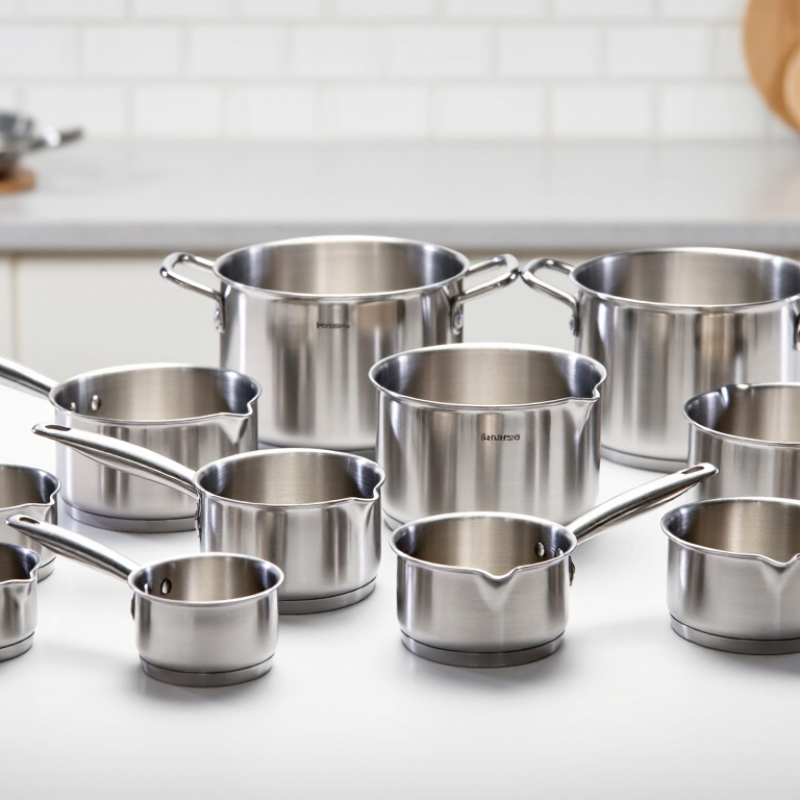
A good milk pan should control heat before it looks impressive. A flat, thick base helps reduce hot spots when warming milk or melting butter. Multi-layer construction can spread heat more evenly, while a narrow pouring lip helps guide liquid into a cup without leaving a trail. Small details matter.
Check the alloy and build. ASTM A240/A240M specifies Type 304 stainless steel at 18.0–20.0% chromium and 8.0–10.5% nickel; these figures describe the alloy, not a guarantee of pan quality. The International Stainless Steel Forum’s food-equipment guidance highlights stainless steel’s cleanability and corrosion resistance. A smooth interior, securely fixed handle, and rounded rim are practical features to inspect. Still, “stainless” alone is not a complete specification.
Look for a handle that stays comfortable to grip and attaches firmly, especially when the pan is full. A snug lid can slow heat loss, though it is not essential for every kitchen. Measurement marks are convenient, but check whether they are etched or printed and how they may wear with use. I would also check the pan’s weight: an overly light base can feel quick to heat, but may need closer attention on the stove. A little compromise is normal.
| No. | Pan Profile | Approx. Capacity | Approx. Rim Diameter | Typical Construction | Induction Use | Best Suited For | Key Consideration |
|---|---|---|---|---|---|---|---|
| 1 | Compact single-serve pan | 0.75 L | 12 cm | 18/10 stainless-steel body; encapsulated base | Only if the base is magnetic | Warming one mug of milk or preparing a small sauce | Small capacity heats quickly; use low to medium heat and watch closely. |
| 2 | Everyday small milk pan | 1.0 L | 14 cm | 18/10 stainless-steel body; bonded aluminum-core base | Yes, when fitted with a magnetic outer layer | Heating milk for coffee, cocoa, or a small serving of porridge | A bonded base helps spread heat across the bottom; it does not make the pan nonstick. |
| 3 | Compact lidded saucepan | 1.2 L | 14 cm | 18/10 stainless steel with a fitted stainless-steel lid | Depends on the base construction | Heating and briefly holding milk or small liquid portions | A lid retains heat, so monitor the pan to prevent boiling over. |
| 4 | General-purpose milk pan | 1.5 L | 16 cm | 18/10 stainless-steel body; layered, heat-distributing base | Yes, if the base is induction-compatible | Daily milk heating, custard portions, and small batches of sauce | A practical middle size for many kitchens; check the pan’s usable capacity before filling. |
| 5 | Pouring-lip milk pan | 1.5 L | 16 cm | 18/10 stainless steel; shaped pouring rim; encapsulated base | Depends on whether the base is magnetic | Pouring warmed milk into cups or transferring thin sauces | A pouring lip can help direct liquid, but careful pouring is still needed with hot contents. |
| 6 | Deep-sided milk pan | 1.8 L | 16 cm | 18/10 stainless-steel body; deep profile; bonded base | Yes, when the base is designed for induction | Heating larger portions while providing extra space below the rim | Greater depth offers more headroom, but milk can still foam and boil over. |
| 7 | Lightweight small-batch pan | 1.0 L | 14 cm | Single-layer stainless-steel body with a flat base | Only if the steel base attracts a magnet | Occasional light-duty use and kitchens that prioritize easy handling | A thinner pan may respond quickly to heat changes but can develop hot spots more readily. |
| 8 | Heavy-base milk pan | 1.5 L | 16 cm | 18/10 stainless-steel body; thicker multi-layer base | Yes, if its outer base layer is magnetic | More even heating for milk, custards, and other heat-sensitive mixtures | A heavier base can improve heat distribution, but the pan may take longer to heat and cool. |
| 9 | Family-size milk pan | 2.0 L | 18 cm | 18/10 stainless-steel body; encapsulated or layered base | Depends on the base design | Several servings of warmed milk, cocoa, or a larger batch of sauce | Choose a burner close to the base diameter to help heat the pan efficiently. |
| 10 | Versatile small saucepan with lid | 2.0 L | 18 cm | 18/10 stainless steel; fitted lid; multi-layer base | Yes, when specifically made with a magnetic base | Milk heating plus everyday small-batch cooking | A broader pan is versatile, but its larger surface may require closer attention when heating small amounts. |
A one- to two-quart pan suits warming a cup of milk, melting butter, or making a small sauce. Bigger is not always better.
Look for a flat, substantial base or bonded layers that spread heat. Thin steel can develop hot spots, so stir gently.
No. Check the interior finish, base thickness, handle attachment, and rim. “Stainless” is only part of the picture.
Check for an induction-compatible marking, or test the base with a magnet. A mirror finish does not confirm compatibility.
A narrow body and shaped pouring lip help guide milk into a cup. I still sometimes spill a little, so a steady grip matters.
Use low to medium heat and stir around the base with a silicone or wooden utensil. Lift the pan briefly if foam rises. Slow heat helps.
Let the pan cool slightly, then soak it in warm water. For stubborn residue, simmer a little water before washing with a soft sponge.
Transfer it to another container and refrigerate it within two hours, or within one hour above 90°F (32°C). Don’t leave it on the counter.
Stainless steel milk pans are valued for their durability, even heating, and versatility, making them useful for warming milk, preparing sauces, and handling small portions. When choosing a pan, consider its capacity, base construction, handle comfort, lid, and compatibility with your stovetop. A compact pan may suit everyday single servings, while a larger design offers more room for recipes and family use. Comparing materials, sizes, and features can help you find an option that matches your cooking habits and storage space.
This guide explores ten stainless steel milk pans to consider in 2026 and explains what sets different designs apart. It also offers practical advice for using and caring for your pan, including heating gently, stirring as needed, and cleaning promptly after use. With the right choice and simple maintenance, a stainless steel milk pan can be a dependable addition to your kitchen.