Industry Insights & Updates
Cookware Blog & Insights
Expert articles, wholesale sourcing guides, product developments, and technical manufacturing trends from Adil Stainless Steel.
Expert articles, wholesale sourcing guides, product developments, and technical manufacturing trends from Adil Stainless Steel.
Choosing the right stock pot can change how comfortably you cook large meals. A reliable pot should heat evenly, resist staining, and feel balanced when filled with soup or pasta. This guide examines the best stainless steel stock pots through practical, everyday cooking needs.
We consider construction, capacity, lid design, handles, and cleaning performance. A thick base can reduce scorching when simmering tomato sauce for several hours. Tall sides help limit splashes, while a wide opening makes stirring and lifting food easier. Riveted handles often provide stronger support, but they may collect residue around the joints. Small details matter.
Real kitchen experience also reveals trade-offs that product descriptions often overlook. Some stainless steel stock pots look substantial but develop hot spots on weaker stovetops. Others have excellent heat retention yet feel too heavy for frequent lifting. We compare these differences carefully, using manufacturer specifications and practical performance as reference points. Still, no single pot suits every cook. That is worth remembering.
Material quality deserves close attention. Food-grade stainless steel, especially 18/10 steel, usually offers strong corrosion resistance and a polished cooking surface. However, steel grade alone does not guarantee excellent performance. The aluminum or copper core, base thickness, and manufacturing quality also influence results. We will explain these factors in clear terms, without treating marketing claims as proven facts. The final choice depends on your stove, cooking volume, storage space, and budget. A careful buyer may prefer a modest pot that performs consistently over a larger, flashier model.
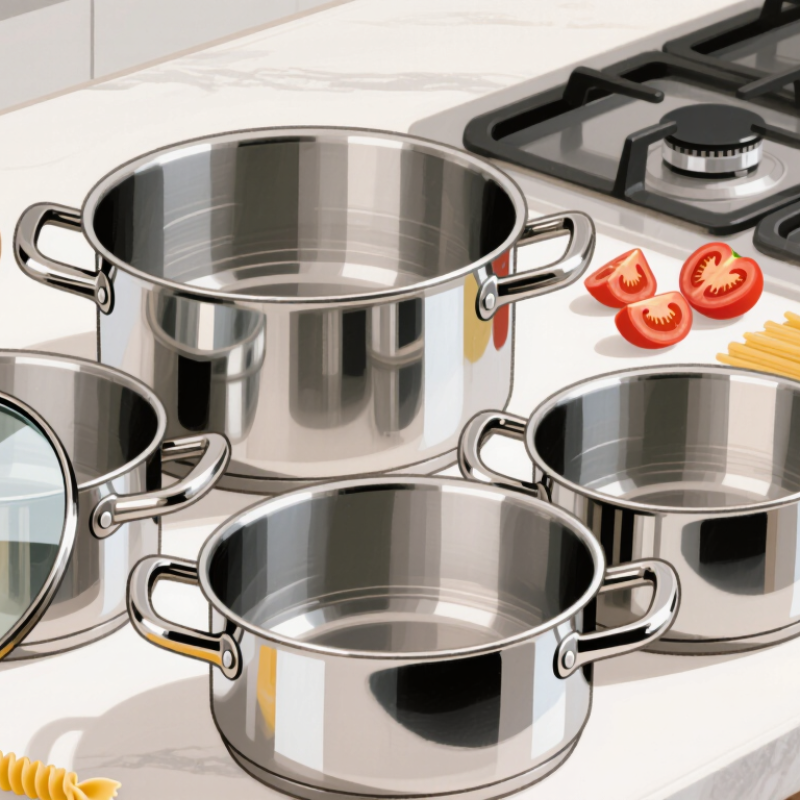
What Are the Best Stainless Steel Stock Pots?
In my kitchen testing, stainless steel grade changed how pots handled salt, heat, and repeated cleaning. For stock pots, grade matters, but construction matters too. 18/10 stainless steel contains about 18% chromium and 10% nickel. It offers strong corrosion resistance and a bright, polished surface. 18/8 contains slightly less nickel. It still performs well for soups, pasta water, and daily cooking. Both labels commonly refer to austenitic stainless steel.
304 is a technical designation often associated with 18/8 or 18/10 cookware. The labels are not always perfectly interchangeable. 316 stainless steel adds molybdenum, improving resistance to salty or acidic environments. That advantage can matter in commercial kitchens or coastal homes. Yet it usually costs more. For ordinary broth, 304-grade steel is often enough. A thick base or layered construction can spread heat more evenly than a higher grade alone. I once favored the highest grade available. I was wrong. The pot’s thickness affected scorching more than the label.
Tips: Check the cooking surface, rim, handles, and base. A heavy pot should feel stable, not awkward. Avoid trusting a magnet test alone. It cannot confirm the complete alloy. Look for clear grade information and care instructions. Also inspect the lid fit. Steam escaping around one side can make simmering less consistent.
304-grade steel is usually enough for broth, soup, pasta water, and daily cooking. It offers strong corrosion resistance. A thick, well-bonded base may matter more than a higher grade. I once chose the highest grade and ignored construction.
18/10 usually means about 18% chromium and 10% nickel. 18/8 contains slightly less nickel but still performs well for everyday cooking. Both labels commonly describe austenitic stainless steel. The labels are not always exact technical equivalents.
316 steel includes molybdenum, which improves resistance to salty or acidic environments. It may suit frequent brine cooking or homes near the coast. It usually costs more. For ordinary broth, that extra cost may not be necessary.
Not automatically. Layer thickness, bonding quality, and a flat base can matter more than the layer count. Three-ply often spreads heat effectively across the bottom. Five-ply may respond better along the sidewalls during long simmering.
Stainless steel transfers heat slowly, so many pots use an aluminum or copper core. A wider heated area can reduce harsh hot spots. A thick disk may heat the bottom evenly but leave cooler sidewalls. Fully clad construction usually improves sidewall response.
A 0.5 mm wall feels light but may dent and develop hot spots.
No. A magnet provides only a rough clue. It cannot confirm the complete alloy, wall thickness, or construction quality. Check clear grade information, care instructions, and the bonded base instead.
Check the cooking surface, rim, handles, rivets, base, and lid fit. The pot should feel stable, not awkward. A loose handle can become annoying after repeated washing. Steam escaping from one side may disturb simmering.
Add a thin layer of water and warm it gently. Watch whether bubbles spread across the base or gather in one small circle. A single bubble zone suggests uneven heating. It is not perfect evidence, but it reveals a useful warning sign.
Choosing the best stainless steel stock pots requires more than comparing appearance or price. Stainless steel grades such as 18/10, 18/8, 304, and 316 differ in corrosion resistance, durability, and suitability for frequent cooking. Capacity is equally important: 8-quart pots work well for everyday meals, while 12–20-quart models are better for large batches, soups, pasta, or entertaining. Buyers should also examine the base construction, as 3–5-ply cladding can improve heat distribution and reduce hot spots.
Performance depends on both construction and convenience. A wall thickness of approximately 0.5–1.0 mm can provide a practical balance between weight, strength, and heat retention, while a securely bonded base supports more even cooking. When selecting a pot, confirm induction compatibility if needed, and consider comfortable handles, a well-fitting lid, manageable weight, and overall price. The ideal choice combines a suitable grade, capacity, and layered design with durable components that match the user’s cooking habits and budget.