Stainless Steel Cookware Blog & Insights
Kitchenware Industry News and Guides
Cookware Manufacturing Insights
Industry Insights & Updates

Cookware Blog & Insights

Expert articles, wholesale sourcing guides, product developments, and technical manufacturing trends from Adil Stainless Steel.

0%

Finding the best stainless steel kitchen utensils supplier in China takes more than comparing catalog prices. A polished ladle may look convincing online, yet its handle can feel unbalanced in the hand. Good sourcing begins with practical questions: What steel grade is specified? How thick are the utensil heads? Are seams smooth, edges rounded, and handles secure after repeated washing?

Materials scientist Michael F. Ashby’s materials-selection approach offers a useful reminder: choose materials according to the demands of their application. For kitchen tools, that means assessing corrosion resistance, strength, ease of cleaning, and manufacturing consistency—not relying on a “stainless steel” label alone. Ask suppliers for documented material specifications, sample units, production photos, and clear answers about inspection procedures. Then compare what they promise with what the samples actually show.

Details matter. A spatula should flex without feeling flimsy. A whisk should have firmly fixed wires, with no rough welds to catch a cloth. Supplier experience, communication, customization options, and delivery planning also deserve attention. No checklist removes every doubt. Even a promising sample cannot guarantee every future batch will match. This guide examines the questions buyers can ask, the quality signals they can verify, and the trade-offs worth considering when choosing a Chinese supplier. The right partner is not simply the cheapest one; it is the supplier whose claims stand up to careful checks.
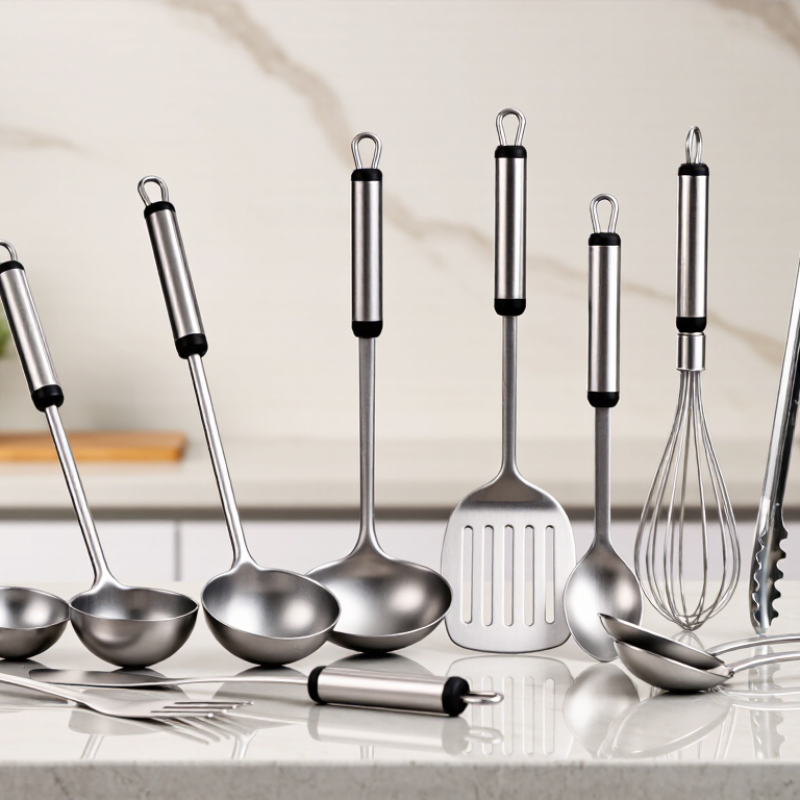
Best Stainless Steel Kitchen Utensils Supplier in China?

What Defines a Stainless Steel Kitchen Utensil Supplier in China?

Best Stainless Steel Kitchen Utensils Supplier in China?

What Defines a Stainless Steel Kitchen Utensil Supplier in China?

A dependable supplier offers more than a polished catalog. They can explain the steel grade, utensil thickness, handle construction, and surface finish in clear terms. For example, a thin spatula may bend when lifting a heavy portion, even if its finish looks flawless. Looks can mislead. Ask whether material records and inspection results are available for the specific products you plan to order.

Production consistency matters, too. Check how the supplier controls dimensions, welds, edges, and polishing across larger batches. A sample should feel balanced in the hand, with no sharp seams or rough spots around the handle. Ask how defects are recorded and addressed, not only whether the factory has quality checks. The answer may reveal gaps; no supplier is perfect, and vague replies deserve follow-up. For food-contact requirements, request relevant documentation and confirm it fits your target market.

Tips: Compare samples against written specifications, including steel grade and thickness. Request photos or inspection records from a recent production run. Clarify packaging, lead time, and how changes are approved before placing a large order. A little checking now can prevent frustrating surprises later.

How China’s Kitchen Utensil Supply Chain Operates

Best Stainless Steel Kitchen Utensils Supplier in China?

How China’s Kitchen Utensil Supply Chain Operates

A stainless steel utensil usually passes through several hands before it reaches a kitchen. Material suppliers provide steel sheets or wire, and factories cut, stamp, bend, or weld them into usable shapes. Handles, rims, and hanging loops need careful alignment. Small gaps can trap residue or make a spoon feel uneven.

Then comes finishing. Workers grind rough edges, polish surfaces, and inspect pieces for scratches, burrs, and inconsistent seams. Reliable suppliers can explain how they identify material grades and keep production batches traceable. Ask for relevant inspection records and food-contact test documents, then compare them with your product requirements. Details matter. A sample should also be checked for balance, grip, and cleaning ease—not just shine.

Finished goods are counted, packed, and prepared for shipment, sometimes through separate packaging and logistics partners. Clear specifications help prevent substitutions in steel thickness, finish, or handle design. Request a pre-production sample and agree on practical checks before an order is made. One limitation is easy to miss: a flawless sample cannot guarantee every later batch will match. Even experienced factories can have variation, so consistent inspection still matters. A transparent supplier should discuss problems plainly, not promise perfection.

Which Product and Manufacturing Factors Matter Most?

A reliable stainless steel kitchen utensils supplier should be judged by product details, not just a polished catalogue. Start with the steel grade: 304 is common for everyday utensils, while 316 may suit harsher, salt-rich environments. Ask for material certificates and confirm that the stated grade applies to the finished product. Handle samples, if possible. Check whether spoon bowls feel smooth, handles sit evenly, and edges are free from burrs. Small details matter.

Manufacturing consistency deserves equal attention. Ask about sheet thickness, forming methods, weld quality, and surface finishing. On a sample, inspect joints for gaps and look for discoloration around welded areas. Request drawings with dimensions and tolerances, especially for nested sets or utensils designed to fit a specific holder. Ask to see inspection records, not only photographs. A shiny sample can hide uneven thickness. That is easy to overlook.

Production capacity, packaging, and lead times also affect the final result. Clarify how the supplier checks dimensions and finish across a full batch, and whether it keeps inspection samples. Request written specifications for packaging, since loose utensils can scratch one another during transit. Food-contact documentation should match the product material and intended use. No supplier is perfect; smaller factories may offer flexibility but need closer checks on repeat orders. Compare actual samples with approved specifications before confirming production.

Best Stainless Steel Kitchen Utensils Supplier in China? Which Product and Manufacturing Factors Matter Most?

Compare the chromium and nickel composition ranges of common stainless steel grades used in kitchenware. Grade suitability depends on the utensil’s use, forming and finishing requirements, and verified material documentation—not composition alone.

Composition ranges shown are typical specification limits for these grades; actual requirements depend on the applicable product standard. When assessing a supplier, request material test certificates and check grade traceability, forming quality, welds, surface finish, and inspection procedures.

How to Evaluate and Verify a Potential Supplier

Best Stainless Steel Kitchen Utensils Supplier in China?

How to Evaluate and Verify a Potential Supplier

A reliable supplier should prove what its utensils are made from, not just show polished catalog photos. Ask for the stated steel grade, batch records, and mill test certificates matching the shipment. The 2023 production report from worldstainless recorded 58.4 million tonnes of global stainless steel production, up 4.6% year over year. That scale makes traceability important: a grade name alone does not confirm the steel in your order.

Check whether the Chinese supplier operates the factory or trades through another manufacturer. Verify the production address, inspect the workshop, and compare its equipment with your product needs. Request samples and inspect welds, edges, handle joints, and surface finish under bright light. For sheet feedstock, ASTM A240/A240M can help frame material checks, but it is not a finished-utensil quality guarantee. Ask for independent testing when grade claims matter. A handheld XRF check can identify many alloying elements, but it does not reliably measure carbon.

Review the quality certificate’s validity, site, and scope with its issuer; a certificate alone proves little about each shipment. Compare recent batch records with your sample, and agree on defect limits before production. Video calls help. They are not factory audits. I would still want an independent inspection before shipment, especially for a first order; it adds cost, but a surprise return costs more.

How to Manage Sourcing, Quality, and Delivery、】【

Choosing a stainless steel kitchen utensils supplier in China is only part of the job. The harder work is keeping specifications, inspections, and shipping aligned. Define the intended use, steel grade, thickness, finish, handle construction, and acceptable edge quality before requesting a quote. Grade 304 suits many everyday applications, while 316 may be worth assessing for greater corrosion exposure. Confirm the choice with a qualified materials specialist. Ask for material documents and production samples, not just a showroom piece. Inspect edges, balance, handle joints, and surface marks under bright light. Small details matter.

Set measurable acceptance criteria before production begins. A written inspection plan can cover dimensions, welds, finish, and packaging, with clear limits for defects. For repeat orders, keep a sealed reference sample and compare new batches against it. Supplier inspection reports are useful, but higher-risk orders may call for independent checks. A polished sample is not the whole story. Plans can still miss details, so review the first production run carefully and record any corrections.

Delivery needs the same discipline. Confirm production capacity, carton dimensions, packing method, shipment terms, and document responsibilities in writing. Request dated updates at key stages, such as material approval, production completion, and dispatch. Add time for inspection and port delays rather than planning around the most optimistic estimate. Delays happen. A few extra days may feel inefficient, but rushed shipping changes can cost more and leave little room to fix packing or quality issues.

FAQS

Which steel grade should I request for kitchen utensils?

Grade 304 suits many everyday uses. Grade 316 may be worth considering in salt-rich environments. Confirm the grade applies to the finished utensils.

What should I inspect on a sample?

Check smooth spoon bowls, aligned handles, clean edges, and tight joints. Look for weld gaps or discoloration under bright light. Small flaws hide easily.

How can I verify the steel grade?

Request batch records and material certificates that match your shipment. Independent testing can help confirm alloy claims. Handheld XRF checks many elements, but not carbon reliably.

How do I check whether a supplier operates its factory?

Verify the production address and inspect the workshop and equipment. Ask whether the supplier manufactures the utensils or works through another factory. Video calls help, but they are not audits.

What details belong in the product specifications?

Record steel grade, thickness, dimensions, tolerances, finish, handle construction, and acceptable edge quality. Set clear defect limits before production begins. Details get missed.

Does an approved sample guarantee the full batch?

No. Compare production pieces with the approved sample and written specifications. Keep a sealed reference sample for repeat orders. One shiny sample proves little.

How can I reduce scratches during shipping?

Put the packing method in writing. Ask how utensils will be separated inside cartons, and confirm carton dimensions. Loose pieces can rub together.

How should I plan production and delivery?

Request dated updates for material approval, production completion, and dispatch. Allow time for inspection and possible port delays. Extra days can still disappear.

Conclusion

Choosing the best stainless steel kitchen utensils supplier in China requires more than comparing prices. A reliable supplier should demonstrate clear manufacturing capabilities, consistent material standards, practical product options, and dependable communication. China’s supply chain may include factories, component makers, and export teams, so understanding who handles each stage can help buyers assess capacity, lead times, and quality control.

Before placing an order, review product specifications, finishing, durability, customization options, and production processes. Verify a supplier’s facilities and documentation where possible, request samples, and agree on inspection criteria before production begins. Clear requirements for packaging, delivery schedules, and communication can reduce misunderstandings. By evaluating suppliers carefully and managing sourcing, quality checks, and logistics throughout the process, buyers can make more informed decisions and build a stable supply relationship.

Evelyn

Evelyn

Evelyn is a dedicated marketing professional with a deep understanding of the company’s products, customers, and industry landscape. With a strong background in market research, content strategy, and customer communication, Evelyn transforms complex product information into clear, practical, and......