Stainless Steel Cookware Blog & Insights
Kitchenware Industry News and Guides
Cookware Manufacturing Insights
Industry Insights & Updates

Cookware Blog & Insights

Expert articles, wholesale sourcing guides, product developments, and technical manufacturing trends from Adil Stainless Steel.

0%

Choosing commercial stainless steel cookware is less about picking the most impressive-looking set and more about matching pans to daily work. A busy kitchen may need saucepans for steady simmering, wide skillets for quick service, and stockpots with handles that feel secure when full. Small details matter. Check the listed capacity, base construction, lid fit, and handle attachment before comparing prices. Stainless steel can be durable and versatile, but it does not heat every dish evenly on its own. A layered base may help distribute heat, though performance still depends on the stove and cooking technique. No set fits every station.

This guide to the top 10 commercial stainless steel cookware sets compares practical features buyers can verify, including piece count, material details, cleaning guidance, and warranty terms. It also considers how each set may suit restaurants, catering teams, or smaller food-service operations. Product descriptions can sound similar, so consult manufacturer specifications rather than relying on broad claims. That matters. A large set may look economical but include pieces your kitchen rarely uses. I would not assume that the highest price means the longest service life; real use and care make a difference. The comparisons ahead are a starting point, not a substitute for checking your equipment, workflow, and budget. Even a good choice deserves a second look.
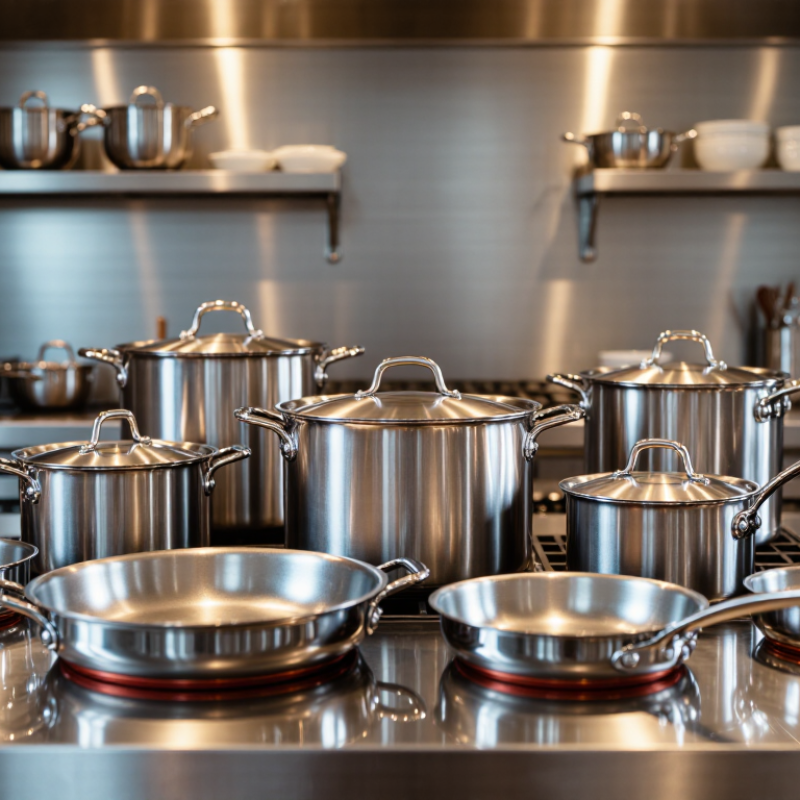
Top 10 Commercial Stainless Steel Cookware Sets for Buyers?

What Defines a Commercial Stainless Steel Cookware Set?

A commercial stainless steel cookware set is defined less by its piece count than by how it handles repeated service. In a busy kitchen, pans face rapid heating, metal utensils, frequent washing, and occasional stacking. Look for a stated steel grade, such as 18/8 or 18/10, and a thick, bonded base that distributes heat across the cooking surface. These labels help, but they do not guarantee even browning; pan shape and burner fit matter too. Small details count. Riveted handles should feel secure and remain manageable when a pot is full. Well-fitting lids help limit splatter and retain steam.

Commercial suitability also depends on practical consistency: pans should sit flat, clean without elaborate care, and offer sizes that match the menu. A heavy base can improve heat retention, yet make a pan tiring to lift during a long shift. That trade-off is easy to overlook. Check the construction, handle attachment, and care instructions rather than relying on a “commercial” label alone. Even a well-made set has limits; stainless steel can develop discoloration or sticking when overheated. Those marks are not always defects, but they can be frustrating when service is rushed.

How Materials and Construction Shape Cookware Performance

Commercial stainless cookware earns its place through construction, not shine. The cooking surface is usually stainless steel, valued for durability and neutral flavor. But stainless steel alone does not spread heat evenly. Many pans add an aluminum or copper core, either throughout the body or inside a bonded base. Fully clad construction can warm sidewalls more evenly; a thick base may suit routine stovetop work at lower cost. Neither design is automatically better. Burner size and cooking style matter.

Look closely at seams, rims, and handles. Smooth, sealed edges are easier to clean, while sturdy rivets should sit flush and feel secure. Heavier pans can feel stable, but weight becomes tiring during repeated service. That trade-off is easy to underestimate. A polished exterior also says little about heat control. Ask for construction details, not just a layer count, and check whether the set includes sizes your kitchen actually uses.

Tips: Match pan diameter to burner size. Heat stainless gradually, then add oil; excessive heat can still cause sticking. Check handles with a dry, secure grip. A small test matters.

How the Top 10 Sets Compare on Essential Buying Criteria

A useful top-10 comparison starts with construction, not polished product photos. Check whether each set uses fully clad layers or only a bonded base, then compare pan thickness, handle rigidity, lid fit, and usable capacity. These details affect heat response and daily handling. That matters. A thin saucepan may scorch a thick sauce, while a large stockpot can feel awkward when full. DOE’s Energy Saver guidance estimates that induction transfers about 85% of its energy to cookware, compared with roughly 32% for gas. For induction kitchens, verify magnetic compatibility and a flat base; a label alone is not a performance test.

Next, compare the sets against the kitchen’s actual workflow: burner size, batch volume, cleaning routine, and replacement cost. The FDA Food Code 2022 sets hot-holding at 135°F or above and cold-holding at 41°F or below. Those limits do not rate cookware, but they underline why vessel capacity and easy, thorough cleaning matter during busy service. Look for rivets that are accessible to scrub, lids that sit securely, and handles that stay stable under a filled-pot load. Capacity matters. Claims like “commercial grade” vary, so record weights and dimensions, then test a representative pan on the intended range. A comparison can still miss the mark if it ignores staff comfort or uneven burners; real kitchens are rarely perfect.

Top 10 Commercial Stainless Steel Cookware Sets for Buyers? — How the Top 10 Sets Compare on Essential Buying Criteria

This chart compares approximate room-temperature thermal conductivity for common cookware materials—a useful reference when evaluating heat-spreading construction. It shows material benchmarks, not brand or set ratings.

Higher conductivity generally means heat travels through the material more readily. Values are approximate; actual conductivity varies with alloy, temperature, and construction.

Which Cookware Set Fits Your Kitchen’s Needs?

Choose a commercial stainless steel set by matching its pieces to your daily menu, not by chasing the largest box. Busy kitchens often need two saucepans, a stockpot, and skillets in sizes staff can lift safely. A multi-ply base can distribute heat more evenly than a thin, single-layer base, though construction and burner type both matter. Check induction compatibility, handle clearance, and whether lids fit securely. Measure shelf depth and sink width before ordering. Small kitchens lose space quickly.

For a café, compare pot capacity with batch sizes: a stockpot that looks generous may be awkward to store or clean. At home, a smaller set may suit everyday cooking better than several rarely used pans. Look closely at rivets, rim shape, and handle comfort; these details matter during frequent washing and pouring. Stainless steel can develop stuck-on food if a pan is overheated or ingredients are added too soon. A little practice helps. Water spots can also appear after washing, especially in hard-water areas. Check the care instructions and warranty terms, and weigh a sample piece if possible. The trade-off is easy to miss: thicker cookware may feel sturdy, but it can be tiring to move all day.

What to Check Before Buying and Maintaining a Set?

Before buying a commercial stainless-steel cookware set, match its pieces to the menu and daily volume. A busy line may need several saucepans, while a deep stockpot may be more useful than another skillet. Check the cooking surface and base construction. Fully clad walls can heat more evenly; a bonded base may offer a practical, lower-cost alternative. Lift each pan and check its balance, handle grip, rivets, and lid fit. Make sure the sizes suit your burners and storage racks. Confirm compatibility with your heat source, including induction if needed. Ask whether individual pans and lids can be replaced. Details matter. Piece count can mislead; a large set may still lack the pan your team reaches for most.

For care, follow the manufacturer’s temperature guidance and avoid leaving an empty pan over high heat. Moderate heat is often enough. Add salt after water starts heating, since undissolved crystals may leave marks. Let pans cool before washing; sudden temperature changes can warp a base. Soak stuck-on food, then use warm water, detergent, and a non-abrasive scrubber. Brown or rainbow-colored films are often cosmetic and may respond to a cleaner intended for stainless steel. Dry pans before stacking, and use separators to reduce scratches. Inspect handles and rivets regularly. Even durable cookware has limits: rough stacking and repeated overheating can shorten its service life. A set may look complete on paper, yet leave a crowded kitchen short of the right pan.

FAQS

What makes a stainless steel cookware set suitable for commercial use?

It should handle repeated heating, washing, stacking, and metal utensils. Look for a stated steel grade and a thick, bonded base. The label alone proves little.

Which steel grades should I look for?

Common options include 18/8 and 18/10 stainless steel. These grades are useful clues, but they do not guarantee even browning or easy cooking.

Does a thicker base always perform better?

A thick or multi-ply base can distribute heat and retain it well. But heavier pans may feel tiring during a long shift. That trade-off matters.

What pieces does a busy kitchen usually need?

Two saucepans, a stockpot, and skillets in manageable sizes can cover many daily tasks. Match capacities to your menu and batch sizes.

How can I tell whether the set will fit my kitchen?

Measure shelf depth and sink width before buying. Check handle clearance, lid fit, and induction compatibility. Small kitchens fill fast.

What should I check on handles and lids?

Riveted handles should feel secure, even when a pot is full. Lids should fit well to limit splatter and retain steam.

Why does food stick to stainless steel?

Overheating a pan or adding ingredients too soon can cause sticking. A little practice helps. I might still rush this step during service.

How should I care for stainless steel cookware?

Follow the care instructions and choose pans that clean without elaborate steps. Water spots may appear after washing, especially in hard-water areas. Discoloration can happen too.

Conclusion

A commercial stainless steel cookware set is designed for frequent, demanding use, with durable construction, dependable heat performance, and pieces suited to a busy kitchen. When evaluating options, consider how stainless steel grade, base design, thickness, and bonded layers affect heat distribution, responsiveness, durability, and ease of cleaning. The top 10 sets can be compared by essential buying criteria such as included pan and pot sizes, compatibility with different cooktops, handling comfort, oven suitability, maintenance needs, and overall value.

The right set depends on your kitchen’s menu, cooking volume, available storage, and budget. Before buying, check that the selection includes the pieces you will use most, that handles and lids feel practical, and that the construction matches your cooking habits. To maintain stainless steel cookware, follow care instructions, avoid unnecessarily harsh cleaning methods, and clean cookware promptly after use. These considerations can help buyers choose a commercial stainless steel cookware set that performs reliably and remains useful over time.

Charlotte

Charlotte

Charlotte is a dedicated marketing professional with a strong understanding of the company’s products, customers, and long-term business goals. Through a combination of market research, strategic planning, and clear communication, she helps present complex product information in a practical and......