Stainless Steel Cookware Blog & Insights
Kitchenware Industry News and Guides
Cookware Manufacturing Insights
Industry Insights & Updates

Cookware Blog & Insights

Expert articles, wholesale sourcing guides, product developments, and technical manufacturing trends from Adil Stainless Steel.

0%

Choosing among stainless steel steamer pots can feel simple until size, safety, and shipping details matter. A polished finish alone does not guarantee reliable cooking performance. Global buyers need clearer evidence before placing an order.

This guide reviews ten practical options for home kitchens, catering teams, and hospitality suppliers. Each pot is considered for steel quality, capacity, tier design, lid fit, handle comfort, and heat distribution. Wall thickness also deserves attention. Thin metal may heat quickly, but it can warp under repeated high temperatures. A stable base usually performs better on gas, electric, and induction cooktops.

Fit matters. A loose lid wastes steam and extends cooking time. Poorly aligned tiers can also make handling awkward, especially when vegetables or dumplings are hot. I would check product dimensions carefully, because listed capacity sometimes excludes the steaming trays. That small detail can change a purchasing decision.

The selection also considers cleaning effort, dishwasher compatibility, packaging quality, and supplier communication. These points reflect practical buying concerns rather than attractive photographs. Still, no ranking suits every market. Import costs, local cookware standards, and available replacement parts can change the final value. I may favor durable construction, while another buyer may prioritize lighter weight or lower pricing.

Reliable choices should include clear specifications, consistent customer feedback, and responsive after-sales support. Buyers should verify certifications and warranty terms independently. A trusted supplier should answer specific questions without vague promises. With these checks, the following stainless steel steamer pots can be compared more confidently, whether you are purchasing one unit or planning a larger commercial order.
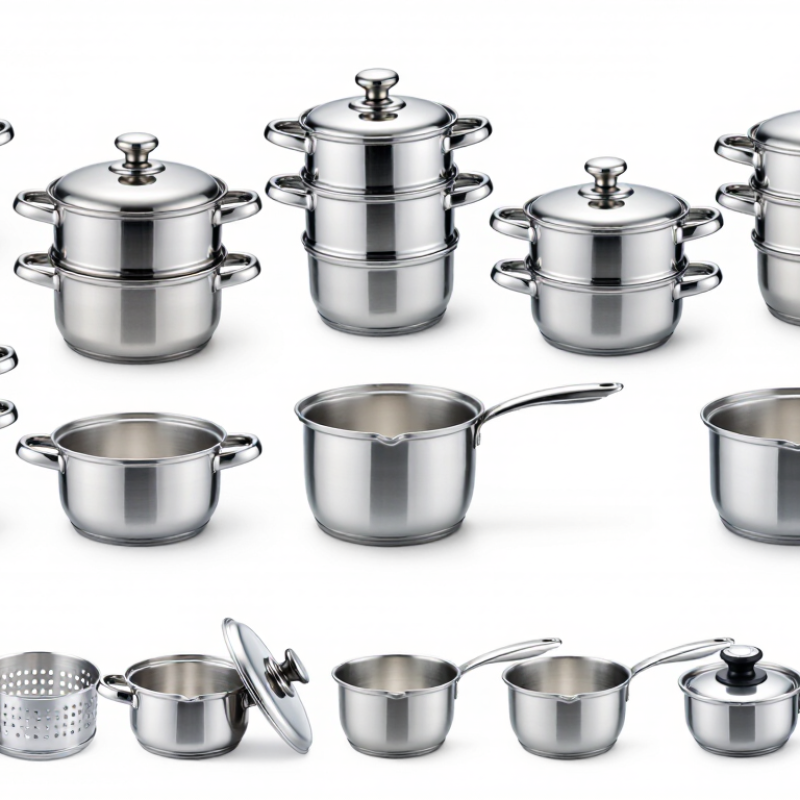
Top 10 Stainless Steel Steamer Pots for Global Buyers

Stainless Steel Steamer Pots: Structure, Materials, and Cooking Principles

A stainless steel steamer pot usually has three working parts: a water base, a perforated steaming insert, and a close-fitting lid. The base stores boiling water, while the insert keeps food above the liquid. Small holes let steam rise evenly around vegetables, dumplings, fish, or grains.

Food-grade stainless steel offers strength, stain resistance, and easy cleaning. Many practical models use 304 stainless steel for the body. Some use a layered or reinforced base, which spreads heat more evenly and reduces scorching. A magnetic stainless steel base can also support induction cooking. Check the specification carefully. Not every stainless steel pot works on induction.

The cooking principle is simple. Heat turns water into steam, and the steam transfers energy to the food surface. At sea level, steam stays near 100°C, although altitude changes this behavior. Keep the water below the insert. Otherwise, food may boil instead of steam. A tight lid improves heat retention, but a loose lid can release too much steam and extend cooking time. In kitchen testing, I noticed that thin vegetables cook quickly, while dense root vegetables need more space and longer exposure. I once overfilled an insert and found the center remained firm. That mistake showed me that capacity figures can be misleading. Airflow matters as much as volume. Condensation also collects on the lid and may soften delicate foods.

Top 10 Stainless Steel Steamer Pots for Global Buyers

Stainless Steel Steamer Pots: Structure, Materials, and Cooking Principles

This chart compares the nominal chromium and nickel content of ten stainless steel grades commonly encountered in cookware and kitchen equipment. Values represent approximate midpoints of standard composition ranges; actual specifications may vary by standard and product.

Chromium supports corrosion resistance, while nickel improves formability and resistance to oxidation. In a steamer pot, the perforated insert allows steam to circulate around the food, and the lower vessel transfers heat from the cooking surface to boiling water. Multi-layer bases may add aluminum or copper to improve heat distribution while keeping stainless steel on the food-contact surface.

Key Features That Define High-Quality Steamer Pots

Top 10 Stainless Steel Steamer Pots for Global Buyers

Key Features That Define High-Quality Steamer Pots

A high-quality steamer pot starts with stable, food-safe stainless steel. World Stainless reported 58.4 million tonnes of crude stainless steel production in 2023. This scale supports stainless steel’s global availability, but material grade still matters. For regular cooking, 18/8 or 18/10 stainless steel offers useful corrosion resistance and a clean, neutral cooking surface. I would still verify the grade, because “stainless” alone explains very little.

Look for a thick, flat base that sits firmly on gas, electric, or induction cookers. A multi-layer base spreads heat more evenly and reduces scorching around the center. The U.S. FDA Food Code 2022 emphasizes smooth, corrosion-resistant, nonabsorbent, and easily cleanable food-contact surfaces. These details matter around the steamer insert, lid rim, and riveted handles. Small gaps can trap moisture and food residue.

Lid design deserves practical testing. A tight-fitting lid should retain steam without rattling excessively. Tempered glass can improve visibility, while a stainless lid usually tolerates rougher handling.

The insert should have evenly distributed perforations, raised feet, and enough clearance above boiling water. Too few holes slow cooking. Too many weaken the basket.

Check the welds closely.

A reliable handle stays cool enough for controlled lifting, though no handle remains risk-free near high heat. Dishwasher compatibility is useful, but repeated cycles may dull the finish. One overlooked issue is weight: a very light pot feels convenient, yet often signals thinner walls and poorer stability.

How to Compare the Top 10 Steamer Pots for Global Buyers

When comparing the top 10 stainless steel steamer pots, start with measurable details, not attractive photos. Check the steel grade, wall thickness, diameter, and total capacity. A 24-centimeter pot may suit two people, while a 32-centimeter model serves a larger household. Check the fit. Measure your cooktop and cabinet before ordering.

The base deserves close attention. A layered base should sit flat and spread heat evenly across gas, electric, and induction surfaces. Test the lid for a steady seal, comfortable lifting, and visible steam control. Handles should remain stable when the pot contains hot water. I also compare the number of steaming tiers, hole size, rack spacing, and drainage design. Small details matter. Narrow holes can protect delicate food, but they may slow cooking. Wide holes steam quickly, although small dumplings can slip through. For global buyers, confirm metric dimensions, packaging strength, carton labeling, and available food-contact documentation. Ask for material reports and inspection photos before shipment. These checks improve reliability, but they do not replace hands-on testing. I once favored a heavier pot, then found its stacked tiers difficult to separate after cooking. Weight can suggest durability, yet it may reduce daily convenience. Compare usable performance, not just specifications or product rankings.

Size, Compatibility, Safety, and Maintenance Considerations

Top 10 Stainless Steel Steamer Pots for Global Buyers

Size and compatibility decide whether a steamer works daily or gathers dust. For family cooking, a 24–28 cm pot usually provides useful capacity without becoming difficult to lift. Commercial kitchens may need 32 cm or larger, but cabinet depth matters. Measure the lid, handles, and stacked tiers before ordering. Check induction compatibility carefully. A magnetic base is essential for induction cooktops, while flat bottoms suit electric and ceramic surfaces. Gas users need stable handles and balanced weight. The World Stainless Association reported 58.4 million tonnes of stainless steel production in 2023, showing strong global material availability, but steel grade still varies. Look for clearly declared food-contact materials, preferably 18/8 or 18/10 stainless steel.

Safety depends on small details. A vented lid reduces pressure buildup and prevents sudden steam release. Cool-touch handles help, though “cool” does not mean cold. The FDA Food Code 2022 emphasizes cleanable, corrosion-resistant food-contact equipment. For institutional buyers, NSF/ANSI 4 certification can provide an additional equipment benchmark. Avoid pots with rough welds, sharp rims, or loose rivets. These flaws trap food and invite corrosion. I have found that heavier walls improve stability, but excessive weight discourages regular use.

Tips: Dry the pot after washing, especially around rivets. Remove mineral spots with diluted vinegar, not abrasive powder. Check the gasket monthly. Confirm the supplier’s dimensions, carton strength, and replacement-part availability. A perfect pot on paper may still fail in a small sink.

Top 10 Stainless Steel Steamer Pots for Global Buyers - Size, Compatibility, Safety, and Maintenance Considerations

Rank Steamer Pot Type Total Capacity Pot Diameter Approx. Height Recommended Use Induction Gas / Electric / Ceramic Dishwasher Safe Safety Features Maintenance Considerations Best Buyer Profile
1 Compact 2-Tier Steamer 3.0 L 18 cm 22 cm Vegetables, eggs, dumplings, and small portions Yes Yes Usually Heat-resistant handles, tempered-glass lid, stable stacking rim Dry immediately after washing; remove mineral spots with diluted vinegar 1–2 people
2 Standard 2-Tier Steamer 5.0 L 20 cm 25 cm Daily steaming, fish, vegetables, and reheating Yes Yes Usually Steam-release vent, cool-touch handles, rolled upper rim Avoid abrasive pads; check the lid vent for food residue 2–4 people
3 Large 2-Tier Steamer 7.5 L 24 cm 29 cm Family meals, whole fish, corn, and meal preparation Yes Yes Usually Reinforced handles, vented lid, wide non-slip base Use sufficient water; do not allow the base to boil dry 4–6 people
4 3-Tier Family Steamer 9.0 L 24 cm 35 cm Multi-dish cooking, dim sum, and batch steaming Yes Yes Parts usually Locking stack alignment, vented lid, sturdy side handles Wash each tier separately; store fully dry to prevent trapped moisture 5–8 people
5 Deep 3-Tier Steamer 12.0 L 28 cm 39 cm Large vegetables, shellfish, tamales, and catering portions Yes Yes Parts usually High-temperature handles, pressure-balancing vent, broad base Use low to medium heat after boiling; descale periodically in hard-water areas Large families
6 Pasta and Steamer Combo 6.0 L 22 cm 27 cm Steaming, pasta, blanching, and stock preparation Yes Yes Usually Strainer insert, tempered-glass lid, heat-resistant grip Rinse after starchy foods; remove discoloration with a stainless-steel cleaner Multi-purpose cooks
7 Glass-Lid Induction Steamer 5.5 L 22 cm 26 cm Visible cooking, vegetables, seafood, and rice dishes Yes Yes Pot usually Tempered-glass lid, steam vent, encapsulated heat-distribution base Avoid thermal shock; allow the lid to cool before rinsing with cold water Visibility-focused users
8 Wide 2-Tier Steamer 8.0 L 26 cm 28 cm Whole fish, large dumplings, leafy greens, and poultry Yes Yes Usually Wide stable base, vented lid, reinforced stainless-steel handles Confirm the cooktop ring supports the wide base; dry thoroughly after cleaning Large-item cooking
9 Stackable 4-Tier Steamer 14.0 L 28 cm 46 cm Catering, meal preparation, and high-volume steaming Yes Yes Parts usually Interlocking tiers, vented lid, wide handles, reinforced base Use on a level surface; inspect stack connections and handles regularly Commercial users
10 Heavy-Duty Stainless Steel Steamer 18.0 L 30 cm 48 cm Bulk vegetables, seafood, large batches, and institutional kitchens Yes Yes Parts usually Heavy-gauge body, secure handles, steam vent, reinforced base Check cooktop load limits; clean promptly after salty or acidic foods Professional kitchens

Note: Capacities and dimensions are representative specifications for commonly sold stainless steel steamer configurations. Dishwasher compatibility, induction performance, and maximum fill levels should always be confirmed in the product manual before purchase.

Choosing the Right Steamer Pot for Different Markets and Kitchens

Choosing the right stainless steel steamer pot begins with the kitchen, not the catalogue. A compact 18-centimeter pot suits small apartments, food stalls, and limited gas burners. Larger kitchens may need a three-tier unit for dumplings, vegetables, or fish. Measure cabinet height and burner width before ordering. This simple step prevents costly returns. In kitchen testing, thick bases heated more evenly, while lightweight models cooled quickly after adding cold food. Neither design wins everywhere. It depends on fuel, batch size, and cooking speed.

Tips: Match the pot to local cooking habits. In humid coastal markets, choose corrosion-resistant stainless steel and dry every layer after washing. For induction kitchens, verify magnetic compatibility. Attractive steel is not always induction-ready. Check handle heat resistance, lid fit, and replacement insert sizes. A glass lid helps visual control, but a solid lid often holds steam better. Ask suppliers for material grades and measured dimensions. Do not rely on vague claims.

For commercial kitchens, stability matters more than polished appearance. A wide rim reduces spills when staff move hot trays. Perforations should release steam without letting small dumplings fall through. In homes, easy cleaning may matter more than maximum capacity. Some buyers prefer dishwasher-safe parts, although repeated high-heat cycles can dull the finish. I have overlooked this detail before. Local water quality also deserves attention, because mineral deposits collect around holes and seams. Test one unit under real conditions before placing a large order.

FAQS

What are the main parts of a stainless steel steamer pot?

It usually has a water base, perforated insert, and close-fitting lid. The base holds boiling water. The insert keeps food above the liquid.

How does a steamer pot cook food?

Heat changes water into steam, and steam transfers energy to the food. Small holes help steam move around vegetables, dumplings, fish, or grains. The process is gentle but not always fast.

What stainless steel grade should buyers consider?

Food-grade stainless steel offers strength, stain resistance, and easy cleaning. Grades such as 18/8 or 18/10 provide useful corrosion resistance. Still, “stainless” alone says too little.

Can every stainless steel steamer pot work on induction cookers?

No. The pot needs a magnetic base or compatible layered construction. Check the specifications before ordering. Attractive steel is not always induction-ready.

How much water should go into the base?

Keep the water below the steaming insert. If water touches the food, the food may boil instead. Add enough water for the cooking time, but avoid overfilling.

What lid and insert features matter most?

A close-fitting lid retains steam and shortens cooking time. A glass lid improves visibility, while a solid lid may hold steam better. The insert needs raised feet and evenly distributed holes.

How should buyers choose the right pot size?

Measure the burner width, cabinet height, and usual batch size. A compact pot suits small kitchens and limited burners. Larger kitchens may need multiple tiers. Capacity can mislead.

Why can food cook unevenly inside a steamer?

Overfilling can block airflow, leaving the center firm. Dense root vegetables need more space and longer steaming. Thin vegetables cook quickly. I have misjudged this before.

What cleaning and maintenance details should buyers check?

Smooth surfaces and tight seams reduce trapped residue. Dry every layer after washing, especially in humid areas. Mineral deposits can collect around holes and seams. Dishwasher cleaning is convenient, but finishes may dull.

What should commercial kitchens test before buying in bulk?

Test one pot under real cooking conditions. Check stability, handle control, lid fit, and insert clearance. A wide rim can reduce spills during hot movement. One trial may reveal problems a catalogue hides.

Conclusion

This guide explores the essential qualities of stainless steel steamer pots, explaining how their layered structure, food-grade materials, and steam circulation principles support efficient and healthy cooking. It highlights the features that distinguish a high-quality pot, including durable construction, even heat distribution, secure lids, comfortable handles, stable bases, corrosion resistance, and easy cleaning. By examining these factors, global buyers can make practical comparisons among the top 10 options without focusing solely on appearance or price.

The article also considers the most important purchasing details, such as capacity, tier design, compatibility with different stovetops, safety features, storage needs, and long-term maintenance. It explains how to select suitable stainless steel steamer pots for household kitchens, restaurants, catering operations, and diverse international markets, where cooking habits, kitchen sizes, and cookware standards may vary. The goal is to help buyers choose reliable, versatile, and cost-effective steaming solutions for everyday use.

Charlotte

Charlotte

Charlotte is a dedicated marketing professional with a strong understanding of the company’s products, customers, and long-term business goals. Through a combination of market research, strategic planning, and clear communication, she helps present complex product information in a practical and......