Stainless Steel Cookware Blog & Insights
Kitchenware Industry News and Guides
Cookware Manufacturing Insights
Industry Insights & Updates

Cookware Blog & Insights

Expert articles, wholesale sourcing guides, product developments, and technical manufacturing trends from Adil Stainless Steel.

0%

A stainless steel mixing bowl is a kitchen vessel made from steel combined with chromium. This blend helps resist rust, stains, and everyday kitchen wear. It is commonly used for whisking, tossing, kneading, marinating, and storing ingredients. Unlike glass, stainless steel feels lighter and is less likely to shatter when dropped.

Most stainless steel mixing bowls have smooth interiors and rounded edges. These details make scraping batter easier and reduce trapped food around the rim. Many models include flat bases, which help keep the bowl steady during vigorous mixing. Some sets also offer nesting sizes, allowing a small cupboard to hold several bowls. That practical design matters in busy home kitchens and professional food preparation areas.

Material quality still deserves attention. Food-grade stainless steel is generally preferred for direct contact with ingredients. However, not every bowl has the same thickness, finish, or stability. A thin bowl may dent, slide, or become noisy on a hard counter. Small details matter. I have found that a damp towel beneath the bowl often improves control during mixing. This is simple, but easy to overlook.

These bowls are durable, reusable, and relatively easy to clean. They usually tolerate hand washing and many dishwasher cycles, depending on the manufacturer’s guidance. They can also transfer heat quickly, which helps when chilling cream but requires caution near hot contents. They are not perfect. Scratches may appear, and metal surfaces can react poorly with certain strongly acidic mixtures over time. Understanding these strengths and limits makes it easier to choose the right bowl for specific cooking tasks.
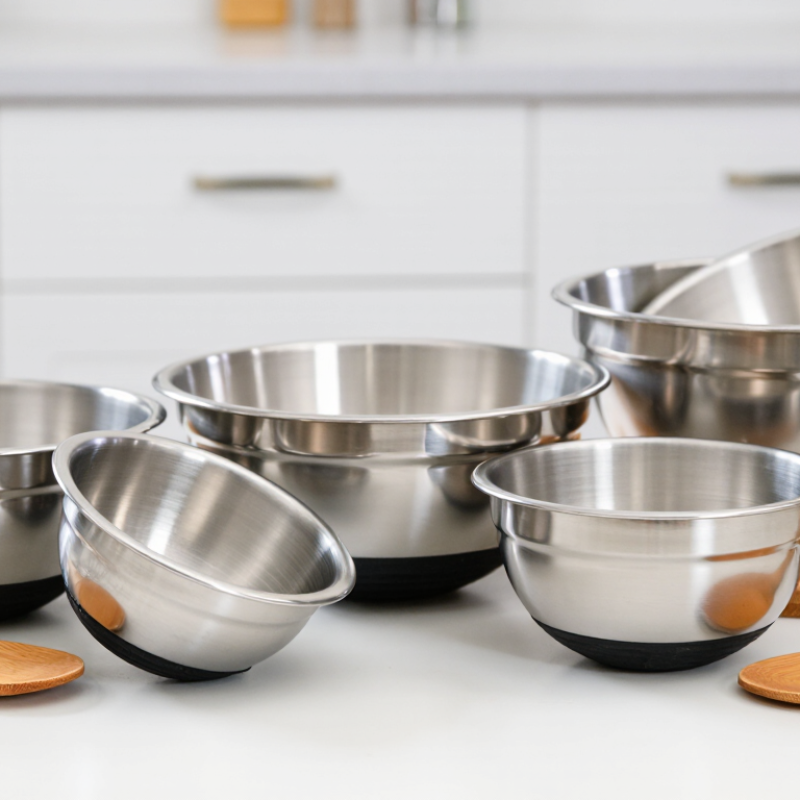
What Is a Stainless Steel Mixing Bowl?

Definition and Basic Characteristics of a Stainless Steel Mixing Bowl

What Is a Stainless Steel Mixing Bowl?

A stainless steel mixing bowl is a reusable kitchen vessel designed for combining, whisking, tossing, and preparing ingredients. It is commonly made from food-contact stainless steel, often including 18/8 steel, although the exact composition can vary. The bowl has a smooth, nonporous surface that does not easily absorb odors, colors, or moisture. That matters when mixing garlic dressing, berries, or sticky dough.

Its basic characteristics include durability, light weight, and resistance to rust and staining under normal kitchen conditions. Many bowls have a rounded interior, a wide rim, and a flat base for stability. Some include measurement marks, pouring edges, or nesting shapes for compact storage. The metal also tolerates chilled ingredients and moderate heat, but it can become very hot quickly. Handle it carefully.

In daily use, I find stainless steel useful for beating eggs because the bowl stays steady during vigorous whisking. It also works well for marinating vegetables and holding freshly washed salad leaves. However, stainless steel is not completely maintenance-free. Leaving salty brine or acidic sauce inside for a long time may dull the surface or encourage spots. I have learned that rinsing promptly and drying the bowl prevents most problems. A metal bowl can also react with certain mixers or scrape a countertop, which is easy to overlook. Its strength is practical, not magical.

Materials, Construction, and Common Design Features

What Is a Stainless Steel Mixing Bowl?

Materials, Construction, and Common Design Features

A stainless steel mixing bowl is built for repeated contact with food, water, and kitchen tools. Many reliable bowls use food-grade stainless steel, often identified as 18/8 steel. This composition contains chromium and nickel, which help resist rust and staining. It does not mean the bowl is indestructible. Strong salt, harsh cleaners, and prolonged moisture can still affect its surface.

Construction matters as much as the metal itself. A thicker wall feels steadier when whisking batter or kneading dough. A rolled rim gives the bowl a comfortable grip and reduces sharp edges. Some bowls have a flat base, while others use a silicone-covered bottom for extra stability. I prefer a weighted base when mixing thick dough. Lightweight bowls can slide across a damp counter.

Common designs include nesting shapes, pouring spouts, measurement marks, and wide openings. A broad interior makes it easier to scrape ingredients from the sides. Deep walls also help control splashes during electric mixing. Handles can improve control, but poorly joined handles may trap food near the welds. That detail deserves inspection. I once chose a bowl for its attractive shape and ignored its narrow base. It looked practical, but it tipped during vigorous mixing. Smooth seams, a balanced profile, and easy cleaning usually matter more than decorative details.

What Is a Stainless Steel Mixing Bowl?

Stainless steel mixing bowls are commonly made from corrosion-resistant austenitic stainless steel. Type 304, often described as 18/8 stainless steel, is widely used for kitchen bowls because it combines durability, cleanability, and resistance to food acids. Type 316 contains molybdenum and offers higher resistance to chlorides.

The chart shows representative midpoint values from standard composition ranges for commonly referenced stainless steel grades. Mixing bowls typically use a smooth, non-porous interior, formed or spun construction, a rolled rim for stiffness and safer handling, and sometimes a flat base or non-slip ring for stability.

How Stainless Steel Mixing Bowls Are Used in Food Preparation

What Is a Stainless Steel Mixing Bowl?

How Stainless Steel Mixing Bowls Are Used in Food Preparation

A stainless steel mixing bowl is a durable container used for combining, holding, and preparing ingredients. Its smooth surface resists many food odors and does not easily absorb color. In daily cooking, I use one for whisking eggs, mixing pancake batter, and tossing chopped vegetables with dressing. It feels stable on the counter, especially when the rim is wide and the base is weighted.

These bowls also support careful food preparation. A large bowl can hold flour, liquid, and seasonings without spilling during mixing. Smaller bowls help organize measured ingredients before cooking. Stainless steel handles cold ingredients well, so I often use it for chilling dough or keeping prepared salad crisp in the refrigerator. It should be cleaned promptly after contact with acidic foods, even though quality stainless steel is generally resistant to corrosion.

The bowl is useful for marinating meat, mixing sauces, and folding whipped ingredients. However, it can become slippery when wet. A damp kitchen towel underneath improves control. I once whisked too quickly and sent flour across the counter. That small mistake changed how I choose bowl depth. Very deep bowls reduce splashing, while shallow bowls make scraping easier. Stainless steel can also become noisy when utensils strike the sides. Silicone or wooden tools offer a quieter option. Clean the bowl with warm water, mild detergent, and a soft cloth, then dry it fully to reduce water spots.

Advantages and Limitations Compared with Other Mixing Bowls

A stainless steel mixing bowl is a nonporous vessel made from corrosion-resistant steel, commonly used for whisking, kneading, and food preparation. Its advantages become clearer during demanding kitchen work. The International Stainless Steel Forum reported global crude stainless steel production of about 58.4 million tonnes in 2023. That scale reflects mature processing, although it does not guarantee identical quality in every bowl.

In daily use, stainless steel handles repeated washing, acidic ingredients, and sudden temperature changes better than many plastic bowls. It is also lighter than glass and less likely to shatter. Very practical. A thin steel bowl can chill cream quickly over ice, while its reflective surface helps users inspect texture and color. Unlike plastic, it usually resists lingering odors and tomato stains. Compared with ceramic, it is easier to lift with one hand during vigorous mixing.

Limitations deserve equal attention. Steel conducts heat poorly compared with copper, so it cannot replace a heat-safe bowl for every cooking method. It is unsuitable for microwave use, may slide on smooth counters, and can create a sharp clatter when a whisk hits the surface. Strong impacts may dent thin walls. Salt-rich or acidic mixtures should not sit in low-quality steel for long periods. The U.S. Environmental Protection Agency’s packaging data has reported steel-can recovery near 70% in recent years. That supports steel’s recycling value, but bowls are different products. I still choose glass for visibility and plastic for quiet handling. No material wins every task.

Choosing, Cleaning, and Maintaining a Stainless Steel Mixing Bowl

What Is a Stainless Steel Mixing Bowl?

A stainless steel mixing bowl is practical, durable, and usually easier to maintain than porous alternatives. World Stainless reported 58.4 million tonnes of crude stainless steel production in 2023. That figure reflects a mature industry, but it does not guarantee every bowl has equal quality. Choose a bowl with a smooth interior, stable base, rolled rim, and comfortable weight. Food-grade 18/8 or 18/10 stainless steel offers useful corrosion resistance. A magnet test can provide clues, but it cannot confirm the steel grade.

Check the details.

The U.S. FDA Food Code requires food-contact surfaces to be smooth, corrosion-resistant, and easily cleanable. This makes surface condition important when choosing a bowl. Avoid deep scratches, sharp seams, rough welds, and loose handles. For cleaning, use warm water, mild detergent, and a soft sponge. Rinse away salt, vinegar, and acidic mixtures soon after use. Dry the bowl promptly to reduce water spots. Do not use chlorine cleaners, abrasive powders, or steel wool. They can damage the surface or leave particles behind.

I still sometimes leave a bowl soaking overnight. That is convenient, but not ideal. Long exposure to salty residue may encourage staining or pitting, especially around damaged areas. For heat marks, a diluted citric-acid cleaner can help, followed by thorough rinsing. Inspect the rim and base regularly. A bowl that rocks, flakes, or develops deep corrosion should be replaced. Small scratches are normal, yet they deserve attention. Good maintenance is simple, but careless storage can undo it.

FAQS

What is a stainless steel mixing bowl used for?

It combines, holds, and prepares ingredients. You can whisk eggs, mix batter, toss vegetables, or prepare sauces.

Why is stainless steel useful in food preparation?

Its smooth surface resists many odors and absorbs little color. It also handles cold ingredients well. You can chill dough or keep salad crisp in a refrigerator.

How should I choose a stainless steel mixing bowl?

Look for a smooth interior, stable base, rolled rim, and comfortable weight. A deep bowl reduces splashing. A shallow bowl makes scraping easier. I sometimes choose appearance over stability, which is not very wise.

Does a magnet test confirm stainless steel quality?

No. A magnet test only provides clues about the metal. It cannot confirm the exact steel grade. Surface condition and construction matter more than one quick test.

How can I stop a mixing bowl from slipping?

Place a damp kitchen towel underneath the bowl. This improves control during whisking or stirring. The bowl may still move if the counter is very wet.

How should I clean a stainless steel mixing bowl?

Wash it with warm water, mild detergent, and a soft sponge. Rinse away salt, vinegar, and acidic mixtures soon after use. Dry it fully to reduce water spots.

Which cleaning products should I avoid?

Avoid chlorine cleaners, abrasive powders, and steel wool. They may damage the surface or leave particles behind. A soft cloth is safer.

Can stainless steel bowls become damaged?

Yes. Deep scratches, rough seams, loose handles, and corrosion need attention. A bowl that rocks or flakes should be replaced. Small scratches are common, but ignoring them is a mistake.

How can I reduce noise while using the bowl?

Use silicone or wooden utensils instead of metal ones. Metal tools can strike the sides loudly. The bowl is not silent. That can be annoying.

Is soaking the bowl overnight a good idea?

Not usually. Long exposure to salty residue may encourage staining or pitting. This risk increases around damaged areas. I sometimes leave bowls soaking overnight. It is convenient, but careless.

Conclusion

A stainless steel mixing bowl is a durable kitchen container designed for combining, whisking, preparing, and serving ingredients. Made from corrosion-resistant steel, it typically features a smooth interior, rounded sides, a stable base, and sometimes a pouring rim or measurement markings. Stainless steel mixing bowls are commonly used for blending batters, kneading dough, tossing salads, marinating foods, and holding ingredients during meal preparation. Their nonporous surface does not easily absorb odors, colors, or flavors, making them suitable for a wide range of cooking tasks.

Compared with glass, plastic, or ceramic bowls, stainless steel offers a strong balance of durability, light weight, and resistance to breaking. However, it can become scratched, may conduct temperature quickly, and is not suitable for use in a microwave. When choosing a bowl, consider its size, weight, stability, stacking ability, and whether it has a comfortable rim or handle. Proper care involves washing it with mild detergent, drying it thoroughly, avoiding harsh abrasives, and storing it carefully to preserve its finish and performance.

Evelyn

Evelyn

Evelyn is a dedicated marketing professional with a deep understanding of the company’s products, customers, and industry landscape. With a strong background in market research, content strategy, and customer communication, Evelyn transforms complex product information into clear, practical, and......