Expert articles, wholesale sourcing guides, product developments, and technical manufacturing trends from Adil Stainless Steel.
Choosing the best stainless steel saucepans is not simply a matter of shine, brand, or price. The right pan must heat evenly, respond predictably, and remain comfortable during repeated cooking.
Grand View Research valued the global cookware market at approximately USD 19.2 billion in 2023. Its report also projects continued growth through 2030, partly driven by durable, premium cookware. That trend matters, but market growth does not prove that every expensive saucepan performs well. It only shows stronger consumer interest.
A reliable evaluation begins with construction. Look for stainless steel with an aluminum or copper core, because stainless steel alone transfers heat slowly. Three-ply bodies usually offer a useful balance between responsiveness and durability. For induction cooking, the base must be magnetically compatible. Check this before buying.
Small details matter.
A well-shaped handle stays cooler and feels stable when the pan holds thick sauce. A tight lid reduces evaporation, while a rolled rim helps prevent drips. I also examine the interior after simmering milk, reducing stock, or reheating acidic tomato sauce. These tasks reveal sticking, hot spots, and cleaning difficulty quickly.
Professional testing supports this practical approach. Consumer Reports cookware evaluations commonly compare heating uniformity, handling, durability, and cleaning performance. NSF International’s food-equipment standards also emphasize cleanable surfaces and safe construction. These standards cannot choose a pan for your kitchen, however.
My own preference is not perfectly objective. A heavier saucepan often feels more controlled, yet it can become tiring during long stirring. Some models distribute heat beautifully but pour poorly. No pan wins every test. This guide compares materials, performance, ergonomics, maintenance, and value, helping you choose based on real cooking habits rather than polished advertising.
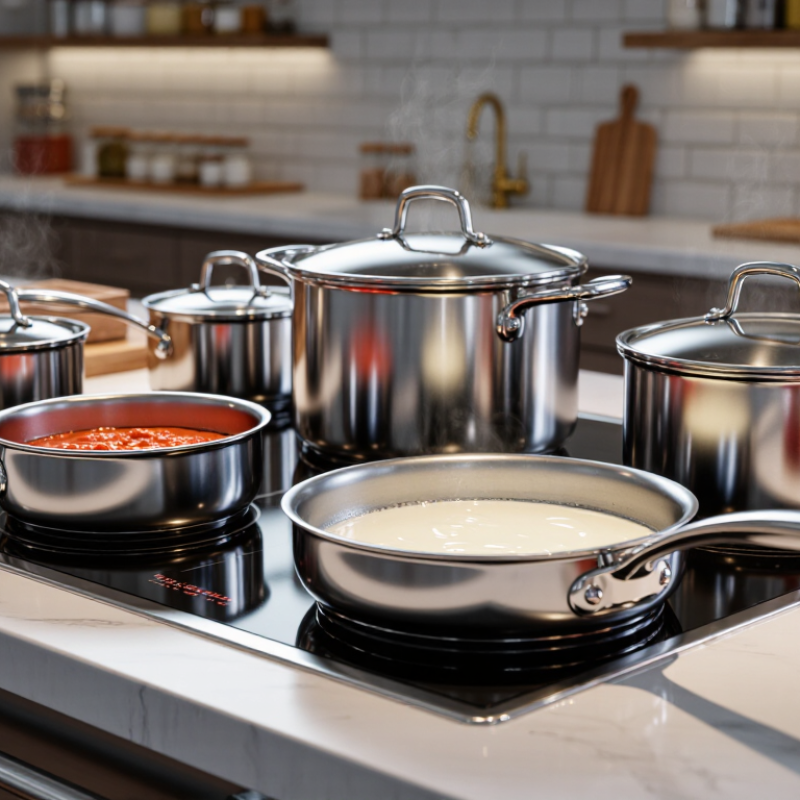
What makes stainless steel saucepans different is their balance of strength, safety, and cooking control. Stainless steel is an iron-based alloy containing chromium, which helps resist rust and staining. It does not easily react with tomatoes, citrus, wine, or dairy. That makes it useful for sauces with strong flavors.
It also keeps its shape under regular heat. Bare aluminum heats quickly, but stainless steel usually offers better durability and a cleaner cooking surface. Many quality saucepans include an aluminum or copper core. This hidden layer spreads heat more evenly.
In my kitchen, a thick bonded base makes the clearest difference. Thin pans can create hot spots beneath rice, custard, or melted butter. Food may scorch before the surface feels hot. A heavier pan responds more slowly, but it holds steady heat well. That slower response can be helpful. It can also test your patience.
Not every stainless steel pan performs equally, even when the surface looks similar. Grade, thickness, construction, and lid fit all affect daily use.
Stainless steel also encourages better cooking habits. Preheating the pan briefly helps reduce sticking, while too much heat can damage delicate sauces. A small amount of oil should shimmer, not smoke.
Stainless steel can develop rainbow marks or baked-on residue, but these usually need careful cleaning rather than replacement. I still overheat pans occasionally. That mistake reminds me that cookware cannot replace attention. A comfortable handle, balanced weight, and tight lid matter just as much during a long simmer.
A good stainless steel saucepan should heat steadily, feel balanced, and resist daily wear. In practical kitchen testing, 18/10 stainless steel handles acidic sauces well and keeps its surface neutral. However, the steel grade is only part of the decision. A saucepan with an aluminum or copper core usually spreads heat better than a thin, single-layer pan. Check the rim, too. A clean pouring edge prevents sauce from running down the side.
Size should match your usual cooking. A 1.5-quart saucepan suits oatmeal, melted butter, and small portions. A 2.5-quart model gives more room for custards, rice, and reheating soup. Larger pans can feel awkward when whisking. I once chose a deep pan for flexibility, but its narrow base heated unevenly on my stove. That mistake changed how I judge capacity.
Construction deserves close attention. Tri-ply walls offer balanced heating, while a thick disc base can work well on flatter electric surfaces. Riveted handles often feel secure, but food may collect around the rivets. A welded handle is easier to clean, though it can feel less substantial. Hold the empty pan before buying. Weight reveals useful quality, but excessive weight becomes tiring.
Tips: Compare the pan’s base with your burner size. Look for a tight-fitting lid and a comfortable handle. Test the balance with one hand. Small details matter.
| Comparison Factor | Common Options | Typical Specifications or Performance | Advantages | Limitations | Best Use |
|---|---|---|---|---|---|
| Cooking surface material | 18/10 or 18/8 stainless steel | Typically contains approximately 18% chromium and 8–10% nickel. It is nonreactive with acidic ingredients and resists corrosion. | Durable, easy to clean, stain-resistant, and suitable for sauces, milk, vegetables, and acidic foods. | Food can stick if the pan is overheated or insufficiently lubricated. Stainless steel itself is not a strong heat conductor. | General-purpose cooking and sauce preparation. |
| Core or heat-conducting material | Aluminum core | Aluminum conducts heat much more efficiently than stainless steel and helps distribute heat across the base and sidewalls. | Responds quickly to temperature changes and reduces localized hot spots. | Very thin or poorly enclosed aluminum may provide less even heating and can be less durable. | Everyday simmering, reheating, and temperature-sensitive sauces. |
| Core or heat-conducting material | Copper core | Copper provides exceptionally high thermal conductivity and rapid temperature response. | Offers precise control for custards, reductions, caramel, and delicate sauces. | Usually costs more and may add weight. The copper must be fully enclosed to prevent direct food contact and reduce maintenance. | Precision cooking where fast heat adjustment matters. |
| Construction | Single-layer stainless steel | One primary stainless-steel layer with limited heat distribution. | Usually lightweight, simple, and relatively affordable. | More likely to develop hot spots, especially on larger burners or at higher heat. | Basic boiling or occasional light-duty use. |
| Construction | Tri-ply fully clad | Three bonded layers, commonly stainless steel on the inside and outside with an aluminum or copper core extending through the base and sidewalls. | Balances heat distribution, responsiveness, durability, and weight. Sidewall cladding improves control during simmering. | Generally heavier and more expensive than single-layer cookware. | Best all-around choice for most home kitchens. |
| Construction | Five-ply fully clad | Five bonded metal layers, often combining stainless steel with one or more aluminum or copper layers. | Can provide excellent stability, even heating, and resistance to warping. | Often heavier and slower to respond than thinner constructions; performance depends on the actual layer design. | Frequent cooking and users who value maximum stability. |
| Construction | Disc-bottom or encapsulated base | A heat-conducting disc is bonded mainly to the bottom rather than extending up the sidewalls. | Can provide good base heating at a lower price and may be lighter than fully clad cookware. | Sidewalls heat less evenly, which can matter when reducing sauces or stirring food around the pan. | Boiling, steaming, and budget-conscious everyday cooking. |
| Capacity | 1–1.5 quarts (0.95–1.4 liters) | Compact size for small portions, melting butter, warming milk, and preparing one or two servings. | Heats quickly and is easy to handle. | Limited room for whisking, stirring, or preventing boil-over. | Small households and small-batch sauces. |
| Capacity | 2–3 quarts (1.9–2.8 liters) | Versatile mid-size range with enough room for most sauces, grains, vegetables, and side dishes. | Good balance of capacity, control, storage space, and maneuverability. | May be too small for family-size pasta sauces or large batches. | Best general-purpose size for most kitchens. |
| Capacity | 4–5 quarts (3.8–4.7 liters) | Larger capacity for soups, stocks, pasta sauce, blanching, and batch cooking. | Reduces the chance of splashing and boil-over when cooking larger quantities. | Heavier, slower to heat, and less convenient for small portions. | Families, meal preparation, and batch cooking. |
| Shape and proportions | Tall and narrow | Smaller evaporation area with greater depth. | Useful for heating liquids while minimizing evaporation and splashing. | More difficult to whisk around the corners and less convenient for reducing sauces quickly. | Milk, broth, grains, and liquid-based cooking. |
| Shape and proportions | Wide and moderately shallow | Larger surface area with easier access to the bottom and sides. | Promotes evaporation and makes whisking, stirring, and reducing sauces easier. | May require more storage space and can evaporate liquids faster. | Reductions, gravies, custards, and frequent stirring. |
| Lid design | Close-fitting stainless-steel lid | Helps retain heat and moisture; stainless steel is durable and typically oven-safe when the handle is suitable. | Long-lasting, dishwasher-friendly, and resistant to breakage. | Does not allow visual monitoring without lifting the lid. | Simmering, steaming, and covered cooking. |
| Handle design | Riveted stainless-steel handle | Mechanically fastened handle designed for strength and long-term use. | Secure and commonly compatible with oven use, subject to the cookware’s stated temperature rating. | Rivets can collect food residue and the handle may become hot during stovetop cooking. | Frequent stovetop-to-oven cooking. |
| Cooktop compatibility | Gas, electric, and ceramic-glass cooktops | Most stainless-steel saucepans work on these surfaces when the base is flat and stable. | Broad compatibility and reliable everyday performance. | Uneven or warped bases can reduce contact with smooth electric and glass surfaces. | Most conventional kitchens. |
| Induction compatibility | Magnetic stainless-steel exterior or bonded magnetic base | Requires a magnetic cooking surface; a simple magnet test can help verify compatibility. | Works efficiently with induction cooktops and generally provides fast heating. | Not every stainless-steel saucepan is induction-compatible. | Induction kitchens and multi-cooktop households. |
| Most balanced specification | 2–3-quart, tri-ply fully clad, 18/10 stainless-steel interior, compatible lid, and induction-ready base | Combines practical capacity with even heating, corrosion resistance, and broad cooktop compatibility. | Versatile enough for sauces, grains, vegetables, reheating, and everyday simmering. | Higher cost and weight than basic single-layer cookware. | Best overall specification for a versatile stainless-steel saucepan. |
What Is the Best Stainless Steel Saucepan?
Cooking control begins with the pan’s construction, not its appearance. A thick aluminum or copper core spreads heat across the base. This reduces scorching around the center, especially when simmering milk, sauces, or roux. Fully clad walls also improve temperature consistency near the sides. That matters.
A saucepan with a heavy, flat base should sit firmly on the cooktop. Look for a comfortable handle, a secure lid, and a shaped pouring rim. These details reduce spills when moving hot stock. Internal volume markings help with small quantities. I often value them more than polished finishes. The best handle is not always the prettiest one. It should remain stable, balanced, and easy to grip with a dry towel.
Temperature control also supports food safety. The USDA Food Safety and Inspection Service recommends reheating leftovers to 165°F, while the 2022 FDA Food Code uses the same benchmark for several reheating applications. A responsive core helps reach that target without aggressive boiling. A well-fitting lid then preserves heat and moisture. However, stainless steel is not naturally nonstick. I still preheat it too quickly sometimes. Food catches, and the mistake is mine. Lower heat, a little fat, and patient stirring usually work better. A saucepan that responds gradually may offer more everyday control than one that simply feels heavy.
The best saucepan combines even heating, precise temperature control, comfortable handling, easy cleaning, and compatibility with different cooktops. The feature scores below represent practical importance for everyday cooking on a 10-point scale.
Choosing the best stainless steel saucepan starts with your cooking habits, not its appearance. A two-quart pan suits oatmeal, sauces, and reheating soup. A three-quart pan offers more room for custards, grains, and family portions. Consider your stovetop, too. Some pans heat unevenly on smaller burners.
Look for a thick base, which spreads heat and reduces scorching. A fully clad construction can improve temperature control around the sides. Stainless steel is durable, nonreactive, and easy to inspect for damage. However, it does not forgive careless heat. I once left milk warming on high heat and created a stubborn brown layer. Lower heat would have prevented it. Weight matters.
Check the handle before buying. It should feel secure, stay balanced, and remain comfortable with a full pan. A tight-fitting lid helps retain moisture during simmering. Internal measurement marks can also make cooking more consistent. Test the rim with your fingers; a smooth edge pours more cleanly. Dishwasher safety is convenient, but repeated harsh cycles may dull the finish. Hand washing is gentler. For frequent sauce making, choose a rounded interior because a whisk can reach the corners more easily. I still prefer practical capacity over impressive size. The largest saucepan may become awkward when filled, especially near a hot burner.
A stainless steel saucepan rewards steady habits more than expensive equipment. I preheat it over medium heat for two minutes, then add oil before onions or sauce. This reduces sticking and protects the cooking surface. A few drops of water should bead and glide across the base. If they vanish instantly, the pan is too hot. I lower the heat and wait.
After cooking, I let the saucepan cool briefly. Never pour cold water into a very hot pan; sudden temperature changes can distort it. Warm water and mild dish soap usually remove fresh residue. For browned milk or starch, I cover the stain with water and simmer it gently for five minutes. A soft sponge lifts the loosened film. I avoid steel wool, which can leave scratches and trap residue. I used to scrub too hard. That habit made cleaning slower, not better.
For dull rainbow marks or mineral spots, a small amount of diluted white vinegar helps. I rinse thoroughly afterward and dry the pan immediately, especially after washing in hard water. Drying prevents chalky rings around the rim. Check the handle screws occasionally, and stop using the pan if the base wobbles. A dishwasher may be convenient, but repeated cycles can darken the finish and leave water marks. Hand washing takes less than three minutes. I still forget sometimes, and the neglected pan tells me so the next morning.
A two-quart saucepan suits oatmeal, sauces, and reheated soup. A three-quart pan handles custards, grains, and family portions. Bigger is not always better.
A thick base spreads heat more evenly and reduces scorching. This helps protect milk, sauces, and delicate foods from burning.
The handle should feel secure and keep the pan balanced when full. It should remain comfortable near a hot burner.
Yes. A snug lid helps retain moisture during simmering. Internal measurement marks can also improve consistency.
A rounded interior lets a whisk reach the corners more easily. Smooth edges also help liquids pour cleanly.
Heat it over medium heat for about two minutes. Add oil before onions or sauce. A few water drops should bead and glide across the base.
Cover the residue with water and simmer gently for five minutes. Use a soft sponge afterward. Steel wool may scratch the surface.
Diluted white vinegar can help remove rainbow marks and mineral spots. Rinse thoroughly and dry the pan immediately. I still forget sometimes.
A dishwasher is convenient, but repeated harsh cycles may dull the finish. Hand washing with warm water and mild soap is gentler.
Stop using it if the base wobbles or the handle becomes loose. Check the handle screws occasionally. Small faults deserve attention.
Stainless steel saucepans are valued for their durability, nonreactive cooking surface, and ability to handle a wide range of ingredients without retaining odors or flavors. Their performance depends on more than the outer material: shoppers should compare saucepan sizes, base thickness, layered construction, heat distribution, weight, and handle design. A well-constructed pan can provide steadier temperatures and reduce the risk of scorching, making it useful for sauces, grains, vegetables, reheating, and everyday stovetop cooking.
The best saucepan for your needs should match your household size, cooking habits, storage space, and preferred heat source. Features such as a secure lid, comfortable handle, balanced weight, pouring rim, and measurement markings can improve control and convenience. To maintain stainless steel saucepans, wash them with mild detergent, avoid sudden temperature changes, remove stuck food with gentle soaking, and dry them thoroughly. Regular care helps preserve their appearance, cooking performance, and long service life.