Flagship Export Cookware Collections
Explore our CE-certified, heavy-gauge stainless steel woks and frying pans designed for high-thermal induction, gas efficiency, and industrial dishwasher durability.
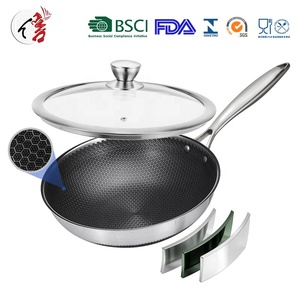
304 Thickened Tri-ply Stainless Steel Honeycomb Wok Non-Stick Household Pan Universal for Induction Cooker & Gas Stove
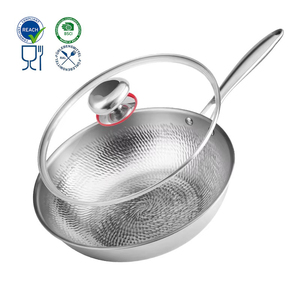
TriPly Stainless Steel Titanium Non Stick Fry Wok Pan Non-stick Induction Hammered Titanium Stainless Steel Wok with Glass Lid
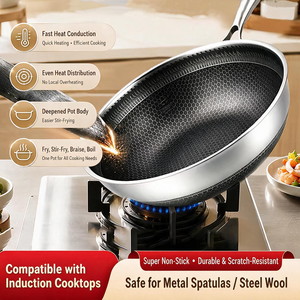
High-quality Non-stick Stainless Steel 304/316 Wok with Glass Cover 18L Capacity Gas & Induction Compatible Cookware Set
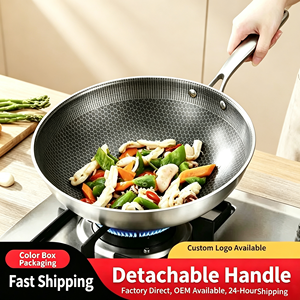
Even Heating Honeycomb Wok Pan 30/32/34cm Riveted Handle Stainless Steel Skillet for Gas Induction Stove
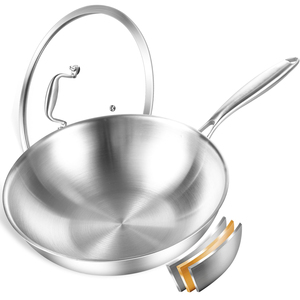
Good Quality Tri-Ply Stainless Steel Wok Durable Cookware Non-Stick Frying Pan for Cooking
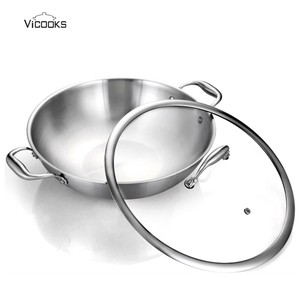
Triply Stainless Steel Woks Stir-Fry Pan with Helpers Induction Wok for Household
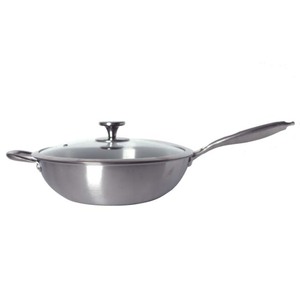
High Quality 304 Stainless Steel Honeycomb Wok Stirfry Pan Tempered Glass Lid Induction Bottom

Premium Thick Bottom 316 Stainless Steel Double Sided Non-Stick Flat Bottom Wok Honeycomb Design with Glass Lid for Home Use
Engineering Excellence & Manufacturing Capabilities
Operational background of Adil Stainless Steel: Precision forging, advanced alloy metallurgy, and integrated B2B supply chain infrastructure based in Gujranwala, Pakistan.
Vertically Integrated Manufacturing
Operating out of Gujranwala, Pakistan's steel epicenter, our facility encompasses automated hydraulic deep-drawing presses, robotic laser welding, annealing furnaces, and high-speed mirror polishing lines to manage end-to-end quality.
Strict CE & International Compliance
Every piece of cookware undergoes rigorous testing for toxic heavy metal leaching, thermal shock resilience, and surface durability. Fully compliant with EU Directive 1935/2004, US FDA 21 CFR, and German LFGB regulations.
Tri-Ply & Honeycomb Innovation
Specializing in 3-layer bonded cookware (AISI 304 interior + Pure Aluminum Core + AISI 430 Magnetic Exterior) and double-sided micro-engraved laser honeycomb structures that maximize scratch resistance and heat efficiency.
Comprehensive Analysis of Stainless Steel Cookware Sourcing: Metallurgy, CE Certification, and Global Market Shifts
In the evolving landscape of commercial and residential kitchenware procurement, international buyers face increasing regulatory scrutiny, changing consumer safety expectations, and severe price-to-performance competition. As a master manufacturer with over 18 years of technical expertise, Adil Stainless Steel (Gujranwala, Pakistan) presents this comprehensive technical whitepaper to guide B2B importers, retail chain buyers, and private-label brands through the metallurgical physics, structural engineering, and regulatory frameworks of premium grade stainless steel cookware.
Key Procurement Insight: Sourcing low-grade 201-series stainless steel disguised as 304 grade results in a 68% higher risk of pitting corrosion within 12 months of high-salinity cooking. CE Certification combined with spectrographic raw-material verification is non-negotiable for European and North American market entry.
1. Metallurgical Science: Deciphering Stainless Steel Grades (304 vs. 316 vs. 430)
Understanding the microstructural alloy composition is the foundational step in sourcing reliable cookware. The term "stainless steel" covers a wide spectrum of iron-chromium-nickel alloys, each tailored for specific thermal, magnetic, and anti-corrosive performance profiles:
- AISI 304 (18/8 Stainless Steel): Containing approximately 18% Chromium and 8% Nickel, 304 is the industry standard for high-end culinary tools. Chromium forms a self-healing passive oxide film (Cr₂O₃) on the surface, preventing atmospheric oxidation, while Nickel adds ductility and resistance to acidic foods (such as tomatoes and citrus juices).
- AISI 316 (18/10 Surgical Stainless Steel): Enhanced with 2-3% Molybdenum, Grade 316 offers superior Pitting Resistance Equivalent Number (PREN). It is specifically engineered for heavy-duty commercial applications, salt-rich cuisine environments, and high-frequency industrial dishwasher cleaning cycles where chloride ions quickly degrade standard metals.
- AISI 430 (18/0 Ferritic Stainless Steel): Featuring high chromium content but virtually zero nickel, 430 steel possesses strong ferromagnetic properties. This alloy is essential for the exterior bottom layer of cookware to ensure seamless compatibility with high-frequency electromagnetic induction cooktops.
| Alloy Grade | Nominal Composition | Magnetic Property | Corrosion Resistance | Primary B2B Application |
|---|---|---|---|---|
| AISI 304 (18/8) | 18% Cr, 8% Ni, Balance Fe | Non-Magnetic (Austenitic) | High (Standard Culinary) | Inner cooking surfaces, stock pots, woks |
| AISI 316 (18/10+Mo) | 18% Cr, 10% Ni, 2% Mo | Non-Magnetic (Austenitic) | Extreme (Chloride & Acid Proof) | Medical cookware, premium commercial ranges |
| AISI 430 (18/0) | 16-18% Cr, 0% Ni | Strongly Magnetic (Ferritic) | Moderate (Atmospheric) | External cladding for induction conduction |
| Tri-Ply Clad | 304 Interior / Al-Core / 430 Exterior | Outer Layer Induction Capable | Exceptional Inside & Outside | Multi-layer energy-saving woks & skillets |
2. Thermal Engineering: Tri-Ply Cladding & Micro-Etched Honeycomb Mechanics
Single-sheet stainless steel exhibits relatively low thermal conductivity (approx. 15 W/m·K) compared to aluminum (approx. 237 W/m·K). To solve the problem of localized hot spots, scorching, and inefficient energy conversion, advanced cookware engineering utilizes roll-bonded multi-layer cladding technology.
Our flagship Tri-Ply Construction permanently fuses an inner core of 99.5% pure elemental aluminum between an interior cooking layer of 304/316 surgical steel and an exterior shield of 430 magnetic steel under 1,200 tons of hydraulic pressure and high temperatures. This ensures lateral heat distribution across the entire vessel walls within seconds, reducing cooking energy consumption by up to 35% on commercial induction ranges.
Furthermore, our proprietary Double-Sided Honeycomb Laser Etching Technology represents a massive leap forward in anti-scratch non-stick longevity. Traditional PTFE non-stick coatings applied directly to flat metal degrade when exposed to stainless steel spatulas. The laser-engraved hex matrix creates raised stainless steel pillars that protect the recessed non-stick valleys from physical abrasion. This physical shield matrix allows commercial chefs to use metal utensils without gouging the non-stick polymer film.
3. Regulatory Imperatives: Navigating CE Marking, LFGB, and FDA Compliance
For procurement officers distributing in the European Union, United Kingdom, and North American retail markets, regulatory compliance failure represents catastrophic supply chain risk. The CE marking, coupled with food-contact verification, confirms that kitchenware does not transfer hazardous chemical substances into food under intended cooking conditions.
- EU Regulation (EC) No 1935/2004: Mandates that materials coming into contact with foodstuffs must be sufficiently inert so as not to transfer constituents to food in quantities that endanger human health or bring about an unacceptable change in food composition.
- German LFGB (Lebensmittel-, Bedarfsgegenstände- und Futtermittelgesetzbuch) § 30 & 31: The stringent European benchmark testing heavy metal migration (Lead, Cadmium, Nickel, Chromium, and Manganese leaching) using 3% acetic acid simulant solutions under boiling conditions for extended hours.
- US FDA 21 CFR 175.300: Governs surface coatings and metallic purity standards for cookware imported into the United States.
Adil Stainless Steel integrates strict batch-level XRF spectrographic analyzer testing across every production batch in Gujranwala, assuring B2B importers that all shipped vessels carry complete, auditable compliance documentation.
4. Future Procurement Trends & Industry Innovations (2025–2030)
As global supply chains adjust to carbon border adjustments, consumer health shifts, and smart kitchen automation, three major trends are reshaping global stainless steel kitchenware sourcing:
A. Elimination of Forever Chemicals (PFOA / PFAS Phase-out): Retail consumers and global legislation are aggressively banning per- and polyfluoroalkyl substances. The market is pivoting rapidly toward physical hybrid systems—such as our hammered titanium woks and raised laser honeycomb matrices—or ceramic-reinforced non-stick systems that deliver release capabilities without fluorinated chemicals.
B. High-Frequency Induction Optimization: As gas hookups face restrictions in newly constructed commercial facilities across North America and Europe, cookware design must focus on ultra-flat, anti-warping bases engineered specifically for high-wattage induction hobs. Base deformation prevention relies on precision stress-relief annealing during deep-drawing operations.
C. Supply Chain Resiliency & OEM Agility: Brands are increasingly seeking direct partnerships with established mid-tier manufacturers capable of providing flexible Minimum Order Quantities (MOQs), custom laser logo engraving, specialized lid fittings, and customized drop-test certified e-commerce packaging.
Frequently Asked B2B Procurement Questions
Actionable answers to common technical, manufacturing, and shipping inquiries raised by professional buyers, global distributors, and private label importers.
Why is CE certification crucial when sourcing stainless steel kitchenware?
CE certification and corresponding food contact test compliance verify that the cookware meets essential European health, safety, and environmental protection standards. It ensures that under high heat and acidic cooking conditions, no harmful heavy metal ions (like lead, cadmium, or excess nickel) leach into food, preventing costly customs rejections and product recalls in regulated international markets.
What is the practical difference between 304 and 316 grade stainless steel in woks?
Grade 304 (18/8) provides excellent rust and acid resistance for standard household cooking. Grade 316 (18/10) contains 2-3% added Molybdenum, providing extra defense against severe chloride/salt pitting and high-temperature stress corrosion. 316 is ideal for high-end commercial kitchens, harsh marine environments, and heavy-use institutional catering equipment.
How does the Tri-Ply honeycomb structure prevent non-stick peeling?
Our micro-engraved honeycomb design creates a multi-dimensional surface consisting of raised stainless steel ridges and recessed non-stick valleys. Metal utensils slide across the raised steel grid without touching or scratching the non-stick coating beneath. This physical barrier extends non-stick service life up to 4 times longer than conventional flat non-stick pans.
Are your products compatible with commercial induction cooktops?
Yes. All our cookware features encapsulated or fully clad magnetic AISI 430 stainless steel bases. This layer rapidly interacts with electromagnetic induction fields to generate instant heat, ensuring 100% compatibility across induction hobs, electric radiant coils, and traditional gas burners without base warping.
What custom OEM / ODM branding services do you provide?
We offer complete OEM/ODM solutions: high-precision fiber laser logo engraving on stainless steel bodies and glass lids, customized handle ergonomics (hollow stay-cool handles, silicone-wrapped, or cast stainless), custom color gift box packaging, barcode labeling, and bespoke tool development for unique vessel dimensions.
What is the typical Minimum Order Quantity (MOQ) and delivery lead time?
Standard MOQs start at 500 to 1,000 units per specification depending on customization requirements. Production lead times generally range between 25 to 40 days following sample approval and deposit confirmation. We also maintain stock allocations for select high-demand catalog items to facilitate faster dispatch.
How does your factory ensure anti-warping base stability over extended heavy use?
Base warping occurs when internal metal stresses relax under uneven thermal expansion. We utilize high-tonnage thermal annealing and stress-relief pressing cycles during bottom impact bonding. This locks the multi-layer disc into absolute flatness, maintaining high thermal coupling with cooktops over years of operation.
What quality control protocols are performed prior to container loading?
Our internal Quality Assurance (QA) team conducts systematic 5-stage inspections: Raw material spectrographic analysis, wall thickness tolerance checks, rivet/weld shear strength testing, 24-hour salt spray corrosion tests, and ISTA-certified packaging drop tests before issuing final clearance certificates.
Partner with a World-Class Stainless Steel Manufacturer
Contact our B2B export engineering team today to request direct factory quotes, technical product catalogs, or customized OEM samples for your distribution network.
Send an Inquiry