Featured Commercial Stainless Steel Cookware & Kitchenware
Explore our precision-engineered food preparation utensils and heavy-duty tri-ply stainless steel cookware series. Manufactured under strict ISO 9001:2015 and CE quality assurance frameworks.
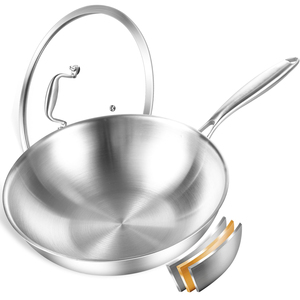
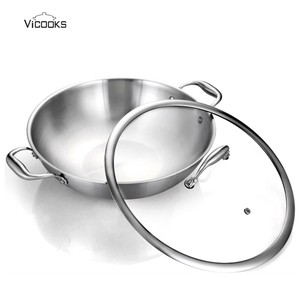
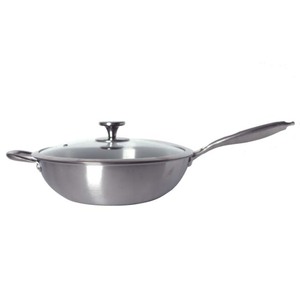

CE Certified Food Contact Materials: Engineering Standards & Regulatory Audit
In modern commercial catering, hotel supply chains, and high-volume retail sectors, selecting qualified CE certified stainless steel food tongs manufacturers is no longer merely a procurement transaction—it is a critical exercise in risk mitigation, public health compliance, and brand reputation management. Commercial food tongs, utility clamps, and multi-ply kitchen cookware exist at the direct interface between hot food preparation and human consumption. Consequently, international regulatory frameworks, specifically within the European Single Market, impose stringent demands on metallurgical purity, heavy metal migration limits, mechanical fatigue endurance, and ergonomic safety.
The CE mark (Conformité Européenne) integrated with compliance under Framework Regulation (EC) No 1935/2004 mandates that stainless steel food contact items must not transfer their constituents into food in quantities that could endanger human health, bring about an unacceptable change in the composition of the food, or bring about a deterioration in the organoleptic characteristics thereof. For procurement officers and global brand importers, partnering with specialized original equipment manufacturers (OEMs) who maintain full traceability from raw alloy coils to final electro-polished tools is the foundation of operational security.
Metallurgical Breakdown: Stainless Steel Alloys in Food Tongs & Cookware Manufacturing
| Alloy Designation | Chemical Composition (Cr / Ni / Mo) | Corrosion Resistance | Mechanical Tensile Strength | Regulatory Standard Suitability |
|---|---|---|---|---|
| AISI 304 (EN 1.4301 / 18-8) | 18% Cr / 8% Ni | High (Resistant to organic acids & steam) | 515 - 700 MPa | CE, LFGB, FDA 21 CFR 175.300 compliant for universal kitchenware. |
| AISI 316 / 316L (EN 1.4404 / 18-10-2) | 16-18% Cr / 10-14% Ni / 2-3% Mo | Superior (Pitting resistance in high-salinity & acidic foods) | 620 - 750 MPa | Premium Commercial grade; mandatory for marine & heavy industrial catering. |
| AISI 430 (EN 1.4016 / 18-0) | 16-18% Cr / 0% Ni | Moderate (Ferritic, induction-magnetic base) | 450 - 600 MPa | Utilized for induction bottom cladding layers and economy handles. |
| Tri-Ply Clad Composite | 304 Interior / Al Core / 430 Exterior | Optimal (Combines non-reactive surface with thermal efficiency) | Composite Engineered Structure | Highest standard for non-warp, even-heating wok & pan manufacturing. |
Enterprise Competencies: Adil Stainless Steel Manufacturing Ecosystem
Established in 2006 in Gujranwala—the global center of stainless steel craftsmanship—Adil Stainless Steel operates a fully integrated manufacturing infrastructure designed for scaled international B2B output.
Vertically Integrated Production
Our facility controls the complete manufacturing lifecycle: raw coil shearing, high-tonnage precision stamping, deep drawing, laser welding, automatic spring-tension calibration, and chemical passivation treatment. This eliminates sub-assembly delays and guarantees structural integrity across 10,000+ active product variants.
Comprehensive Quality Assurance
Every production lot of CE certified food tongs and tri-ply cookware undergoes rigorous quality audits. We execute X-ray fluorescence (XRF) spectrographic alloy verification, 72-hour neutral salt spray corrosion testing (ASTM B117), tensile strength analysis, and high-frequency spring fatigue testing exceeding 150,000 mechanical flex cycles.
Global Export & OEM/ODM Capability
With an export footprint spanning over 10 countries across Europe, the Middle East, Africa, and North America, our international logistics division coordinates custom private-label laser etching, custom retail display packaging, container consolidation, and compliant customs documentation tailored for immediate market entry.
Next-Generation Engineering Trends in Stainless Steel Food Preparation Tools
The commercial kitchen equipment sector is undergoing a rapid evolution driven by ergonomic science, thermal energy efficiency, and strict hygiene protocols. As commercial kitchens transition toward automated, high-speed food service, the demands placed on utility tools such as locking food tongs, salad clippers, buffet serving tongs, and heavy-duty woks have escalated dramatically.
1. Micro-Honeycomb Laser Surface Etching
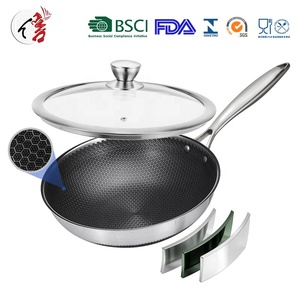
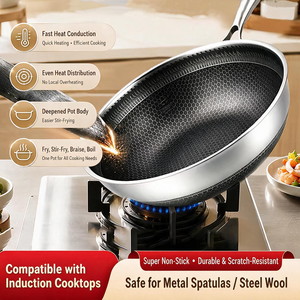
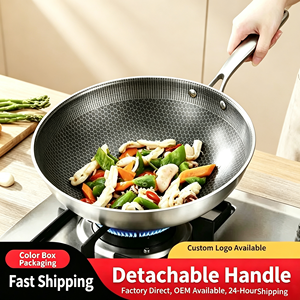
Traditional chemical non-stick coatings often degrade under commercial cooking temperatures, presenting micro-flaking risks that violate European food safety norms. Advanced manufacturing utilizes precision fiber lasers to etch an raised micro-honeycomb stainless steel matrix over a recessed non-stick resin bed. This structural innovation protects the coating from metallic spatulas and tongs while delivering exceptional heat distribution and non-stick release.
2. Hybrid Silicone-Steel Ergonomic Fusion
Modern CE-certified food tongs feature over-molded, high-temperature food-grade silicone contact heads attached to a heavy-gauge 304 stainless steel chassis. This hybrid construction prevents scratching on delicate non-stick cookware coatings, withstands direct thermal exposure up to 260°C (500°F), and eliminates bacterial collection traps through seamless ultrasonic bonding mechanisms.
3. Advanced Leaf Spring & Pull-Ring Locking Mechanisms
Mechanical failure in high-volume food service typically occurs at the pivot spring. Next-generation food tong manufacturing employs cold-rolled spring-tempered stainless steel leaf springs designed for high-stress retention. Integrated pull-ring locking mechanisms feature smooth internal silicone seals to prevent grease build-up within the internal mechanism, enabling one-handed operation and space-efficient storage.
4. Passivation & Electro-Polishing Surface Chemistry
To meet stringent European CE and German LFGB compliance, post-stamping operations require advanced citric or nitric acid passivation. This chemical treatment strips free iron from the surface of the tongs, inducing the instantaneous formation of a continuous, self-healing chromium oxide oxide layer (Cr₂O₃). This barrier completely blocks elemental leaching when contacting highly acidic foods such as citrus marinades or tomato bases.
Strategic Procurement Forecast (2025–2030): Supply Chain Resilience & ESG Compliance
Global procurement managers sourcing stainless steel food tongs and commercial cookware must navigate a complex economic landscape characterized by fluctuating raw nickel prices, carbon border adjustment mechanisms (CBAM), and heightened regulatory scrutiny. Supply chain optimization strategies are shifting from pure unit-cost reduction toward total cost of ownership (TCO) and ESG sustainability metrics.
Material Traceability & Scope 3 Emissions
Importers into the EU and UK markets increasingly require mill test certificates (MTCs) complying with EN 10204 Type 3.1. Leading manufacturers are integrating batch-level QR codes laser-engraved onto tongs and pan bases, allowing procurement officers to trace raw material origins, recycled steel content percentages, and carbon footprint metrics.
Consolidated Sourcing Models
To mitigate freight volatility and vendor management overhead, institutional buyers are consolidating orders with comprehensive manufacturers capable of supplying full-spectrum kitchenware portfolios—ranging from small precision tongs to 18L industrial tri-ply stock pots—within single consolidated container loads.
Modular Tooling & OEM Customization
Retail brands demand rapid product differentiation. Modern OEM suppliers leverage modular stamping dies that allow custom handle length adjustments (e.g., 9-inch, 12-inch, 16-inch heavy-duty grill tongs), custom head geometries (scalloped, silicone-tipped, flat-blade), and customized laser branding without requiring capital-intensive new tooling investment.
B2B Procurement FAQs: CE Certified Food Tongs & Cookware
Clear, authoritative answers to critical technical, regulatory, and commercial questions asked by international buyers, wholesale distributors, and supply chain managers.
To achieve CE compliance under Regulation (EC) No 1935/2004 and DGCCRF standards, food tongs must undergo heavy metal migration testing (measuring chromium, nickel, manganese, and lead dissolution in 3% acetic acid simulant), overall migration testing, mechanical fatigue testing of spring assemblies, and physical edge sharpness evaluations to guarantee safe operator usage.
AISI 304 contains 18% chromium and 8% nickel, forming a stable passive chromium oxide layer that resists corrosion from food acids, salts, and commercial dishwashers. AISI 201 substitutes manganese for nickel, making it significantly more susceptible to pitting corrosion, rusting, and chemical leaching under heavy commercial kitchen use.
Commercial-grade food tongs typically utilize stainless steel sheet thicknesses between 0.8mm and 1.2mm (20-gauge to 18-gauge). Thinner gauges (0.5mm - 0.6mm) are common in retail economy lines but suffer from handle bending under heavy meat-gripping loads in commercial environments.
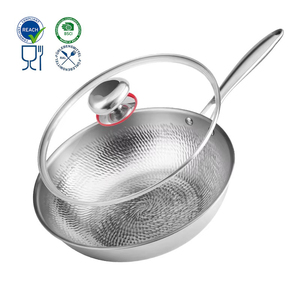
Tri-ply construction sandwiches an aluminum core between food-grade 304 stainless steel (interior) and magnetic 430 stainless steel (exterior). The laser-etched honeycomb pattern creates raised stainless steel ridges that protect the recessed non-stick surface from abrasion caused by stainless steel tongs, spatulas, and metal scrubbing pads.
Standard OEM production MOQs for customized logo laser etching and private-label packaging generally start at 1,000 to 3,000 units per SKU. Custom tooling or bespoke geometric modifications require 20 to 30 days for die development, followed by standard mass production lead times of 25 to 35 days.
Yes. All 304 and 316 grade stainless steel tongs, solid metal locking mechanisms, and tri-ply cookware items manufactured by Adil Stainless Steel are 100% commercial dishwasher safe, remaining immune to chemical clouding, rusting, or spring degradation when exposed to industrial alkaline detergents.
We employ low-carbon steel variants (such as 304L/316L) and utilize automated argon-shielded TIG laser spot welding for joint assembly. This precise thermal control prevents chromium carbide precipitation along grain boundaries, eliminating the risk of intergranular weld decay.
Absolutely. Our packaging engineering division designs full-color retail gift packaging, blister packs, and reinforced 5-ply corrugated export cartons tested to ISTA 1A drop-test standards to ensure zero product deformation during long-distance ocean transit and eCommerce order fulfillment.
Partner with a Trusted CE Certified Stainless Steel Manufacturer
Streamline your global supply chain with factory-direct pricing, certified 304/316 metallurgy, and comprehensive OEM support. Contact our export sales engineering team for instant quotes, sample kits, and technical catalog requests.