Featured Industrial & Commercial Cookware Collections
Explore our precision-engineered stainless steel woks, stock pots, and multi-layer frying pans tailored for heavy-duty commercial kitchens, retail brands, and global OEM buyers.
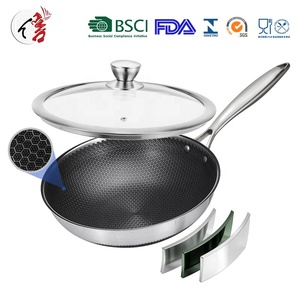
304 Thickened Tri-ply Stainless Steel Honeycomb Wok Non-Stick Household Pan Universal for Induction Cooker & Gas Stove
Contact Us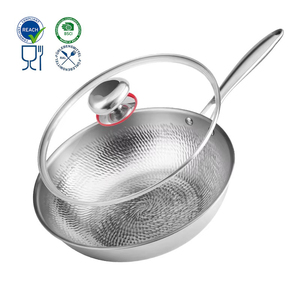
TriPly Stainless Steel Titanium Non Stick Fry Wok Pan Non-stick Induction Hammered Titanium Stainless Steel Wok with Glass Lid
Contact Us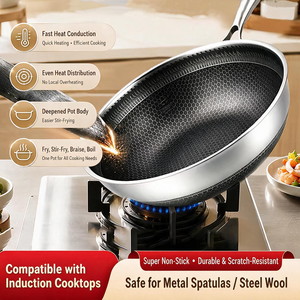
High-quality Non-stick Stainless Steel 304/316 Wok with Glass Cover 18L Capacity Gas & Induction Compatible Cookware Set
Contact Us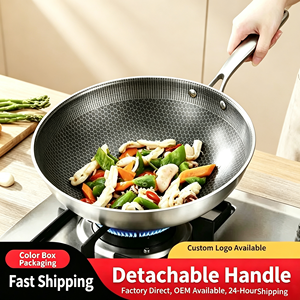
Even Heating Honeycomb Wok Pan 30/32/34cm Riveted Handle Stainless Steel Skillet for Gas Induction Stove
Contact Us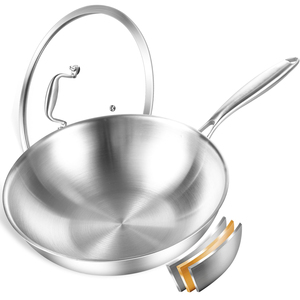
Good Quality Tri-Ply Stainless Steel Wok Durable Cookware Non-Stick Frying Pan for Commercial & Household Cooking
Contact Us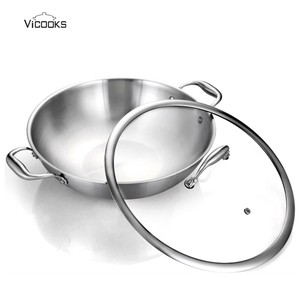
Triply Stainless Steel Woks Stir-Fry Pan with Helpers Handles Induction Compatible Wok for High Thermal Demand Household
Contact Us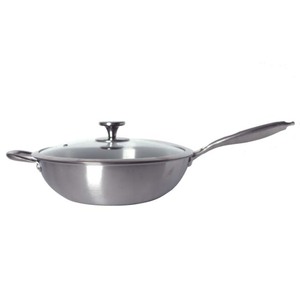
High Quality 304 Stainless Steel Honeycomb Wok Stirfry Pan Tempered Glass Lid Encapsulated Induction Bottom
Contact Us
Premium Thick Bottom 316 Stainless Steel Double Sided Non-Stick Flat Bottom Wok Honeycomb Design with Glass Lid
Contact UsNavigating Industrial Stainless Steel Cookware Procurement in 2025
In the rapidly evolving landscape of commercial catering, industrial food processing, and high-end retail cookware distribution, the demand for enterprise-grade stainless steel cooking pots has reached unprecedented technical heights. B2B buyers, institutional procurement managers, and private-label brand owners are no longer merely comparing unit costs; they are evaluating complex metallurgical specifications, thermal distribution kinetics, multi-layer cladding integrity, and long-term total cost of ownership (TCO).
As global market regulatory frameworks tighten around food contact materials (FCM)—specifically regarding heavy metal leaching, PFOA/PFAS chemical restrictions, and energy efficiency standards—sourcing from premier manufacturing ecosystems in China and global specialized hubs like Gujranwala has become a strategic imperative. This whitepaper serves as an authoritative industry guide designed to provide decision-makers with the technical information gain necessary to select, inspect, and procure top-tier industrial stainless steel cooking pots, stock pots, and tri-ply woks.
1. Metallurgical Analysis: SUS304 vs. SUS316 vs. Tri-Ply Clad Alloys
The structural performance of commercial stainless steel cookware depends fundamental on chemical alloy composition and structural bonding methods. Industrial cooking vessels operate under intense thermal stress, exposure to high-salinity organic acids, and continuous mechanical scraping. Selecting the appropriate alloy tier directly determines vessel longevity and sanitary safety.
| Material Metric / Parameter | SUS304 (18/8 Austenitic) | SUS316 (18/10 Marine/Medical) | Tri-Ply Clad (SS430 + Al Core + SS304/316) |
|---|---|---|---|
| Chromium / Nickel Content | 18% Cr / 8% Ni | 18% Cr / 10% Ni + 2% Molybdenum | Outer: 18% Cr (Ferritic) / Inner: 18/8 or 18/10 |
| Pitting & Acid Resistance | High (Standard Commercial) | Exceptional (High Chloride/Salinity) | High to Superior (Depending on Interior Layer) |
| Thermal Conductivity (W/m·K) | ~16.2 (Slower Heat Spread) | ~16.3 (Slower Heat Spread) | ~150–210 (Ultra-Fast Core Heat Transfer) |
| Induction Compatibility | Requires Encapsulated Base | Requires Encapsulated Base | Native Direct Induction (Outer SS430 Layer) |
| Delamination Resistance | Solid Single Plate (N/A) | Solid Single Plate (N/A) | High Pressure Thermo-Bonded (>350 MPa) |
| Recommended Commercial Use | Standard Stock Pots, Steamers | Heavy Acidic Sauces, Marine Catering | High-Heat Stir Fry, Sear Pans, Tri-Ply Woks |
While single-ply SUS304 (18/8 grade) remains the industry workhorse for deep stock pots due to its balance of tensile strength and cost efficiency, high-performance cooking demands composite material science. The introduction of Tri-Ply Cladding—incorporating a pure aluminum (AL1050) or copper core sandwiched between an exterior magnetic stainless steel (SUS430) layer and an interior food-grade austenitic layer (SUS304/316)—solves the inherent low thermal conductivity of solid stainless steel. This multi-ply structure eliminates scorching hot-spots, reduces kitchen energy consumption by up to 30%, and ensures rapid thermal response required by professional chefs.
Furthermore, for specialized industrial applications involving high-salt broths or acidic reductions, SUS316 stainless steel enriched with 2% Molybdenum provides critical resistance against chloride pitting corrosion, extending vessel lifespan by over 200% compared to conventional 201-grade budget alternatives.
2. Manufacturing Excellence: Enterprise Capabilities & Quality Assurance
Leading Chinese cookware manufacturing clusters, together with integrated production centers such as Gujranwala, employ state-of-the-art hydraulic draw-forming, automatic laser welding, and robotic surface finishing technologies. Evaluating a manufacturer’s production infrastructure is critical for institutional buyers seeking long-term B2B partnerships.
Precision Deep-Drawing
Utilizing 1200-ton to 2500-ton hydraulic presses to form seamless deep-drawn pot bodies up to 100-liter capacities without structural stress fractures or wall thinning.
Laser-Etched Honeycomb
Advanced German laser engraving creates a raised micro-structure honeycomb steel grid over non-stick matrix, protecting coatings from metal spatula abrasion.
72-Hour Salt Spray Testing
Rigorous laboratory quality control protocols subjecting raw stainless steel and welded joints to continuous neutral salt spray chamber testing to guarantee zero rusting.
Our partner facilities operate under strict ISO 9001:2015 Quality Management Systems. Every batch of industrial cookware undergoes comprehensive physical and chemical verification, including chemical spectrometry to confirm precise nickel/chromium concentration, hydrostatic pressure testing on handles, and thermal shock resistance trials up to 400°C. Heavy-duty riveted handles, reinforced impact-bonded capsular bases, and spot-welded hollow handles are engineered to survive thousands of hours of intense commercial operation.
Market Intelligence 2025–20303. Global Sourcing Trends & Industrial Cookware Innovation
The commercial kitchen hardware sector is experiencing a paradigm shift driven by technological advances and sustainability mandates. B2B buyers must align their procurement strategies with four key emerging industry trends:
- 1. Full Induction Compatibility & Energy Efficiency: As commercial kitchens transition from open gas flames to high-efficiency induction ranges, multi-layer magnetic capsular bases and full-body magnetic tri-ply woks are becoming baseline mandatory specifications. Modern impact-bonding technology eliminates air gaps between base layers, maximizing energy conversion rates up to 92%.
- 2. Transition to PFOA/PFAS-Free Advanced Coatings: Global environmental regulations (including EU REACH and US EPA directives) are driving the phase-out of traditional fluoropolymer coatings. The market is shifting heavily toward chemical-free micro-etched honeycomb stainless steel surfaces, plasma-sprayed ceramic matrices, and titanium-infused multi-layer physical armor.
- 3. Modular & Stackable Space-Saving Designs: Urban commercial kitchens and cloud kitchens require optimized storage footprint. Manufacturers are developing standardized nesting stock pots, detachable handle mechanisms, and universal steam-insert combinations.
- 4. Traceable Raw Materials & Sustainable Metallurgy: Enterprise buyers are increasingly demanding recycled content certification (SCS Certified Recycled Content) and low-carbon steel mill sourcing documentation to fulfill corporate ESG obligations.
4. Frequently Asked Questions (FAQ) for Enterprise B2B Buyers
Below are expert technical answers to the most common questions encountered by global importers, wholesalers, and OEM procurement specialists when sourcing industrial stainless steel cookware from China and global manufacturing hubs.
What is the difference between impact-bonded and brazed encapsulation bases?
Impact bonding uses extreme mechanical press force (up to 3,000 tons) without solder to fuse the stainless steel base plate, aluminum disc, and pot body together. Brazing uses silver/copper solder. Impact bonding is vastly superior as it prevents thermal delamination, air pocket formation, and base detachment under continuous high-heat commercial use.
Why is 304 or 316 stainless steel preferred over 201 grade for commercial pots?
Grade 201 uses manganese substitution to lower nickel content, making it prone to rust, pitting, and chemical corrosion when exposed to salt, vinegar, or acidic food elements. Grades 304 (18/8) and 316 (18/10) contain high nickel and chromium levels, guaranteeing food safety compliance, long-term corrosion resistance, and regulatory approval in Western markets.
What are the typical Minimum Order Quantities (MOQs) for OEM/ODM orders?
Standard MOQ for factory-direct custom orders ranges between 500 to 1,000 sets per size for standard catalog items. For fully custom tooling, specialized logo stamping, or bespoke color box packaging, MOQs generally start at 1,000 to 2,000 pieces per SKU. Flexible mixed-container options are available for established buyers.
How does laser honeycomb technology improve non-stick durability?
Laser-etched honeycomb designs create elevated stainless steel ridges above the non-stick valleys. Metal utensils, turners, and whisks glide only over the tough stainless steel peaks, protecting the non-stick coating below from scratches, peeling, and mechanical degradation, extending pan service life by 3x to 5x.
Which international quality certifications should buyers inspect before ordering?
Key certifications include ISO 9001 (Quality Management), LFGB (German Food contact safety standard), FDA 21 CFR (US Food & Drug Administration), DGCCRF (French food safety), and CE/BSCI for ethical factory auditing. Always request recent third-party test reports (e.g., SGS, TÜV, Intertek) for heavy metal leaching tests.
What packaging and shipping precautions are taken for bulk ocean freight?
Industrial orders use heavy-duty 5-ply or 7-ply corrugated outer master cartons, anti-scratch polybags, molded corner protectors, and moisture-absorbing silica gel packs. Palletized loading (ISPM 15 heat-treated wooden pallets) with stretch-wrapping is standard for FCL and LCL shipments to prevent transit compression and moisture oxidation.
Partner with China's Premier Industrial Cookware Manufacturers
Looking to scale your OEM product line, streamline your supply chain, or request factory-direct quotations and custom sample prototypes? Contact our senior engineering and export sales specialists today.
Contact Us