Flagship Commercial & Household Deep Fry Cookware
Direct factory supply featuring heavy-gauge food-grade stainless steel, tri-ply cladding technology, and high thermal efficiency bottoms engineered for international cookware brands and distributors.
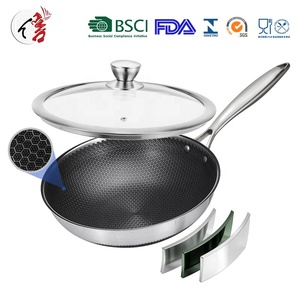
304 Thickened Tri-ply Stainless Steel Honeycomb Deep Fry Wok
- Laser-Etched Honeycomb Grid
- Gas & Induction Stove Compatible
- High-Temp Oil Splatter Shield
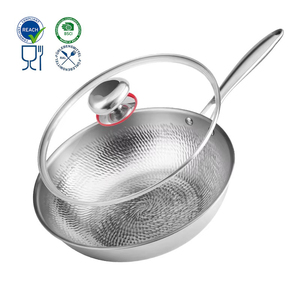
Tri-Ply Titanium Stainless Steel Deep Frying Pan with Glass Lid
- Hammered Titanium Composite
- Tempered Steam-Vented Glass Lid
- Ergonomic Stay-Cool Handle
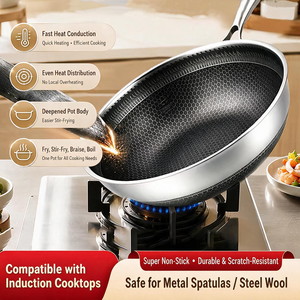
Commercial 304/316 Stainless Steel Deep Fry Stock Pot Set
- Grade 316 Marine Corrosion Resistant
- Heavy Commercial Capacity (Up to 18L)
- Dual Riveted Steel Side Handles
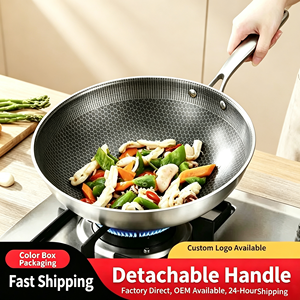
Precision Temp Honeycomb Deep Fryer Skillet (30/32/34cm)
- Solid Riveted Stainless Steel Handle
- Multi-Size OEM Diameter Options
- Rapid Heat Dispersion Base
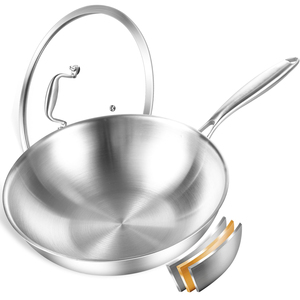
Heavy-Duty Tri-Ply Stainless Steel Deep Fryer Pan
- Scratch Resistant Polished Finish
- High-Density Aluminum Core
- Optimal Oil Thermal Retention
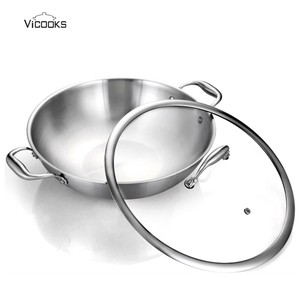
Triply Stainless Steel Deep Frying Wok with Helper Handle
- Helper Handle for Heavy Oil Lifts
- Encapsulated Induction Base
- Dishwasher Safe Mirror Polish
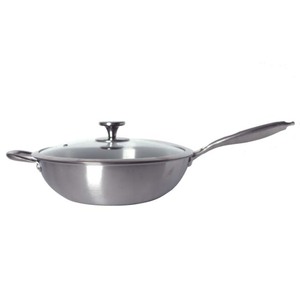
Premium 304 Stainless Steel Deep Fry Pot with Glass Lid
- Micro-Structure Laser Grid Coating
- Tempered Explosion-Proof Glass
- Universal Cooktop Compatibility

Double-Sided Non-Stick 316 Stainless Steel Flat Deep Fry Pot
- Medical-Grade 316 Stainless Core
- Double-Sided Micro-Texture
- Heavy Induction Base Core
The Engineering & Sourcing Landscape of Stainless Steel Deep Fry Pots
In high-volume commercial kitchens and modern culinary retail markets, stainless steel deep fry pots serve as vital operational assets. Unlike standard saucepans or superficial stir-fry woks, deep frying requires sustained oil immersion temperatures ranging between 175°C and 205°C (350°F–400°F). Maintaining thermal stability under heavy food-load introduction demands engineered metal structures with high heat capacity, rapid thermal recovery, and chemical resistance to fatty acid oxidation.
China's stainless steel cookware manufacturing ecosystem leads global exports, supplying over 68% of commercial and residential cookware worldwide. However, selecting a top-tier manufacturer requires navigating alloy metallurgy, thermal cladding technologies, and automated quality assurance standards. This document delivers empirical analysis, technical procurement parameters, and manufacturing benchmarks to guide global buyers through successful B2B sourcing strategies.
Metallurgical Analysis: Stainless Steel Alloy Grades in Deep Fry Pots
Understanding alloy specifications prevents premature corrosion, pitting from salt seasoning, and heat warping. The table below details the performance characteristics of stainless steel alloys utilized by leading Chinese OEMs:
| Alloy Grade | Chemical Composition (Cr / Ni / Mo) | Corrosion Resistance | Thermal Conductivity | Recommended Application |
|---|---|---|---|---|
| SUS 201 | 14-16% Cr / 1-3.5% Ni (High Mn) | Low (Prone to rust under saline/acidic heat) | 16.3 W/m·K | Budget promotional items (Not recommended for deep frying) |
| SUS 304 (18/8 - 18/10) | 18% Cr / 8-10% Ni | High (Resists organic acids & high-temp fats) | 16.2 W/m·K | Standard premium household & commercial deep fryers |
| SUS 316 (Marine Grade) | 16-18% Cr / 10-14% Ni / 2-3% Mo | Superior (Molybdenum prevents chloride pitting) | 15.9 W/m·K | Heavy commercial fryers, high-salinity seasoning cooking |
| SUS 430 (Ferritic) | 16-18% Cr / 0% Ni | Moderate (Magnetic nature) | 25.5 W/m·K | Outer magnetic base layer for induction cooktop compatibility |
Technological Trends Reshaping Deep Fry Pot Manufacturing
Advanced metallurgy, precision laser etching, and composite thermal engineering have transformed deep fryers from basic metal buckets into high-efficiency thermal cookware.
Multi-Ply Clad Metallurgy
Single-sheet stainless steel exhibits poor heat distribution, causing localized hotspots that burn oil. Leading China factories now press 3-ply (SS304 + Pure Aluminum + SS430) or 5-ply composite sheets. The internal aluminum core rapidly disperses thermal energy across the sidewalls, maintaining stable frying oil temperatures.
Laser-Etched Honeycomb Armor
Traditional non-stick coatings degrade under high-temperature deep frying. Modern ODM factories utilize micro-laser engraving to create a raised stainless steel honeycomb grid over PFOA-free non-stick channels. Metal wire skimmers and frying baskets rest on the elevated steel ridges without contacting the non-stick valleys.
Impact-Bonded Capsule Bottoms
For budget-to-mid tier deep fry stock pots, high-tonnage friction impact bonding fuses a 4mm-6mm aluminum disc encapsulated within a magnetic SUS430 stainless steel cap under 2,500 tons of hydraulic pressure. This eliminates air gaps and prevents bottom warping across induction, gas, and ceramic stovetops.

Advanced Geometric & Safety Innovations
Next-generation deep fry pot designs integrate tailored geometry to enhance safety and oil efficiency:
- Conical Recirculation Rim: Inwardly tapered upper walls force popping oil droplets to condense and flow back into the basin, reducing grease splatter by up to 45%.
- Integrated Oil Draining Racks: Removable wire racks mount directly onto the pot rim, allowing excess oil to drip back into the pot, maintaining food crispness while conserving frying oil.
- Cool-Touch Hollow Riveted Handles: Precision cast stainless steel handles with internal air channels prevent thermal conduction from the pot wall, ensuring safe handling without oven mitts.
- Oil Level Calibration Markings: Laser-etched interior volume lines (MIN/MAX oil levels) prevent hazardous oil overfill and boil-over fires.
Global B2B Purchasing Trends for Stainless Steel Cookware
Strategic insights for procurement managers, brand owners, and wholesale importers preparing for market shifts over the next decade.
1. Decarbonized & Recycled Steel (ESG Sourcing)
European and North American regulatory frameworks (such as CBAM) are pressing buyers to report carbon footprints. Top Chinese factories are transitioning to electric arc furnace (EAF) stainless steel utilizing up to 75% recycled scrap metal, drastically lowering Scope 3 emissions for OEM partners.
2. Smart Temperature Sensing Integration
Commercial end-users are demanding cookware that interfaces with smart induction hobs. Factory R&D teams are inserting calibrated bimetallic temperature gauge slots, probe ports, and thermal indicator rings into fry pot lids to ensure precise oil temperature control and prevent acrylamide formation.
3. Modular OEM/ODM Tooling Platforms
Rather than custom-crafting distinct pot body molds, buyers are adopting modular components—standardizing universal body deep draw shells while customizing handles, lid rim profiles, etching patterns, and retail packaging to accelerate time-to-market by 60%.
Why Partner with China's Premier Stainless Steel Manufacturers?
Our manufacturing infrastructure combines over 18 years of specialized metalworking expertise with automated production systems. From raw cold-rolled coil feeding to final mirror polishing, every process is governed by strict ISO quality controls.
10,000+ SKUs
Comprehensive Cookware Varieties
Zero Defect Quality
Spectrographic & Hydro Testing
ISO 9001:2015
Certified Global Compliance
Custom OEM/ODM
Rapid Mold Prototyping


Factory Verification & Quality Assurance Audit Protocol
Use this standardized technical checklist when evaluating Chinese deep fry pot suppliers during factory audits and pre-shipment inspections (PSI).
| Inspection Criteria | Technical Verification Method | Acceptable Standard (AQL 1.5/4.0) | Impact of Failure |
|---|---|---|---|
| Raw Material Alloy Integrity | X-Ray Fluorescence (XRF) Spectrometer Analysis | SUS304: Ni ≥ 8.0%, Cr ≥ 18.0%; SUS316: Mo ≥ 2.0% | Severe pitting corrosion; toxic leaching during high-temp frying |
| Impact Bonding Strength | Ultrasonic Flaw Detector & Thermal Shock Cycle Test (heated to 350°C and quenched in ice water) | Zero delamination, air void area < 0.5% of bottom surface | Encapsulated bottom detachment under heavy commercial heat |
| Salt Spray Corrosion Resistance | Neutral Salt Spray (NSS) Test per ISO 9227 (5% NaCl solution for 72 Hours) | Rating 9 or higher (zero red rust formation) | Surface rusting during ocean transit or high-salt culinary environments |
| Handle Rivet & Weld Torque | Tensile Pull Testing & Mechanical Torsion Test (Up to 100 kg pull force) | Zero deformation or weld joint separation | Dangerous handle failure when lifting hot frying oil |
| Bottom Flatness & Thermal Planar | Laser Dial Indicator Gauge across bottom axis | Concavity ≤ 0.3% of total bottom diameter | Poor induction coupling, uneven heating, burner rocking |
Frequently Asked Questions for Deep Fry Pot Procurement
Detailed answers addressing minimum order quantities, customization options, food safety certifications, and shipping logistics.
Partner with China's Premier Cookware Manufacturer
Elevate your brand's market standing with high-performance, certified stainless steel deep fry pots. Request a comprehensive catalog, factory quotation, or custom prototype sample today.
Send an Inquiry