Featured OEM Custom Cookware & Wok Collections
Precision-engineered stainless steel stockpots, pasta sets, and tri-ply honeycomb woks manufactured to international LFGB and FDA food-contact standards.
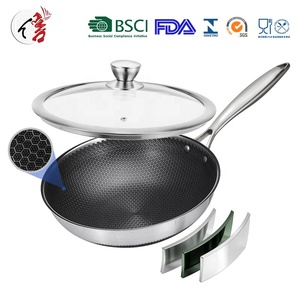
304 Thickened Tri-ply Stainless Steel Honeycomb Wok Non-Stick Household Pan Universal for Induction Cooker & Gas Stove
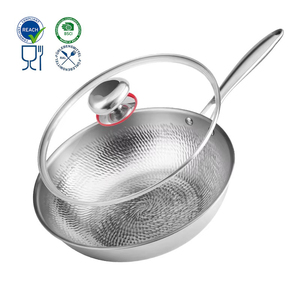
TriPly Stainless Steel Titanium Non Stick Fry Wok Pan Non-stick Induction Hammered Titanium Stainless Steel Wok with Glass Lid
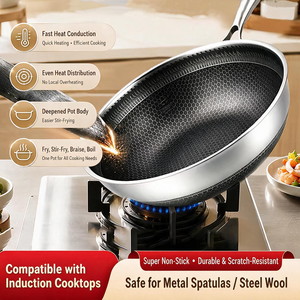
High-quality Non-stick Stainless Steel 304/316 Wok with Glass Cover 18L Capacity Gas & Induction Compatible Cookware Set
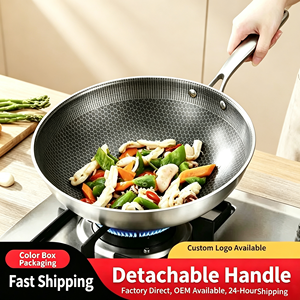
Even Heating Honeycomb Wok Pan 30/32/34cm Riveted Handle Stainless Steel Skillet for Gas Induction Stove
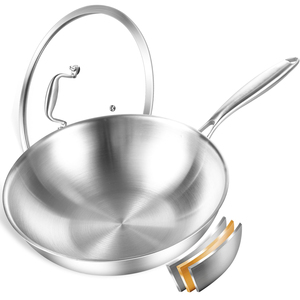
Good Quality Tri-Ply Stainless Steel Wok Durable Cookware Non-Stick Frying Pan for Cooking
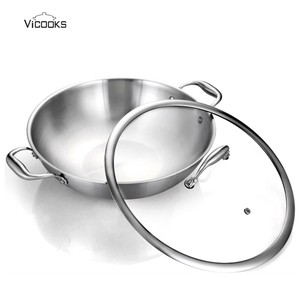
Triply Stainless Steel Woks Stir-Fry Pan with Helpers Induction Wok for Household
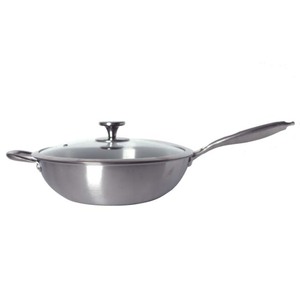
High Quality 304 Stainless Steel Honeycomb Wok Stirfry Pan Tempered Glass Lid Induction Bottom

Premium Thick Bottom 316 Stainless Steel Double Sided Non-Stick Flat Bottom Wok Honeycomb Design with Glass Lid for Home Use
The Metallurgy of Commercial Pasta Pots: OEM Customization Guide
An authoritative guide for global procurement directors, brand owners, and hospitality suppliers evaluating OEM stainless steel pasta pot manufacturing protocols.
304 vs 316 Stainless Steel Grade Selection
Selecting the optimal austenitic alloy is critical when engineering heavy-duty pasta boilers and stockpots. Standard culinary equipment uses SUS 304 (18/8 or 18/10 Stainless Steel), offering outstanding mechanical strength and resistance against general atmospheric oxidation. However, for commercial pasta cooking—where high concentrations of sodium chloride (salting water) and acidic tomato-based reductions are used continuously—leading OEM factories utilize SUS 316 grade steel.
SUS 316 contains 2% to 3% Molybdenum, dramatically increasing resistance to localized pitting and crevice corrosion under saline thermal loads. For high-frequency commercial kitchens, specifying 316 stainless steel for interior pot liners prolongs service lifecycle by up to 250%.
Encapsulated Thermal Bases & Cladding Technology
Stainless steel exhibits relatively poor thermal conductivity (approx. 15 W/m·K). To eliminate localized scorching and achieve rapid water boiling, OEM pasta pot factories engineer multi-layer encapsulated bases or full-body tri-ply clad composites.
Impact-Bonded Capsular Bottoms: A 4.0mm–6.0mm pure aluminum (AL 1050) disc is friction-bonded under 2,500-ton hydraulic pressure between the SUS 304 vessel body and a protective magnetic SUS 430 stainless steel exterior plate. This creates seamless edge-to-edge heat conduction for induction cooktops without air gaps.
Technical Specification Matrix: Cookware Material Construction
Use this quantitative engineering matrix when finalizing OEM product line specifications with factory tooling engineers.
| Construction Type | Core Thermal Layer | Corrosion Resistance | Induction Efficiency | Best Procurement Application |
|---|---|---|---|---|
| Single-Ply (Impact Base) | Aluminum Core Disc (4-6mm) | High (SUS 304 Interior) | 92% Efficiency Rating | Commercial Boiling Pots & High-Volume Catering |
| Tri-Ply Full Clad | Full Aluminum Sheet (1.5-2.5mm) | Superior (304 / 316 Interior) | 96% Efficiency Rating | Premium Retail Cookware & Specialty Pasta Sets |
| 5-Ply Heavy Commercial | Alu-Copper-Alu Multi-Core | Maximum (SUS 316 Acid Resistant) | 98% Rapid Response | Professional Chef Lines & Luxury OEM Brands |
| Etched Honeycomb Tri-Ply | Encapsulated AL Matrix | High (Non-Stick Laser Grid) | 94% Efficiency Rating | Dual Household & Commercial Non-Stick Woks |
OEM Manufacturing Workflow: Deep Drawing & Deep-Vessel Precision
Manufacturing tall, narrow-profile pasta pots and multi-tier steamer inserts requires advanced double-action hydraulic deep drawing technology. Unlike standard frying pans, pasta pots require deep draw ratios exceeding 1:2.5, demanding extreme ductility in raw metal blanks to prevent wall thinning or stress tearing.
Quality Assurance Benchmark: Professional OEM pasta pot manufacturing facilities implement ultrasonic wall-thickness scanning to ensure uniform wall integrity (minimum 0.8mm to 1.2mm nominal thickness) post-drawing, preventing thermal distortion under heavy usage.
1. Stamping & Blanking
High-precision cold-rolled stainless steel sheets are blanked into calculated disc geometries, treated with synthetic drawing lubricants.
2. Multi-Stage Hydraulic Draw
Hydraulic presses progressively form deep vessel profiles through multi-cavity dies, preserving material tensile equilibrium.
3. Surface Finishing & Riveting
Automatic multi-axis robotic polishers deliver mirror (8K) or satin brush finishes, followed by heavy-duty solid stainless rivet attachment.
Why Partner with Premier OEM Manufacturing Complexes?
Leveraging over 18 years of metalworking expertise from Pakistan's industrial manufacturing heartland in Gujranwala.
Vertically Integrated Production Facilities
Operating within Gujranwala—Pakistan’s renowned metal manufacturing cluster—our factory infrastructure spans deep-drawing presses, CNC machining, automated annealing ovens, electrostatic coating lines, and packaging automation. Vertical integration eliminates sub-contractor delays and maintains strict price stability for global B2B buyers.
Rigorously Tested Quality Assurance
Every production batch undergoes comprehensive laboratory verification: X-Ray Fluorescence (XRF) spectro-analysis for alloy composition, 24-hour neutral salt spray (NSS) testing for corrosion resistance, handle torque load testing, and hydrostatic pressure leak detection on lid fitments.
Custom OEM Branding & Bespoke Tooling
From private-label laser-etched logos and custom color silicone handle sleeves to proprietary bottom stampings and bespoke retail color boxes, our engineering team assists brand managers from CAD concept models through rapid rapid 3D sample prototyping.
Future Trends in OEM Cookware Procurement (2025–2030)
Key technology shifts, environmental compliance standards, and market demands reshaping global stainless steel supply chains.
1. Decarbonization & EU CBAM Compliance
European importers and North American retail chains are aggressively auditing the carbon footprint of imported steel products. The implementation of the EU Carbon Border Adjustment Mechanism (CBAM) requires OEM factories to provide certified energy expenditure reports per unit manufactured.
Leading factories are transitioning to solar-assisted electric annealing furnaces and scrap-recycled stainless steel coils (containing up to 75% recycled scrap metal content) to meet stringent corporate scope 3 emission targets.
2. Titanium-Reinforced Plasma Micro-Structure Surfaces
Consumer preferences are rapidly shifting away from traditional PTFE (Teflon) coatings due to global PFAS regulations ("forever chemicals"). OEM cookware factories are pioneering physical vapor deposition (PVD) titanium bonding and laser micro-etched honeycomb matrices.
By elevating metal ridges above a recessed non-stick valley, cooks achieve metal-utensil safe searing with non-stick convenience, extending pan lifespan by over 500% compared to traditional non-stick pans.
3. Smart-Induction Optimization & Integrated Thermal Sensors
As commercial kitchens shift from natural gas to commercial high-power induction hobs, pasta pots require specialized ferromagnetic base alloys (such as ferritic AISI 441 or high-grade 430 stainless steel).
Upcoming OEM lines feature encapsulated cavity pockets designed for Bluetooth thermal sensor pods, allowing commercial kitchen management systems to monitor pasta cooking temperatures down to 0.5°C accuracy.
4. Modular Multi-Functional Strainer Systems
Supply chain space efficiency (CBM minimization) is paramount for international shipping profitability. Modern OEM pasta pot designs prioritize modular nested insert baskets.
By designing 4-in-1 nested systems—consisting of a stockpot, deep pasta colander insert, steamer tray, and tight-fitting glass lid—importers reduce volumetric shipping costs per unit by 35% while commanding higher retail price points.
Frequently Asked Questions (FAQ) for B2B Importers
Detailed answers to primary technical, logistical, and commercial inquiries regarding OEM pasta pot factory production.
Ready to Partner with a Leading OEM Cookware Manufacturer?
Consult with our engineering team today for technical drawings, pricing quotes, material samples, or factory site audit arrangements. We deliver reliable B2B cookware solutions globally.