OEM/ODM Stainless Steel Kitchen Tools Factories & Factory Directory

Technical Engineering Standard, Food-Safety Compliance (FDA/LFGB), Vertical Manufacturing Capabilities, and Global Procurement Strategy for B2B Enterprise Buyers.

Direct Factory Catalog

Featured OEM/ODM Stainless Steel Kitchen Tools

Engineered for commercial strength, precision cutting, non-toxic food contact, and high-volume wholesale export. Contact our engineering team for custom private-label manufacturing.

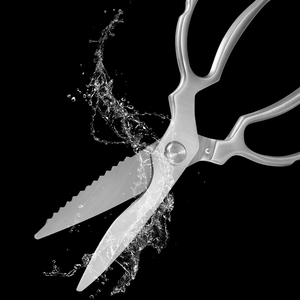
FOCUS YJ Japanese Style Herb Kitchen Scissors Heavy Duty Stainless Steel Blade

FOCUS YJ Japanese Style Herb Kitchen Scissors Multi-Blade Tool

Heavy-duty 420J2 martensitic stainless steel multi-blade shears designed for high-efficiency herb preparation. Anti-corrosive, ergonomic TPR grip with detachable pivot mechanism for thorough sanitation.

Contact Us
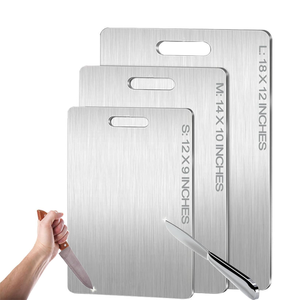
Food Grade Double Sided Titanium & 304 Stainless Steel Cutting Board

Double-Sided Titanium & 304 Stainless Steel Chopping Board

Ultra-durable, non-porous metal cutting board combining medical-grade titanium plating with thickened 304 stainless steel. Zero microplastic shed, antibacterial surface, easy wash for commercial prep.

Contact Us
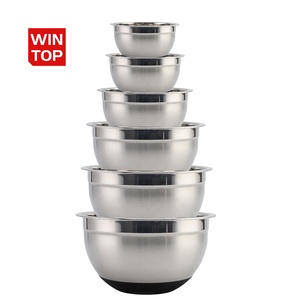
Stainless Steel Mixing Bowls Non Slip Nesting Set

Nesting Stainless Steel Mixing Bowls Set with Non-Slip Base

Heavy-gauge SUS304 food-grade whisking and prep bowl collection. Features laser-etched interior measurement scales, stackable space-saving geometry, and molded anti-skid silicone bottoms.

Contact Us
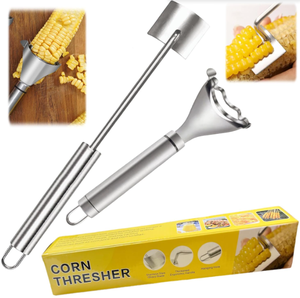
2-Piece Stainless Steel Corn Scraper & Kernel Remover Peeler

2-Piece Stainless Steel Corn Scraper & Kernel Remover Peeler

Precision-curved serrated 304 stainless steel stripper. Ergonomic lever mechanics ensure fast corn cob stripping without kernel damage. Ideal for industrial catering and retail home tool kits.

Contact Us
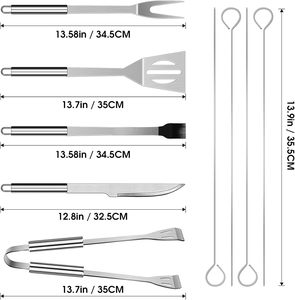
Professional Barbecue BBQ Utensil Set Stainless Steel Accessories

Professional Stainless Steel BBQ Utensil Set with Grill Bag

Commercial-grade 1.5mm thick stainless steel barbecue accessories. Complete with heat-isolated handles, heavy-duty tongs, spatula, skewers, and rugged 600D carrying case. EU warehouse stock available.

Contact Us
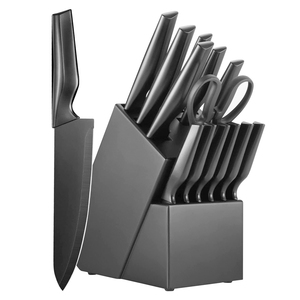
14 Piece Built-in Sharpener Kitchen Knife Set with Block

14-Piece Kitchen Knife Set with Built-in Sharpener Block

Full-tang high-carbon stainless steel forged knife set. Includes chef, slicing, bread, and utility knives fitted inside a hardwood storage block featuring integrated ceramic honing slots.

Contact Us
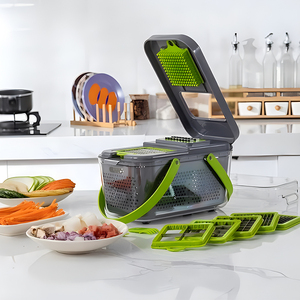
14-in-1 Stainless Steel Food Cutter & Vegetable Slicer

14-in-1 Factory Wholesale Stainless Steel Vegetable Food Cutter

Multifunctional mandoline dicer and grater system with 14 interchangeable rust-resistant stainless steel blade inserts. Reinforced food-grade plastic frame with anti-slip rubber feet.

Contact Us
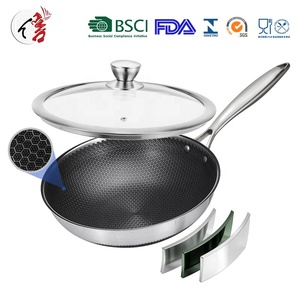
304 Thickened Tri-ply Stainless Steel Honeycomb Wok Pan

304 Tri-Ply Stainless Steel Honeycomb Non-Stick Wok Pan

Precision laser-etched micro-honeycomb mesh pan over tri-ply multi-clad (304 SS + Aluminum Core + 430 Magnetic Base). Scratch-resistant, spatula-safe, compatible with induction and gas stoves.

Contact Us
Industry Whitepaper Report

Navigating Stainless Steel Kitchen Tools Factory Selection

An engineering breakdown of material metallurgy, production line automation, passivisation standards, and cost optimization when sourcing OEM/ODM kitchenware globally.

The Metallurgical Reality: Choosing Between Austenitic, Martensitic, and Ferritic Alloys

When international procurement teams evaluate an OEM/ODM Stainless Steel Kitchen Tools Factory, the primary structural vulnerability in product performance stems from incorrect alloy specification. Stainless steel is not a single uniform material; rather, it is a broad family of iron-chromium-nickel alloys tailored for specific mechanical and environmental demands.

In high-volume kitchen utensil manufacturing, selecting the optimal grade dictates corrosion resistance, edge retention, yield strength, and food safety compliance under international frameworks such as US FDA 21 CFR, EU 1935/2004, and German LFGB.

  • Austenitic 304 Grade (18/8 & 18/10 Stainless Steel): Containing 18% Chromium and 8–10% Nickel, Grade 304 offers exceptional resistance to organic acids, high-salinity wash environments, and thermal shock. It is the gold standard for deep-drawn mixing bowls, cutting boards, food cutters, and cookware inner layers.
  • Martensitic 420J2 Grade Knife Steel: High carbon content combined with 12-14% Chromium allows 420J2 to undergo heat treatment, quenching, and tempering to achieve Rockwell hardness ratings of HRC 52–56. This structural rigidity is critical for heavy-duty kitchen scissors, vegetable peelers, and knife blades.
  • Ferritic 430 Grade (18/0 Stainless Steel): Nickel-free magnetic steel. While exhibiting lower corrosion resistance in acidic liquid contact than 304, 430 stainless steel features superior magnetic permeability, making it indispensable as the exterior bottom layer in tri-ply cookware for induction cooktop compatibility.
Steel Grade Alloy Composition Hardness (HRC) Corrosion Resistance Magnetic Property Optimal Application in Kitchen Tools
SUS304 (18/8) 18% Cr, 8% Ni, Balance Fe 15 - 20 (Work hardened) Exceptional Non-Magnetic Mixing Bowls, Cutting Boards, Corn Scrapers, Utensils
SUS316 (18/10) 18% Cr, 10% Ni, 2% Mo 20 - 25 Superior (Marine Grade) Non-Magnetic Medical-grade preparation tools, high-acid commercial vats
420J2 / 1.4021 13% Cr, 0.26-0.35% C 52 - 56 (Heat Treated) Moderate / Blade Grade Magnetic Herb Scissors, 14-Piece Knife Sets, Mandoline Blades
SUS430 (18/0) 16-18% Cr, <0.75% Ni 20 - 25 Standard domestic Strongly Magnetic Induction Base Cladding, Tool Handles, Oxford Bag BBQ Frames
Factory Profile & Manufacturing Muscle

Adil Stainless Steel: 18+ Years of Manufacturing Leadership

Operating out of Gujranwala, Pakistan—the country's premier metallurgy industrial region—Adil Stainless Steel combines low-cost structural manufacturing with rigorous ISO 9001 quality controls.

2006
Year Established
10,000+
Tool SKUs & Molds
10+
Export Destinations
ISO 9001
Certified Quality Lab
🏭

Vertically Integrated Production

From raw coils slitting and high-tonnage deep-draw stamping to ultrasonic solvent cleaning, robotic mirror polishing, and automated PVD titanium vapor coating—our Gujranwala facility controls 100% of the supply chain without sub-contracting risk.

🔬

In-House Metallurgy & QC Testing

Our laboratory performs continuous X-Ray Fluorescence (XRF) alloy spectral analysis on incoming raw sheet metal. Finished tools undergo 72-hour salt-spray corrosion chamber tests, drop testing, dishwashing fatigue cycles, and blade hardness checks.

🛡️

Custom OEM/ODM Rapid Tooling

Equipped with 5-axis CNC machining, EDM wire cutting, and CAD simulation software, our engineering team translates client conceptual designs into physical sample tools within 14 business days, reducing time-to-market by over 40%.

🌐

Global Tariff & Logistics Flexibility

Exporting directly to North America, the European Union, the UK, Middle East, and Africa. Manufacturing from Pakistan affords buyers unique preferential trade tariffs, duty exemptions, and resilient supply chain diversification outside traditional East Asian hubs.

🌿

Ecological Chemical Passivation

We utilize advanced citric-acid ultrasonic passivisation systems that remove free iron particles from tool surfaces without generating hazardous nitric fumes, delivering ultra-clean, corrosion-proof kitchen tools compliant with European REACH norms.

📦

Omnichannel Packaging Engineering

Full OEM packaging support: custom color gift boxes, mail-order drop-ship crush-proof packaging, blister packaging, and barcode integration optimized for Amazon FBA fulfillment centers and global big-box retail shelf displays.

Strategic Procurement Horizon

Future Procurement & Development Trends in Kitchen Tools

Key technology shifts and consumer behavior drivers shaping the next generation of stainless steel kitchen tool manufacturing over the next five to ten years.

🌱

1. The Anti-Microplastic Movement & Titanium Hybrids

Global consumers and regulatory authorities are accelerating the phase-out of plastic chopping boards, nylon spatulas, and Teflon-coated tools due to microplastic shedding and PFAS bioaccumulation.

Leading OEM factories are pivoting toward double-sided metal cutting boards combining 304 Stainless Steel with Medical-Grade Titanium Layering. This provides a self-sanitizing, knife-sparing surface that withstands decades of heavy commercial preparation without degrading.

🍳

2. Tri-Ply Multi-Cladding & Laser Honeycomb Surfaces

Traditional single-ply cookware and stamped woks suffer from localized hot spots, scorching food and wasting energy. Modern industrial production favors full-body tri-ply clad metals: an interior layer of food-grade 304 SS, a heavy pure aluminum core for rapid heat distribution, and an exterior magnetic 430 SS base.

Furthermore, laser-etched stainless steel honeycomb matrices physically protect non-stick coatings from metal spatulas, bridging the gap between non-stick convenience and stainless steel longevity.

🎨

3. Advanced PVD Coating & Physical Surface Finishing

B2B buyers are demanding high-aesthetic tools that appeal to luxury domestic kitchens and high-end restaurant displays. Physical Vapor Deposition (PVD) titanium plating applies molecular-level ceramic coatings in matte black, champagne rose gold, and deep bronze.

Unlike organic painted coatings, vacuum-deposited PVD layers do not chip, peel, or leach toxic organic compounds when exposed to acidic foods or high-temperature dishwashing.

🔪

4. Integrated Tool Sharpening & Ergonomic Load Balance

Functional integration is key to modern product development. As seen in the popularity of 14-piece knife sets featuring ceramic sharpening wheels built into hardwood storage blocks, consumers expect self-maintaining tool ecosystems.

Ergonomically balanced, full-tang handles crafted with thermoplastic rubber (TPR) over-molding provide fatigue-free handling during multi-hour commercial prep sessions.

5. Automation in Fine-Blanking & Automated Polishing

Robotic fine-blanking presses and 6-axis robotic polishing cells allow stainless steel factories to achieve micro-meter dimensional tolerances and uniform mirror finishes on complex items like herb scissors, corn scrapers, and multi-cutters.

This automation eliminates human variance, lowers per-unit labor costs, and guarantees that batch item #1,000 matches batch item #100,000 flawlessly.

📈

6. Agile Sourcing & Hedging Raw Material Volatility

Fluctuations in Nickel (LME) and Chromium raw material markets necessitate strategic manufacturing partnerships. Enterprise buyers are shifting toward factories capable of offering fixed-price index contracts and flexible container consolidation.

Consolidating multi-tool categories—from mixing bowls to knife blocks—into single shipping containers dramatically reduces freight footprint and import customs clearing overhead.

Technical Sourcing FAQ

Frequently Asked Procurement Questions

Direct engineering answers regarding alloy selection, minimum order quantities, factory quality audits, passivisation, and international compliance.

Q: How do I verify whether a factory is using authentic SUS304 versus lower grade 201 stainless steel?

Grade 201 replaces expensive Nickel with Manganese to reduce costs, rendering it highly susceptible to pitting corrosion in dishwasher environments. To ensure authenticity, require the factory to provide a Material Test Report (MTR) with heat number trace. On-site, utilize X-Ray Fluorescence (XRF) spectro-analyzers to verify Nickel content is at least 8.0% and Chromium is at least 17.5%. Chemical spot-test reagents will also immediately turn red on 201 steel due to manganese content, remaining clear on genuine 304.

Q: What is chemical passivisation, and why is it mandatory for exported kitchen tools?

During mechanical stamping, cutting, and grinding, microscopic particles of free iron from steel tooling embed into the stainless tool's surface. If left untreated, these particles oxidize into rust spots when exposed to moisture. Passivisation involves immersing the cleaned tools in a warm citric or nitric acid bath, which selectively dissolves free surface iron while leaving Chromium intact to form a uniform protective Chromium Oxide (Cr₂O₃) passive layer.

Q: What are the typical OEM/ODM custom branding and sample lead times at Adil Stainless Steel?

For existing tooling (laser etching logos, custom color handles, or specialized packaging), sample turnaround is 3 to 5 business days. For full custom ODM projects requiring unique forging dies or plastic injection molds, 3D CAD modeling takes 48 hours, rapid prototype 3D metal printing takes 5 days, and final hardened production steel molds are completed within 14 to 21 days.

Q: What Acceptance Quality Limit (AQL) standards are applied during pre-shipment inspections?

Standard production runs are evaluated according to ISO 2859-1 (ANSI/ASQ Z1.4) single sampling plans. Our default quality benchmark is Level II Normal Inspection with an AQL threshold of 0 Critical Defects, 1.5 Major Defects (e.g., dimensional deviation, weld flaw, sharp burr), and 4.0 Minor Defects (e.g., minor surface scuffing). Third-party inspection agencies (SGS, TUV, Bureau Veritas) are welcomed at our facility prior to balance payment.

Q: How do titanium metal chopping boards compare to traditional wood or plastic boards?

Plastic cutting boards suffer from deep knife gouges that harbor E. coli bacteria and shed thousands of microplastic fibers into food during chopping. Wood boards absorb moisture, warp, and crack over time. Double-sided titanium and 304 stainless steel boards provide a non-porous, hydrophobic surface that wipes clean instantly, prevents cross-contamination between raw meat and vegetables, and lasts indefinitely without warping or mold growth.

Q: Are your OEM stainless steel tools compliant with European LFGB and US FDA food contact regulations?

Yes. All product categories—including our 14-in-1 food cutters, mixing bowls, and tri-ply honeycomb woks—undergo heavy metal leaching testing (lead, cadmium, extractable nickel, chromium, and manganese) under acid simulation conditions (3% acetic acid at 100°C for 2 hours) to certify total compliance with FDA 21 CFR 175.300 and German LFGB Section 30 & 31 standard specifications.

Q: What minimum order quantities (MOQs) are required for custom branded kitchen tools?

Standard inventory tools with custom laser-engraved logos feature low entry MOQs starting at 500 units per item. Full custom color-box packaging or specialized PVD surface coatings require an MOQ of 1,000 to 2,000 units depending on the tool size. Mixed-SKU container consolidation is available across our entire catalog to help buyers optimize cash flow and inventory velocity.

Q: What logistics and Incoterms shipping options do you support for international importers?

We provide comprehensive Incoterms including EXW, FOB (Karachi Port), CFR, CIF, and DDP (Delivered Duty Paid directly to client warehouses across North America and Europe). Our logistics department handles full export documentation, Certificate of Origin (COO), Form E, bill of lading clearance, and containerized loading supervision.
Partner with a Trusted Stainless Steel Tool Factory

Contact our engineering and sales department in Gujranwala, Pakistan today. Request detailed technical datasheets, factory audit reports, sample kits, or customized B2B quotation pricing.

Contact Us