High-Demand Custom Cookware Collections
Explore our top-tier stainless steel cookware engineered for institutional distributors, private labels, and commercial hospitality chains. Request complete OEM technical datasheets and tier-pricing directly.
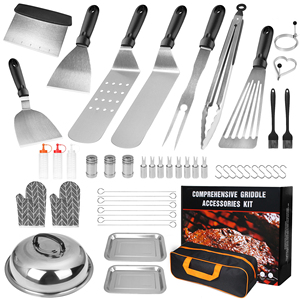
50 Pcs Stainless Steel Teppanyaki Outdoor Accessories Set
Feature: Magnifying Spatula Included
Application: Commercial BBQ & Camping
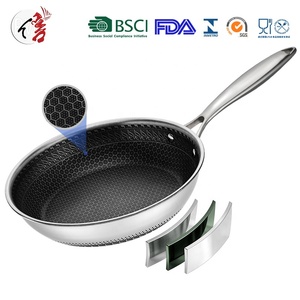
Custom 304 Tri-Ply Honeycomb Nonstick Skillet
Coating: Laser Etched Micro-Mesh
Logo: Custom Bottom Laser Engraving
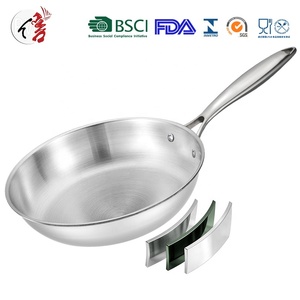
Professional Heavy-Duty Tri-Ply Stainless Steel Skillet
Base: All-Stove & Induction Compatible
Finish: Premium Mirror Polished Outer
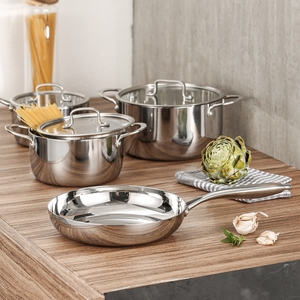
1-7 Pcs Modular SUS304 Encapsulated Base Pot Set
Capacity: 1.5L - 6.5L Multi-Size Options
OEM: Custom Color Box & Stamped Logo
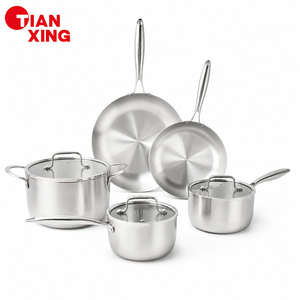
Commercial Multi-Ply Fully Clad Culinary Pot Series
Heat Distribution: Edge-to-Edge Thermal Core
Rivet: Heavy Stainless Riveted Joints
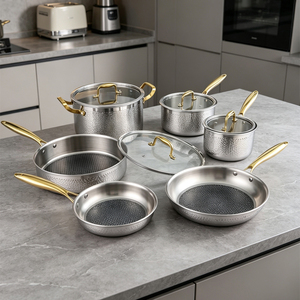
Bespoke 3/5-Ply Honeycomb Nonstick Stock Pot Collection
Scratch Resistance: Metal Utensil Safe
Sizing: 16cm to 32cm Diameters
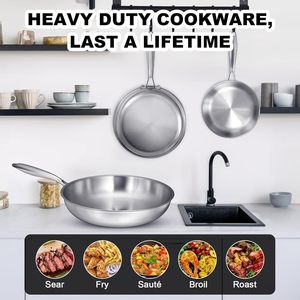
Professional 8/10/12-Inch Tri-Ply Non-Stick Skillet
Handle Type: Stay-Cool Hollow Handle
Base: Impact-Bonded Thermal Disc
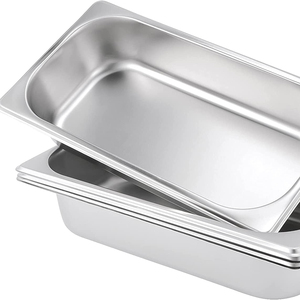
Heavy-Gauge Gastronorm GN Pans & Food Storage Containers
Depth Options: 20mm to 200mm
Accessories: Lids with Silicone Seals
Navigating Global Stainless Steel Cookware Sourcing in 2025
The commercial and retail stainless steel cookware industry is undergoing a structural transition driven by consumer demand for non-toxic materials, high thermal efficiency, and long-term durability. B2B buyers—ranging from regional brand owners and department store procurement managers to commercial hospitality suppliers—face distinct challenges: balancing raw material costs, securing custom logo private-labeling, ensuring strict food-safety compliance (LFGB, FDA, DGCCRF), and mitigating supply chain bottlenecks.
To gain a competitive edge, volume purchasers must evaluate suppliers beyond simple unit pricing. Key parameters now center on metallurgical purity (SUS304 vs. SUS316), cladding bond integrity (3-ply vs. 5-ply roll bonding), and precision manufacturing processes like laser-etched micro-comb nonstick structures and impact-bonded encapsulated bases.
This whitepaper serves as an authoritative B2B procurement matrix, analyzing top-tier stainless steel cookware factories, structural technology shifts, OEM logo application methodologies, and risk-reduction strategies for global procurement officers.
B2B Manufacturing Evaluation Matrix
A comparative analysis of key performance metrics across leading custom stainless steel cookware supplier archetypes.
| Evaluation Parameter | Tier 1 OEM Mass Production Hubs | Specialized Tri-Ply Clad Factories | Adil Stainless Steel (Integrated Hub) |
|---|---|---|---|
| Primary Material Focus | Standard SUS201 / SUS304 Alloys | High-End Tri-Ply (304-Alu-430) | Certified SUS304 / SUS316 / Tri-Ply Clad |
| Custom Logo Methods | Surface Ink Printing / Stamping | Laser Etching & Bottom Embossing | Full OEM Suite (Laser, Stamping, Glass Etch) |
| Minimum Order Quantity (MOQ) | High (2,000+ sets per SKU) | Medium (1,000+ sets) | Flexible B2B Tiering (500 - 1,000 sets) |
| Food Safety Compliance | Standard National Testing | LFGB & FDA Certified | Full Compliance: FDA, LFGB, ISO 9001, EU Standards |
| Thermal Base Technology | Single Plate / Encapsulated Base | Edge-to-Edge Clad Roll Bonding | Impact-Bonded & Multi-Ply Clad Options |
| Average Lead Time | 45 - 60 Days | 35 - 50 Days | 25 - 40 Days (Optimized Logistics) |
Future Procurement Trends in Cookware Manufacturing
Insights into regulatory evolution, supply chain restructuring, and material science shaping procurement over the next decade.
1. Transition to PTFE/PFOA-Free Hybrid Technologies
Global environmental directives and shifting health awareness are driving buyers away from traditional chemical non-stick coatings. Future procurement is heavily leaning toward micro-embossed honeycomb stainless steel structures. These designs elevate food above the cooking surface using raised stainless steel grids, combining physical non-stick properties with extreme scratch resistance and zero chemical breakdown.
2. Multi-Ply Edge-to-Edge Cladding
Traditional disc-bottom cookware (where a heavy aluminum slab is impact-bonded only to the base) is losing market share in high-end segments to full body Tri-Ply (3-Ply) and 5-Ply cladding. By bonding 18/10 stainless steel, high-purity aluminum cores, and magnetic stainless steel across the entire body wall, heat transfer becomes completely uniform, eliminating scorching and lowering energy consumption by up to 30%.
3. Supply Chain Resiliency & Regional Sourcing Hubs
Procurement officers are mitigating geopolitical risks and tariff fluctuations by diversifying production locations. Industrial manufacturing hubs like Gujranwala, Pakistan, have emerged as highly attractive cost-and-quality alternatives to traditional East Asian sourcing, offering raw material access, skilled metallurgical labor, and direct sea/land logistics routes to Europe, the Middle East, and Africa.
Product Development & Metallurgy Innovations
Understanding the raw material science, surface treatments, and structural integrity factors that dictate cookware performance.
Microstructural Alloy Selection: SUS304 vs. SUS316 vs. 430 Magnetic Steel
The foundation of premium stainless steel cookware lies in exact alloy composition. Leading factories utilize tailored material stacking optimized for specific culinary environments:
- SUS304 (18/8 or 18/10 Stainless Steel): The gold standard for interior food contact surfaces. Containing 18% Chromium and 8-10% Nickel, it forms an imperceptible, self-healing Chromium Oxide passive layer that provides extraordinary resistance to organic food acids and rust.
- SUS316 (18/12/2 Marine-Grade Steel): Preferred in high-end medical and commercial culinary lines. The addition of 2-3% Molybdenum dramatically enhances resistance to pitting caused by sodium chlorides (salt water), making it virtually immune to chemical corrosion.
- SUS430 (18/0 Ferritic Stainless Steel): Formulated with high magnetic permeability, this alloy is applied to the exterior bottom layer of cookware to ensure seamless energy transfer on high-frequency Induction Cooktops.
Advanced Surface Engineering & Thermal Bonding
Modern factory production leverages hydraulic press bonding operating at temperatures exceeding 500°C and pressures up to 2,500 tons. This process eliminates internal air pockets between metal layers, preventing base detachment during severe thermal shock. Additionally, surface treatments like satin passivisation and multi-stage mirror polishing reduce food particle adhesion while delivering high aesthetic value.
Why Partner with Adil Stainless Steel?
Leveraging over 18 years of manufacturing heritage to deliver unmatched value, product customization, and quality assurance.
Vertically Integrated Industrial Base
Established in 2006 in Gujranwala—Pakistan’s premier industrial steel manufacturing cluster—our factory spans full-cycle production: blanking, deep drawing, impact bonding, polishing, handle riveting, and automated packaging.
Comprehensive OEM & Private Label Suite
We specialize in complete private label manufacturing. From bottom laser etching and stamped brand logos to custom glass lid handles, silicone rims, and fully localized retail box design, we turn your brand concepts into market-ready inventory.
Rigorous Global QA Standards
Every production batch undergoes strict quality control checks, including spectral material composition analysis, salt-spray corrosion testing, thermal shock testing, and handle torque/tension testing to ensure full compliance with FDA, LFGB, and ISO 9001 standards.
Frequently Asked B2B Procurement Questions
Detailed technical answers to common queries raised by international purchasing teams during supplier evaluation.
What is the optimal metal thickness and cladding structure for high-end retail cookware?
For high-end retail cookware, a total wall thickness of 2.3mm to 3.0mm is recommended for 3-Ply clad material. The ideal cross-section consists of an internal 0.4mm 18/10 (SUS304) stainless steel layer for food contact safety, a core 1.5mm to 2.1mm 1050 pure aluminum core for fast thermal conductivity, and an exterior 0.5mm 430 magnetic stainless steel layer for universal induction compatibility.
How do you apply custom brand logos to cookware products?
We offer three primary customization methods: (1) Laser Etching: High-precision micro-laser engraving ideal for base logos, side walls, or handles without disturbing protective oxide layers. (2) Hydraulic Bottom Stamping: Deep embossing into the external steel plate during bottom bonding for permanent branding. (3) Silk-Screen & Chemical Etching: Recommended for custom graphics on glass lids and specialty accessories.
What international food safety standards do your products comply with?
All our products are manufactured using certified food-grade raw materials that meet German LFGB, US FDA (21 CFR Part 175/180), EU Regulation (EC) No 1935/2004, and French DGCCRF food-contact material guidelines. Heavy metal extraction tests (Nickel, Chromium, Manganese) are conducted regularly by accredited third-party labs like SGS and TÜV.
How do you prevent bottom warping and deformation during high-heat usage?
Warping is prevented by precision thermal disc engineering. During manufacturing, the base of the cookware is pressed with a micro-concave camber (typically 0.5% to 0.8% inward curvature). When heated, the expansion of the aluminum core flattens the bottom perfectly against flat-top induction ceramic hobs, ensuring uniform contact without wobbling or heat spots.
What are your minimum order quantities (MOQs) and production lead times for OEM projects?
Our standard OEM minimum order quantity starts at 500 sets per SKU for standard catalog items with custom branding, and 1,000 sets for fully bespoke mold development. Standard production lead time ranges between 25 to 40 days post deposit confirmation and sample approval. Express shipping and consolidated container loadings are supported for key regional ports.
Scale Your Cookware Line with a Trusted Manufacturer
Access factory-direct pricing, custom logo options, and complete technical specifications. Request our latest B2B product catalog and OEM pricing matrix today.