Precision-Engineered Stainless Steel Food Storage Solutions
Explore our flagship enterprise product catalog. Manufactured from premium food-grade SUS304/SUS316 alloys, featuring high-precision deep-drawing technology, leak-proof silicone seal engineering, and customizable branding options.
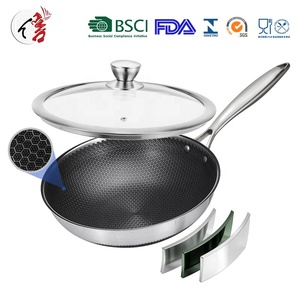
304 Thickened Tri-Ply Stainless Steel Honeycomb Storage Basin
Heavy-gauge tri-ply construction featuring internal micro-engraved honeycomb etching for extreme physical scratch resistance and thermal stability.
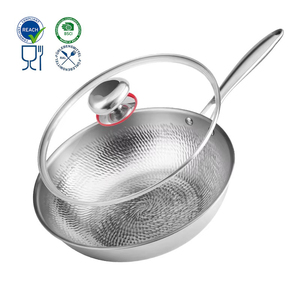
Tri-Ply Titanium Stainless Steel Airtight Food Storage Box
Reinforced titanium-infused matrix offering chemical inertia against acidic and saline food items, paired with a glass-silicone lock lid.
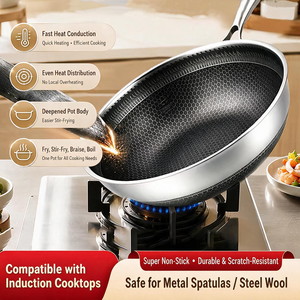
High-Capacity 304/316 Surgical Grade Sealed Container Set
Commercial grade 18L high-volume storage basin designed for high-density food prep, institutional catering, and cold-chain logistics.
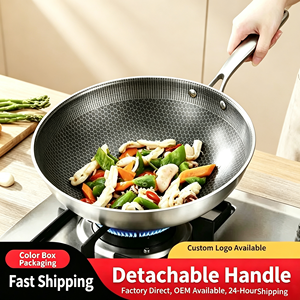
Even-Heating Honeycomb Stainless Steel Meal Prep Box
Dual-compatible induction base storage container engineered for seamless transition from cold storage to direct reheating elements.
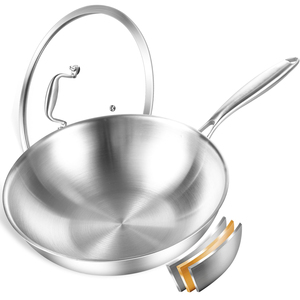
Commercial Heavy-Duty Tri-Ply Stainless Steel Container
Continuous deep-drawn 0.8mm wall structure optimized for harsh environment resistance, deep freezing, and commercial dishwashing.
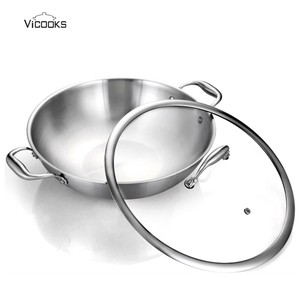
Modular Nestable Tri-Ply Food Storage & Prep Set
Space-saving stackable geometric design minimizing freight dimensions by 40% while giving retail consumers a complete nested kitchen set.
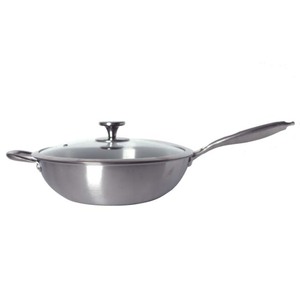
Airtight 304 Honeycomb Storage Box with Tempered Glass Lid
Clear visibility glass lid with high-elasticity food-grade silicone ring combined with structural honeycomb wall reinforcement.

Premium 316 Medical Grade Double-Sealed Flat Storage Box
Top-tier SUS316 austenitic stainless steel container providing optimal protection against corrosion, rust, and bacterial build-up.
Executive Sourcing Guide: Decoding China’s Stainless Steel Food Storage Container Ecosystem
The global housewares and commercial kitchenware industries are undergoing a massive paradigm shift. As corporate sustainability mandates, single-use plastic bans, and stringent chemical safety standards (such as microplastic zero-tolerance regulations) intensify across Europe, North America, and East Asia, stainless steel food storage containers have emerged as the premier sustainable alternative. When enterprise procurement managers, retail brand buyers, and private-label distributors search for reliable high-volume manufacturing partners, China’s industrial manufacturing hubs in Guangdong, Zhejiang, and Shandong represent over 70% of global output.
However, navigating the landscape of China stainless steel food storage containers factories requires deep technical comprehension. Evaluating a factory goes beyond surface-level pricing per piece. It demands a detailed audit of raw material metallurgy (specifically distinguishing authentic SUS304 and SUS316 from substandard low-nickel alloys), hydraulic deep-drawing precision, automated passivation polishing lines, and silicone gasket vulcanization safety. This whitepaper provides procurement executives with actionable insight into high-performance food storage container manufacturing.
Information Gain Insights: True food preservation efficiency depends heavily on the Chromium Passive Oxide Layer (Cr₂O₃) achieved via nitric acid passivation. Inferior factories skip chemical passivation, leaving raw steel susceptible to micro-pitting corrosion when storing acidic foods like tomato puree or lemon marinades.
Metallurgical Metallurgy
Distinguishing 18/8 (SUS304) and 18/10 (SUS316) from 200-series alloys. Ensuring zero heavy-metal leaching across extended acid exposure tests.
Deep-Draw Stamping
Continuous high-tonnage hydraulic drawing ensures uniform wall thickness (0.5mm - 1.0mm) without stress-crack micro-fractures.
Hermetic Sealing Engineering
Medical-grade liquid silicone injection gaskets combined with four-sided polypropylene lid locking mechanisms for 100% leak-proof execution.
Stainless Steel Grade Matrix: Comparing 304, 316, and Tri-Ply Systems
A primary failure point in B2B container procurement is selecting an inappropriate metal specification for the target consumer market. The table below outlines the mechanical and chemical parameters of stainless steel alloys utilized in premier China container factories.
| Steel Grade Standard | Nominal Composition | Pitting Resistance (PREN) | Acid/Salt Corrosion Standard | Freezer-to-Oven Rating | Primary Commercial Use |
|---|---|---|---|---|---|
| AISI 304 (SUS304) | 18% Cr / 8% Ni | 18.0 - 20.0 | Neutral Salt Spray > 96 hrs | -40°C to +250°C | Household Storage |
| AISI 316 (SUS316) | 16% Cr / 10% Ni / 2% Mo | 23.0 - 25.0 | Acidic Salt Spray > 240 hrs | -50°C to +300°C | Medical / Premium B2B |
| Tri-Ply Clad Metal | 304 Interior / Al Core / 430 Exterior | 19.0 (Interior) | High Thermal Conductivity Test | Direct Reheating / Induction | Reheat & Prep Containers |
| 201 Grade (Warning) | 14% Cr / 1% Ni / 8% Mn | < 14.0 | Salt Spray < 24 hrs (Rust Prone) | Not Recommended for Acids | Low-Cost Non-Food Use |
When evaluating top China stainless steel food storage containers factories, enterprise buyers must verify mill test certificates (MTC). True austenitic steels like 304 and 316 contain high nickel levels, rendering them non-magnetic in their annealed state. Cheap substitutes like 201 utilize manganese to mimic softness but oxidize rapidly when exposed to acidic foods like vinegars and citrus dressings.
China Factory Auditing: Differentiating Direct OEM Manufacturers from Trading Intermediaries
Sourcing directly from a true OEM factory vs. a trading intermediary can impact gross margins by 18% to 35%. To ensure supply chain transparency, procurement teams must implement a structured physical or virtual audit protocol centered on three production milestones:
1. Deep-Drawing Hydraulic Tonnage
Direct factories operate 200-ton to 800-ton hydraulic press lines capable of drawing seamless containers with zero wall thinning. Ask for live videos of the stamping shop floor.
2. In-House Mold Tooling Shop
Leading factories possess CNC EDM machines to create custom container molds (OEM/ODM). Intermediaries must outsource tooling, adding 4 to 8 weeks to prototyping lead times.
3. Automated Surface Polishing
Inspect the polishing line. Electrolytic polishing removes surface iron particles, creating a ultra-smooth mirror or satin finish with surface roughness Ra < 0.2μm, essential for food hygiene.
Future Procurement Trends: 2025–2030 Innovations in Metal Food Packaging
The stainless steel storage container sector is evolving rapidly. Forward-thinking buyers are prioritizing four critical product innovations to gain competitive advantage in international consumer markets:
Microwave-Safe Stainless Steel Alloys
Engineers have developed rounded-corner container geometry combined with smooth electropolished walls that eliminate electric field concentrations, enabling safe heating in modern microwave ovens.
Plastic-Free All-Metal & Glass Hybrid Lids
To comply with strict European eco-design regulations, factories are moving away from traditional plastic polypropylene lids toward 100% recyclable stainless steel or tempered glass lids paired with removable food-grade silicone seals.
Vacuum-Insulated Preservation
Integrating double-wall vacuum technology (similar to thermal flasks) into flat meal containers, keeping food hot or cold for over 6 to 8 hours without external electrical heating.
Antimicrobial Nano-Coatings
Application of non-toxic, food-safe silver-ion (Ag+) surface treatments that inhibit bacterial growth (E. coli, Salmonella) by 99.9% during ambient temperature food transport.
Why Partner With Us: Our Manufacturing Ecosystem & B2B Advantages
With a rich manufacturing heritage spanning since 2006 (over 18 years of technical specialization), our production base has developed into a premier industrial hub for high-grade cookware, kitchenware, and stainless steel food containers. Serving clients in over 10 countries across North America, Europe, and the Middle East, we understand the demands of global B2B procurement.
10,000+ Existing Product SKUs
Extensive collection of standard shapes, deep basins, nestable sets, bento boxes, and commercial hotel pan containers ready for rapid private-label customization.
ISO 9001:2015 & Audit Compliance
Our facility is fully certified by international quality standards, maintaining strict adherence to BSCI, Sedex, and ISO quality management protocols.
Rapid OEM/ODM Prototyping
In-house tooling facility capable of producing 3D sample prototypes in under 7 days and complete production molds within 25 days.
Vertical Integration Control
From raw coil cutting and deep drawing to laser logo engraving, silicone injection, and packaging, 100% of manufacturing occurs in-house to safeguard quality.
Frequently Asked Questions for B2B Container Sourcing
Find detailed technical answers to common questions asked by global purchasing directors, supply chain managers, and brand owners.
Q1: What is the standard Minimum Order Quantity (MOQ) for custom stainless steel storage containers?
Our standard factory MOQ is 1,000 sets per size for standard catalog items with custom laser-engraved logos and customized color-box packaging. For completely custom OEM shapes requiring new tooling, the MOQ typically starts at 3,000 pieces per mold.
Q2: Are stainless steel food containers 100% leak-proof for liquids like soup or salad dressing?
Yes. Our leak-proof container series utilizes food-grade high-elasticity silicone sealing rings paired with heavy-duty side latches or vacuum-release valves. Every batch undergoes a 30-minute inverted pressure leak test to guarantee 100% hermetic seal integrity.
Q3: How do your products satisfy European (LFGB) and US (FDA) food safety standards?
All raw stainless steel coils (SUS304/SUS316) are tested for overall migration, heavy metals (lead, cadmium, nickel release), and toxic substance absence. Official test reports from SGS or TÜV are provided with every export shipment to ensure seamless customs clearance.
Q4: Can stainless steel storage containers be used in the freezer, oven, and dishwasher?
Absolutely. The stainless steel body withstands deep freezing temperatures down to -50°C and oven temperatures up to +300°C (without the plastic/silicone lid). All container bases are 100% commercial dishwasher safe and rust-resistant.
Q5: What customized logo and surface finishing options do you offer for private labels?
We support precision Fiber Laser Engraving, Silk Screen Printing, Heat Transfer Graphics, Embossing/Debossing via stamping dies, and specialized surface finishes including Mirror Polish, Satin Brush, Electro-Plated Gold/Rose Gold, and Durable Powder Coating.
Q6: What is the typical lead time for mass production and sample delivery?
Existing catalog samples are dispatched within 48 hours. Custom logo samples take 5 to 7 business days. Full mass production lead time is generally 30 to 40 days after sample approval and deposit confirmation, depending on container quantity.
Q7: How does your factory pack nested container sets to minimize sea freight costs?
We specialize in space-optimized nesting configurations where smaller containers fit inside larger ones, protected by anti-scratch non-woven fabric sleeves. This reduces overall shipping volume by up to 45%, significantly lowering per-unit freight expenditure.
Q8: What are the international HS Codes for importing stainless steel food containers?
The standard Harmonized System (HS) Code for stainless steel household food storage containers and kitchenware is 7323.93.00 (Table, kitchen or other household articles of stainless steel). We assist buyers with correct documentation to optimize tariff classifications.
Partner With a Leading China Stainless Steel Container Manufacturer
Streamline your supply chain with certified food-grade materials, factory-direct OEM pricing, and reliable global delivery. Request a customized wholesale quote or schedule a virtual factory tour today.