High-Performance Stainless Steel Woks & Paella Pans
Explore our factory-direct selection engineered with food-grade AISI 304/316 clad metals, laser-etched non-stick matrices, and heavy-duty induction compatibility for international buyers.
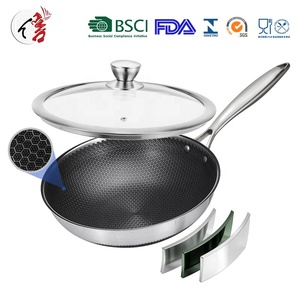
304 Thickened Tri-ply Stainless Steel Honeycomb Wok Non-Stick Household Pan Universal for Induction Cooker & Gas Stove
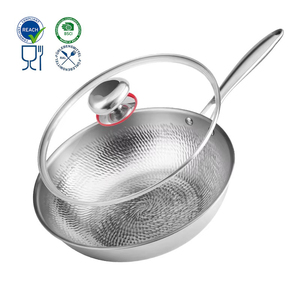
TriPly Stainless Steel Titanium Non Stick Fry Wok Pan Non-stick Induction Hammered Titanium Stainless Steel Wok with Glass Lid
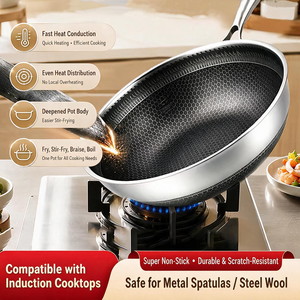
High-quality Non-stick Stainless Steel 304/316 Wok with Glass Cover 18L Capacity Gas & Induction Compatible Cookware Set
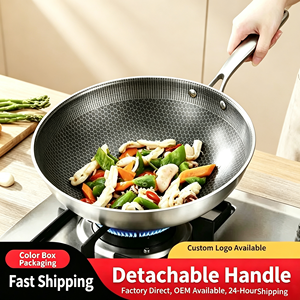
Even Heating Honeycomb Wok Pan 30/32/34cm Riveted Handle Stainless Steel Skillet for Gas Induction Stove
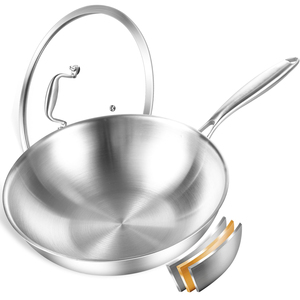
Good Quality Tri-Ply Stainless Steel Wok Durable Cookware Non-Stick Frying Pan for Cooking
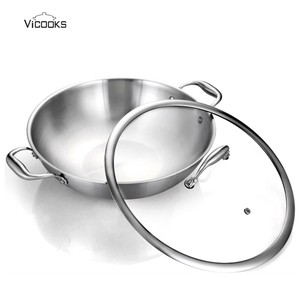
Triply Stainless Steel Woks Stir-Fry Pan with Helpers Induction Wok for Household
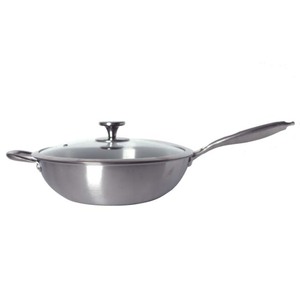
High Quality 304 Stainless Steel Honeycomb Wok Stirfry Pan Tempered Glass Lid Induction Bottom

Premium Thick Bottom 316 Stainless Steel Double Sided Non-Stick Flat Bottom Wok Honeycomb Design with Glass Lid for Home Use
Navigating Top China Stainless Steel Paella Pans Factories: Technical Sourcing Matrix
In the hyper-competitive global kitchenware market, sourcing from top China stainless steel paella pans factories requires a granular understanding of metallurgical engineering, thermal conductivity physics, and manufacturing quality control. As global consumer preferences shift toward durable, PFOA-free, and multi-cooktop compatible cookware, international B2B buyers—including brand owners, restaurant supply distributors, and supermarket chain buyers—must look beyond superficial aesthetics to evaluate authentic OEM/ODM factory capabilities.
Traditional single-ply paella pans, historically crafted from carbon steel or standard 201-grade stainless steel, often suffer from critical thermal deformation (warping) under high-wattage commercial induction stoves, uneven heat distribution leading to localized hot spots, and rapid surface oxidation. Premier Chinese cookware manufacturing hubs—located across Guangdong (Jianmen, Chaozhou), Zhejiang (Yongkang, Wuyi), and integrated manufacturing centers—have revolutionized paella pan and wok production through Tri-Ply Cladded Steel Metallurgy and Laser Micro-Engraving Honeycomb Technologies.
Tri-Ply Clad Metallurgy
Full-body cladding integrates an aluminum core between food-grade steel walls, offering edge-to-edge heat diffusion with zero thermal lag.
Laser Honeycomb Matrix
Micro-embossed stainless steel ridges protect the non-stick coating from metal utensil abrasion, increasing product lifespan by 400%.
Universal Induction Base
High-grade AISI 430 magnetic steel exterior ensures seamless energy conversion across commercial induction, gas, and ceramic cooktops.
Metallurgical Breakdown: Choosing the Right Grade for Bulk OEM Orders
When requesting quotations (RFQs) from China paella pan factories, specifying exact raw material standards is the single most critical factor in preventing quality degradation. Below is an engineering evaluation matrix comparing primary stainless steel alloys utilized in commercial paella pan and wok production.
| Steel Grade / Structure | Composition (Cr-Ni-Mo) | Corrosion Resistance | Thermal Shock Resistance | Target Retail / B2B Segment |
|---|---|---|---|---|
| AISI 201 (Single Ply) | 16% Cr, 1% Ni, 5.5% Mn | Low (Susceptible to acid attack) | Moderate (Prone to warping <2mm) | Budget Promotional / Disposable Sets |
| AISI 304 (18/8 Standard) | 18% Cr, 8% Ni | High (Standard food-grade compliance) | High (Excellent structural memory) | Mass Market / Department Stores |
| AISI 316 (18/10/2 Surgical) | 18% Cr, 10% Ni, 2% Mo | Ultra-High (Saltwater & acidic dish proof) | Extreme (Resists extreme flame exposure) | Premium Commercial Hospitality / Luxury Brands |
| Tri-Ply Clad (304-Alu-430) | Multi-layer Composite Core | High (Internal 304 food contact) | Superior (3-layer heat stress distribution) | High-End Retail / Heavy-Duty Culinary Use |
| Titanium-Infused Tri-Ply | 304 + Ti Surface Reinforcement | Maximum (Non-reactive to alkaline/acid) | Maximum (Zero hot spots, warp-proof base) | Professional Chef & Specialty Cookware Lines |
Future Sourcing & Procurement Trends in Stainless Steel Cookware
The global cookware procurement landscape is undergoing rapid structural transformation driven by strict European Union regulatory policies on PFAS/PFOA chemical coatings, ESG-conscious supply chains, and demanding automated production parameters. Forward-thinking procurement officers are restructuring their vendor selection criteria around four core future trends:
1. Shift Toward PFOA-Free Physical Non-Stick Solutions
With North American and European regulators accelerating bans on legacy PTFE/PFAS coatings, top China factories have pioneered micro-structure physical non-stick technology. By utilizing laser engraving to create raised stainless steel honeycomb patterns over recessed food-grade coatings, cookware durability is doubled while complying with modern environmental safety norms.
2. Automation in Deep Drawing & Hydroforming
Tier-1 factories have replaced traditional manual spinning processes with multi-stage automated hydraulic presses (up to 1,500-ton capacity). Deep drawing yields seamless paella pan curves with precise wall-to-base thickness ratios (e.g., 2.5mm rim tapering down to a 3.0mm flat induction bottom), eliminating stress fractures and ensuring stable stacking during container transit.
3. Modular OEM Tooling & Cost-Effective Customization
Leading manufacturers now offer standardized modular molds for handles, helper ears, and glass lids, dramatically lowering custom tooling investment for private-label clients. Importers can launch unique product lines with customized laser-etched logos, bespoke handle coating finishes (satin polish, PVD gold titanium plating, soft-touch silicone), and tailor-made retail gift boxes at minimal upfront cost.
4. Supply Chain Audit Standardization (BSCI, ISO 9001, LFGB)
Regulatory scrutiny requires full supply chain traceability. Global buyers now demand verified mill test certificates (MTC) for all stainless steel coils before production begins, alongside independent third-party factory audits (SGS, TUV, Bureau Veritas) certifying social responsibility, environmental management systems (ISO 14001), and food contact safety (EU LFGB & US FDA standards).
Why Partner With Integrated Stainless Steel Manufacturers
Leveraging over 15 years of OEM/ODM export expertise, state-of-the-art production lines, and an extensive product portfolio spanning over 10,000 SKUs, top-tier factories offer unparalleled stability to international procurement networks. Our integrated manufacturing framework spans every critical phase of production:
Spectrometry Testing
X-ray fluorescence (XRF) spectrometry validates raw coil chemical composition, guaranteeing 100% compliance with AISI 304 and 316 Nickel-Chromium ratios.
Robotic Polishing
Multi-axis automated polishing robots deliver mirror-smooth interior finishes (Ra < 0.2µm) and elegant brushed exterior finishes for long-lasting aesthetic appeal.
Thermal Shock & Shear Quality Control
Batch samples undergo 400°C-to-ice-water thermal shock cycles and heavy handle rivet shear-force testing to prevent structural failure in intense commercial environments.