Executive Commercial Cookware Catalog
Verified Commercial-Grade Tri-Ply & Honeycomb Stainless Steel Saucepans, Woks, and Heavy-Duty Skillets engineered for high-volume culinary operations.
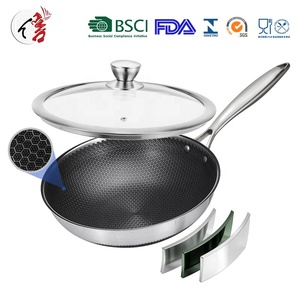
304 Thickened Tri-ply Stainless Steel Honeycomb Wok Non-Stick Pan
- Material: 304 Heavy-Gauge Core
- Compatibility: Gas & Commercial Induction
- Feature: Laser-Etched Honeycomb Grid
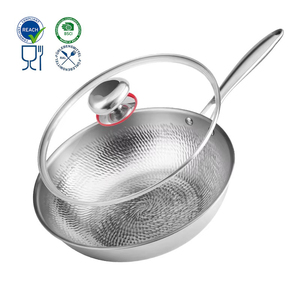
TriPly Stainless Steel Titanium Non-Stick Hammered Wok with Glass Lid
- Coating: Titanium-Reinforced Matrix
- Finish: Artisanal Hammered Exterior
- Cover: Tempered Glass Lid Included
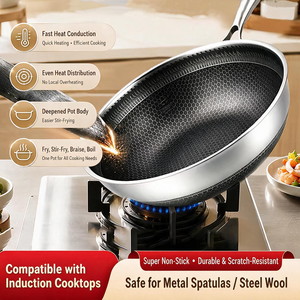
High-Efficiency Non-Stick 304/316 Stainless Steel Commercial Cookware
- Grade: High-Corrosion 316 Alloy
- Capacity: High Volume Commercial Lineup
- Base: Rapid Thermal Transfer Disc
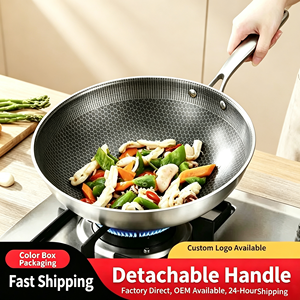
Even Heating Honeycomb Wok Pan with Riveted Commercial Handle
- Sizes: 30cm / 32cm / 34cm Options
- Ergonomics: Stainless Cast Steel Rivets
- Heat Profile: Edge-to-Edge Conduction
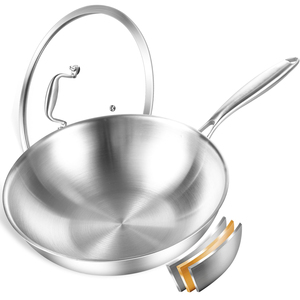
Commercial Tri-Ply Stainless Steel Multi-Purpose Frying Pan
- Construction: 3-Layer Bonding
- Durability: Scratch & Wear Resistant
- Use-Case: High Temperature Searing
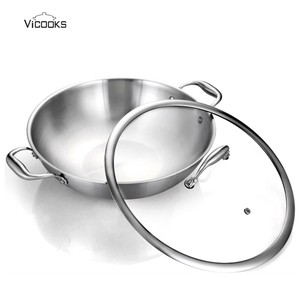
Triply Stainless Steel Wok & Saucepan with Dual Helper Handles
- Balance: Ergonomic Dual Handle System
- Bottom: Magnetic Stainless Steel Base
- Efficiency: Energy-Saving Thermal Retention
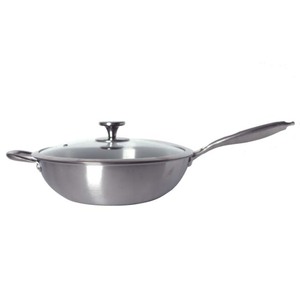
High Quality 304 Stainless Steel Honeycomb Stir-Fry Saucepan
- Surface: Full-Coverage Laser Honeycomb
- Glass Lid: Explosion-Proof Tempered Glass
- Application: Restaurant & Enterprise Kitchens

Premium Thick Bottom 316 Steel Double-Sided Honeycomb Saucepan
- Steel Grade: Premium 316 Marine Standard
- Base Thickness: 3.5mm Encapsulated Core
- Resistance: Ultra Acid & Alkali Proof
Manufacturing Benchmark & Global Capacity Statistics
Key performance operational parameters supporting enterprise OEM/ODM supply chains worldwide.
Industrial Whitepaper: Sourcing Commercial Grade Stainless Steel Saucepans
An authoritative analysis on metallurgical compliance, cladding thermo-dynamics, and procurement strategies for high-frequency culinary operations.
In the global commercial food service and hospitality sectors, selecting top-tier commercial grade stainless steel saucepans and cookware is not simply an inventory decision; it is a critical capital investment directly tied to operational efficiency, food safety compliance, and long-term cost optimization. Commercial kitchens subject cookware to extreme thermal shock, continuous mechanical abrasion, and harsh chemical sanitization regimes. Standard residential-grade saucepans rapidly fail under these conditions, leading to base warping, handle shearing, non-stick degradation, and inconsistent heat transfer that ruins batch consistency.
To assist procurement directors, hospitality buyers, and wholesale brand managers, this technical guide outlines the structural metallurgy, manufacturing methodologies, and quality control metrics that define premier commercial-grade stainless steel saucepan manufacturers.
1. Metallurgical Analysis: 304 vs. 316 Stainless Steel Alloys
The foundation of commercial saucepan performance lies in alloy composition. Leading manufacturers utilize austenitic stainless steel alloys engineered to withstand severe oxidation and acidic food environments:
- AISI 304 (18/10 or 18/8 Stainless Steel): Comprising 18% chromium and 8-10% nickel, 304 stainless steel provides exceptional resistance to organic acids (such as citric and acetic acids found in sauces) and mechanical wear. It maintains structural rigidity up to 800°C and serves as the global standard for heavy-duty commercial stockpots and saucepans.
- AISI 316 (18/12/2 Surgical/Marine Grade): Enhanced with 2-3% molybdenum, 316 stainless steel offers superior resistance to pitting corrosion caused by high-salinity solutions (brines, heavy salting) and chloride-rich cleaning chemicals. Premium commercial lines utilize 316 steel for interior food-contact surfaces to eliminate metal leaching and preserve pure flavor profiles.
2. Thermo-Dynamics & Cladding Technology: Tri-Ply vs. Impact-Bonded Bases
Stainless steel possesses relatively low thermal conductivity (approx. 15 W/m·K) compared to aluminum (approx. 237 W/m·K). To overcome this, top manufacturers employ multi-layer cladding technologies:
| Construction Tech | Layer Architecture | Thermal Efficiency | Warp Resistance | Commercial Suitability |
|---|---|---|---|---|
| Tri-Ply Full Clad | SS 304 (Interior) + Pure Al Core + SS 430 (Exterior) | Exceptional (Uniform sidewall heat) | Ultra-High (> 450°C shock) | Best for sauces, delicate simmers, high-end HORECA |
| 5-Ply Heavy Duty | 5 Layers (Steel, Dual Al Cores, Copper Core) | Maximum (Optimal heat retention) | Extreme (Heavy commercial load) | Institutional kitchens, continuous 24/7 service |
| Impact-Bonded Encapsulated Base | SS Body + 4mm-6mm Al Disk + Magnetic SS Plate | High (Bottom only, slower sidewalls) | High (Solder-bonded under 2,000 tons press) | Cost-effective bulk commercial boiled cooking |
Engineering Insight: Why Tri-Ply Full Cladding Eliminates Hotspots
Tri-ply full cladding bonds the high-conductivity aluminum core across the entire vessel shape—from the center of the base all the way up the sidewalls. This prevents scorch zones at the bottom radius of saucepans, reducing food burn rates by up to 34% and cutting kitchen cleaning downtime significantly.
Enterprise Manufacturing Advantages: The Adil Stainless Steel Standard
Leveraging over 18 years of specialized engineering in Gujranwala, Pakistan—a global epicenter of steel craft—to supply world-class B2B solutions.
Vertically Integrated Production
From raw coils of food-grade steel to automated deep-drawing, multi-stage mirror polishing, laser etching, and custom packaging, every step takes place in-house to guarantee stringent quality control.
ISO Certified Quality Management
Operating under strict ISO 9001 quality frameworks, our products undergo rigorous salt spray corrosion testing, high-impact base bonding tests, and handle shear stress analysis prior to shipment.
Proven Global Export Footprint
Exporting to over 10 countries across Europe, the Middle East, Africa, and Asia. Experienced in handling country-specific tariff standards, international freight logistics, and compliance documentation.
Future Procurement Trends in Commercial Stainless Steel Cookware (2025–2030)
Anticipating shifts in commercial kitchen technology, regulatory mandates, and sustainable manufacturing.
The commercial cookware market is undergoing a rapid evolution driven by energy conservation initiatives, strict PFOA/PFAS chemical bans, and the universal transition toward high-efficiency commercial induction cooktops. Buyers and brand managers must align their procurement strategies with these core macro-trends:
1. Commercial Induction Optimization & Universal Base Engineering
With global commercial kitchens transitioning to induction technology to reduce ambient kitchen heat and lower HVAC electricity costs, future saucepan designs must prioritize induction speed. Modern commercial saucepans feature a magnetic AISI 430 exterior layer optimized for high-frequency magnetic induction, enabling energy transfer efficiency rates exceeding 90% compared to 40-55% on conventional gas burners.
2. Laser-Micro-Etched Non-Stick Physical Barriers (PFOA/PFAS Free)
Regulatory bodies globally (including EU REACH and US FDA) are phasing out traditional chemical coatings. The future belongs to laser-etched honeycomb micro-structures. By raising stainless steel ridges above a sunken non-stick surface, the pan protects the non-stick structure from metal spatulas while providing effortless food release and non-toxic durability.
3. Ergonomic Safety & Permanent Joint Mechanics
Workplace safety standards are imposing stricter guidelines on commercial kitchen equipment ergonomics. Modern commercial saucepans are adopting hollow cast-stainless-steel handles attached with solid dual or quad rivets. The hollow design creates an airflow thermal break (stay-cool technology), while solid stainless rivets prevent mechanical fatigue under continuous heavy liquid loads.
Frequently Asked Questions (FAQ) for Commercial Procurement
Clear, technical answers to common questions raised by enterprise buyers, importers, and supply chain managers.
Partner with a Leading Commercial Stainless Steel Manufacturer
Upgrade your product lineup or secure factory-direct pricing for your commercial kitchen distribution network. Contact our senior export engineering team today for technical specifications, custom samples, and bulk quotation details.