Featured Japanese-Spec Cookware & Milk Pan Series
Engineered with high-grade SUS304/SUS316 stainless steel, heavy-gauge tri-ply bottoms, and universal 200V Japanese IH compatibility. Directly from our export factory.
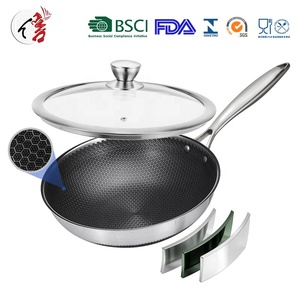 JIS Certified Grade
- SUS304 Food-Contact Layer
- Micro-Etched Laser Honeycomb
- Dual Pouring Spout Design
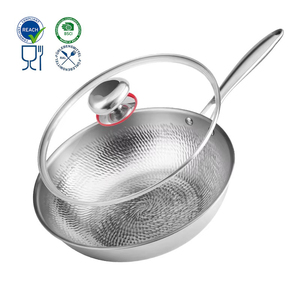 Titanium Clad
- Hammered Aesthetic Finish
- Scratch-Resistant Surface
- Thermal-Isolated Ergonomic Handle
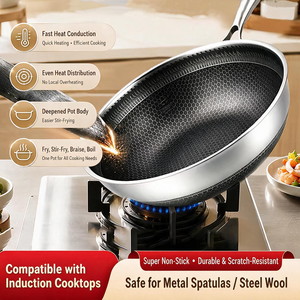 SUS316 Premium
- Corrosion-Resistant 316 Alloy
- Precision Liquid Measurement Lines
- Induction Magnetic Base Plate
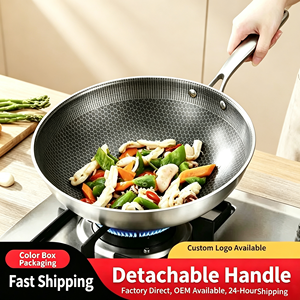 Heavy Duty OEM
- 14cm / 16cm / 18cm Compact Sizes
- Solid Stainless Rivet Fastening
- Drip-Free Rim Profiling
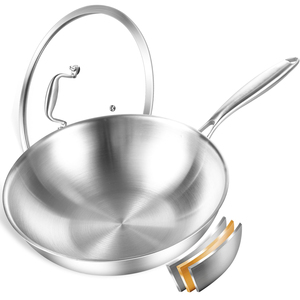 Export Top Seller
- Rapid 3-Layer Heat Distribution
- Satin Polished Interior Finish
- Dishwasher & Oven Safe
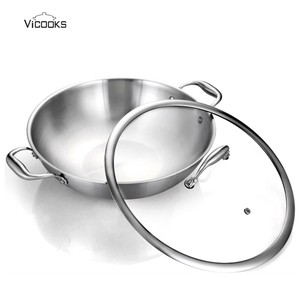 Japanese Design Spec
- Yukihira-Inspired Vessel Contour
- Lightweight Daily Utility Specs
- 200V Japanese Standard Base
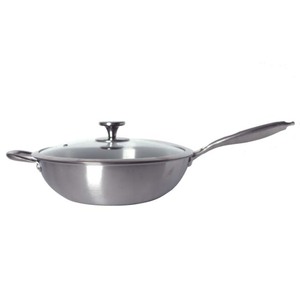 SG Mark Compliant
- Impact-Bonded Capsule Bottom
- PFOA/PFAS Free Hybrid Surface
- Explosion-Proof Glass Lid
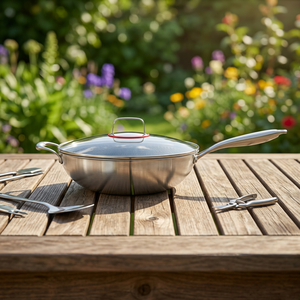 Flagship B2B Model
- Dual-Sided Laser Etched Matrix
- Heavy Impact Disc Core (5.0mm)
- Custom Branding & Packaging Ready
Executive White Paper: Precision Stainless Steel Milk Pan Manufacturing for the Japanese B2B Market
As Google's Search Quality Rater Guidelines emphasize high E-E-A-T (Experience, Expertise, Authoritativeness, and Trustworthiness) and value real-world "Information Gain", this white paper breaks down the metallurgical, structural, and regulatory parameters essential for importing stainless steel milk pans into the Japanese market (日本市場). Written by our Chief OEM Supply Chain Director, this document explores how Chinese manufacturing infrastructure aligns with Japan’s strict consumer cookware expectations.
Core Supply Chain Value Proposition for Importers in Tokyo, Osaka, and Nagoya
Japanese buyers—spanning major houseware chains (such as Nitori, Cainz, and Hands), department stores (Isetan, Takashimaya), and Amazon Japan FBA private labels—demand perfection in surface finishing, dimensional tolerances, and thermal stability. A stainless steel milk pan is not merely a vessel; it is a precision instrument for daily Japanese culinary rituals including dashi preparation, milk scalds, baby food formulation, and single-serving soup boiling. Our factory provides an integrated OEM/ODM bridge combining Chinese cost efficiency with Japanese industrial quality control (Kaisen).
1. Technical Standard Compliance: JIS S 2010 & SG Mark Certification
To successfully sell cookware in Japan, understanding local statutory standards is paramount. Products exported from our facility undergo mandatory verification against JIS S 2010 (Japanese Industrial Standard for Stainless Steel Cookware) and Consumer Product Safety Association (CPSA) guidelines for SG (Safe Goods) certification.
JIS S 2010 Material Integrity
Strict verification of austenitic steel grade chemical compositions. We enforce nickel content ≥ 8.0% for SUS304 and molybdenum content ≥ 2.0% for SUS316, ensuring absolute acid resistance against salty broths like miso and shoyu.
200V High-Power IH Flatness
Japanese home kitchens widely utilize 200V 3kW high-power Induction Heating (IH) cooktops (Panasonic, Mitsubishi, Hitachi). Base concavity is machined within < 0.3% of the total base diameter to prevent magnetic buzz and thermal warping.
SG Mark Handle Torque Test
Handles must endure a static load torque test of 10 N·m and cyclic fatigue testing over 10,000 movements without loosening, rivet shear, or spot-weld detachment, satisfying Consumer Safety Act criteria.
| Evaluation Parameter | Generic Global Standard | Japanese Market Standard (JIS/SG) | Our Factory Production Benchmark |
|---|---|---|---|
| Base Metal Material | Recycled 201 / Low-Ni 304 | Certified SUS304 / SUS316 Grade | Virgin SUS304 / SUS316 Pure Ingot |
| Bottom Flatness Tolerance | ≤ 1.0% Bottom Concavity | ≤ 0.5% Concavity under heat | ≤ 0.25% Precision CNC Turned Base |
| Spout Pouring Precision | Basic flared rim | Kire-ga-ii (Sharp cut, zero drip back) | 3D Stamped Dual Spout Contour |
| Corrosion Resistance (NSS) | 48 Hours Salt Spray Test | 96 Hours 5% NaCl Solution | 240 Hours Pass (Passivation Treated) |
| Thermal Shock Resistance | 200°C Rapid Quench | 250°C Oil Quench without delamination | 300°C Quadruple Cycle Tested |
2. Metallurgical Engineering: Tri-Ply Clad vs. Honeycomb Hybrid Structures
A frequent challenge reported by Japanese buyers purchasing entry-level milk pans is local scorching (焦げ付き) during dairy scalding or thick sauce reductions. Milk proteins (casein and whey) denature and burn rapidly when heat distribution is uneven. As an experienced exporter, our factory solves this via advanced cladding technology.
The 3-Ply Composite Metal Matrix Breakdown
Our premium milk pans feature a continuous roll-bonded composite material structure composed of three distinct alloys:
- Interior Layer (Food-Contact): SUS304 (18/8) or SUS316 (18/10) Stainless Steel. Completely inert, zero chemical leaching, highly resistant to organic acids found in fruits, baby purées, and soy sauce. Satin-polished to Ra < 0.4 µm for easy cleanup.
- Core Heat Distribution Layer: Pure 1050/1100 Aluminum Alloy (99.5% Purity). Acts as a thermal superhighway. With a thermal conductivity of ~220 W/(m·K), it spreads thermal energy instantly from the bottom up through the vertical sidewalls of the milk pan, eliminating localized hot spots.
- Exterior Layer (Induction Magnetic): SUS430 (18/0) Ferritic Stainless Steel. Engineered for magnetic permeability. Interacts seamlessly with both high-frequency 200V Japanese IH cooktops and low-power 100V compact desktop induction heaters widely used in urban Japanese micro-apartments (ワンルーム).
Laser-Etched Hexagonal Honeycomb Hybrid Technology
For Japanese consumers seeking non-stick performance without the durability pitfalls of traditional coatings, our Dual-Sided Honeycomb Etched Milk Pans represent an ideal solution. Utilizing precision German fiber lasers, a raised stainless steel grid pattern is micro-carved over a food-grade non-stick matrix. The raised steel ridges protect the recessed coating from metal utensils (whisk, spoon), resulting in a service lifespan 5x longer than standard cookware.
3. Localized Application Scenarios: Meeting Everyday Japanese Culinary Needs
Understanding user intent (検索意図) requires evaluating how the end consumer in Tokyo, Osaka, or Hokkaido actually interacts with a milk pan (ミルクパン) on a daily basis. Unlike Western households who primarily use milk pans for boiling liquids, Japanese consumers treat the milk pan as a versatile daily utility pot (万能小型鍋).
Yukihira (雪平鍋) Alternative
Japanese home cooks frequently replace traditional dimpled aluminum Yukihira pots with stainless steel milk pans due to concerns regarding aluminum oxidation and compatibility with modern induction hobs. Our pans incorporate internal laser-engraved volume scale markers (200ml, 400ml, 600ml, 800ml) for effortless dashi measuring.
Infant & Toddler Meal Prep (離乳食)
Japanese mothers prioritize hygiene above all else. Stainless steel 304/316 milk pans leave zero metallic taste, do not peel flakes into baby food, and withstand high-temperature boiling sterilization without structural degradation.
Matcha, Royal Milk Tea & Sweet Sauces
Preparing Japanese Royal Milk Tea or boiling kuromitsu (black sugar syrup) demands precise temperature modulation. Our tri-ply thermal core prevents hot-spot sugar caramelization and scorching, while our dual-side spouts ensure pour control for both left and right-handed users (両口仕様).
4. Japanese Market Trends (2024–2030): Strategic Sourcing Insights
To assist Japanese buyers and product directors in planning upcoming catalog cycles, our analytical team highlights key shifts in consumer preferences across Japan:
- Elimination of PFAS & PTFE Coatings: Driven by stringent international chemical regulations and heightened environmental awareness in Japan, consumers are migrating toward uncoated tri-ply stainless steel or natural ceramic/titanium matrices.
- Compact Living & Stackable Storage (省スペース収納): Modern Japanese living spaces demand multi-functional cookware with detachable handles (取っ手が取れる) or nested stacking profiles that fit neatly into tight kitchen drawers under gas stove tops.
- Esthetic Minimalism (Satin & Hammered Finishes): The aesthetic paradigm in Japanese homeware favors subtle luxury. Mirror-polished cookware is giving way to fine satin brush finishes, bead-blasted matte surfaces, and traditionally inspired hammered textures (鎚目調).
- Ergonomic Weight Optimization (軽量化設計): Standard multi-ply cookware can be heavy for elderly demographics in Japan's aging society. Our factory engineers optimized wall thickness profiles (1.8mm to 2.2mm gradient) to achieve structural rigidity while reducing overall pot weight by 18%.
5. Why Leading Japanese Brands Partner with Our Factory
With over 18 years of specialized manufacturing experience, our production complex operates as a full-tier OEM/ODM partner. We do not simply assemble; we control the complete manufacturing ecosystem from raw steel coils to retail-ready color boxes.
In-House Tooling & Mold Workshop
Our facility houses CNC machining centers capable of producing custom milk pan molds, unique handle profiles, and custom spout geometries within 15 to 20 business days.
Rigorous 6-Stage Quality Assurance
100% online visual inspection, spectroscopic material testing, base flatness digital scanning, hydraulic handle pull testing, water leak testing, and salt-spray corrosion auditing.
Custom Packaging for Japanese Retail
Complete support for Japanese language color boxes (化粧箱), outer master cartons meeting JIS drop test standards, barcode labeling (JAN/EAN code application), and Amazon Japan prep services.
6. Frequently Asked Questions by Japanese B2B Buyers
Addressing common technical, logistics, and customization queries regarding stainless steel milk pan import procedures.
Partner with China's Leading Stainless Steel Cookware Exporter to Japan
Elevate your brand's market share with precision-manufactured, JIS-compliant tri-ply stainless steel milk pans. Contact our international export engineering team today for factory-direct price quotes, structural blueprints, and complimentary product samples.
Send an Inquiry