Featured Commercial & Domestic Tri-Ply Stainless Cookware
Engineered with food-grade SUS304/316 steel, multi-layer clad bases, and high-pressure safety interlocks certified for Swiss culinary standards.
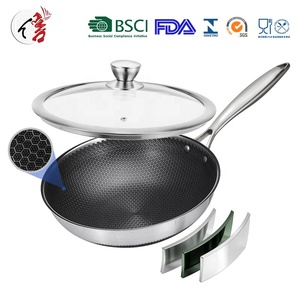
304 Thickened Tri-ply Stainless Steel Honeycomb Wok Non-Stick Pan
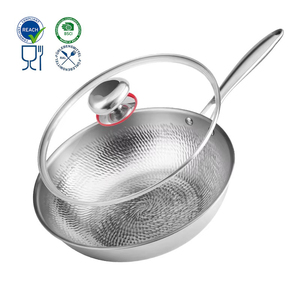
TriPly Stainless Steel Titanium Non-Stick Hammered Wok with Glass Lid
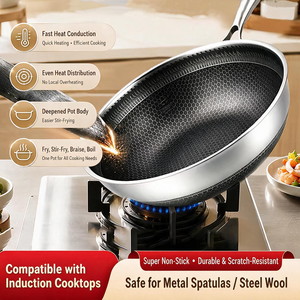
High-Quality Non-Stick Stainless Steel 304/316 Wok Set (18L Capacity)
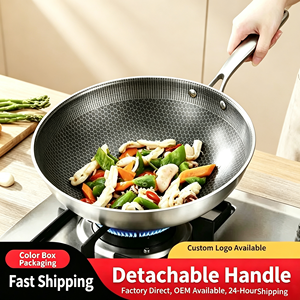
Even Heating Honeycomb Wok Skillet 30/32/34cm Riveted Stainless Handle
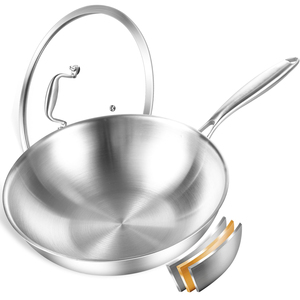
Professional Tri-Ply Stainless Steel Non-Stick Frying Pan Wok
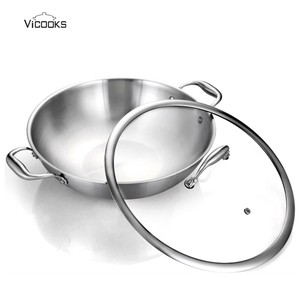
Triply Stainless Steel Stir-Fry Wok Pan with Side Helper Handles
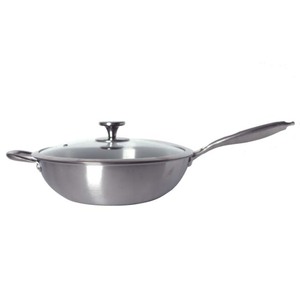
High Quality 304 Stainless Steel Honeycomb Wok with Tempered Lid
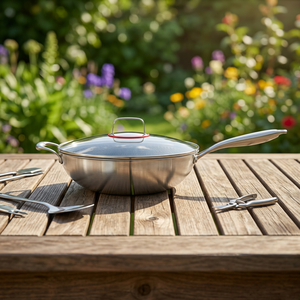
Premium Thick Bottom 316 Stainless Steel Double-Sided Honeycomb Wok
Swiss B2B Procurement Analysis: Why China Pressure Cookers Dominate Swiss Retail & Commercial Supply Chains
Switzerland’s culinary landscape presents a unique synthesis of high alpine physics, stringent household energy management standards (such as Minergie benchmarks), and an unyielding demand for engineering perfection. For Swiss kitchenware distributors, department store buyers (such as Manor, Coop, and Migros procurement units), and commercial hospitality suppliers across Zurich, Geneva, Bern, and Lugano, sourcing pressure cookers and tri-ply stainless steel cookware from top-tier Chinese manufacturers is no longer merely a cost-efficiency decision—it is a strategic engineering alignment.
Information Gain Insight — High-Altitude Boiling Physics in the Swiss Alps: Due to atmospheric pressure drop at elevated altitudes across Switzerland (ranging from 408 meters in Zurich to over 1,600 meters in Zermatt and St. Moritz), standard open-pot water boiling temperatures drop from 100°C to below 90°C. Cooking collagen-dense meats or legumes at standard atmospheric pressure in alpine hotels requires significantly higher electrical consumption. High-performance stainless steel pressure cookers operating at internal gauge pressures of 60 kPa to 100 kPa (0.6 to 1.0 bar) raise water boiling points up to 118°C to 120°C. This cuts cooking duration by up to 70% and lowers electrical draw on high-frequency Swiss induction hobs by over 60%.
Modern Chinese stainless steel cookware manufacturers have elevated their production capabilities to match Swiss precision expectations. By utilizing heavy-duty hydraulic deep-drawing presses (up to 2,500 tons), automated multi-layer cladding processes, and rigorous laser-guided quality control system integration, leading OEM/ODM factories in China supply cookware that satisfies both European Pressure Equipment Directive standards and the aesthetic expectations of Swiss consumers.
Mandatory Swiss & European Compliance Standards for Pressure Cooker Importation
Importing pressure vessels into the Swiss Confederation requires navigating both Swiss Federal regulations and aligned European Union harmonized standards. While Switzerland is not an EU member state, its technical barrier to trade (TBT) agreements strictly align local market standards with EU safety directives. Importers must ensure their Chinese manufacturing partners comply with the following mandatory safety matrix:
PED 2014/68/EU & SVTI
The Pressure Equipment Directive (PED) classifies pressure cookers with operating pressures above 0.5 bar under strict safety categories. Chinese export factories must hold CE-PED certification verified by notified bodies, satisfying Swiss Safety Inspection Body (SVTI / ASIT) guidelines.
DIN EN 12778 Standard
Governs domestic pressure cooker safety devices. Requires primary operating valves, independent safety valves, automated lid-locking under pressure, and controlled gasket over-pressure release slots to prevent catastrophic decompression.
LFGB & EU 1935/2004
Swiss Food Contact Regulation (EDI Ordinance on Materials and Articles) enforces zero harmful chemical migration. All stainless steel alloys (SUS304/316) undergo strict heavy metal leaching tests for Chromium (Cr), Nickel (Ni), and Manganese (Mn).
| Safety Mechanism | Engineering Specification | Operational Function | Swiss Regulatory Benchmark |
|---|---|---|---|
| Primary Weight Valve | Precision-weighted brass/silicone valve (60–100 kPa) | Maintains constant optimal cooking pressure and vents excess steam automatically. | DIN EN 12778 Clause 5.2 |
| Secondary Safety Valve | Spring-loaded metal backup valve (120–150 kPa) | Triggers automatically if the primary venting tube becomes obstructed by food debris. | CE PED Category I / II |
| Gasket Venting Slot | Engineered rim cutout in stainless steel lid perimeter | Allows silicone gasket to deform outward, safely releasing steam downward if pressure exceeds 200 kPa. | SVTI Alpine Safety Standard |
| Automatic Bayonet Lock | Internal pin mechanism linked to pressure sensor | Physically locks the lid handle; prevents lid removal whenever internal gauge pressure exceeds 4 kPa. | EU 1935/2004 Mechanical Safety |
Metallurgical Analysis: SUS304 vs SUS316 Cladding & Honeycomb Micro-Etching
The thermal efficiency and longevity of pressure cookers and stir-fry woks depend on metallurgy. Premier Chinese factories utilize heavy multi-ply bonding technologies to engineer cookware tailored to modern Swiss kitchens dominated by high-wattage induction hobs from brands such as V-ZUG, Miele, and Electrolux.
304 vs 316 Surgical Grade Stainless Steel
While standard 18/8 (SUS304) stainless steel delivers exceptional rust resistance for general cooking, 18/10/2 (SUS316) contains 2% Molybdenum. This element dramatically enhances pitting corrosion resistance against high-salt solutions, acidic Swiss tomato preserves, and fondue wine acids. Premium Swiss commercial product lines strongly prefer SUS316 for extended lifespan.
Tri-Ply Clad Construction Architecture
A 3-layer composite body bonds an inner layer of food-safe SUS304/316, an encapsulated middle core of 1050/1100 pure aluminum (high thermal conductivity ~225 W/m·K), and an outer magnetic SUS430 stainless layer. This eliminates hot spots, spreads heat evenly up the sidewalls, and optimizes energy transfer on Swiss induction stovetops.
Bionic Honeycomb Laser Etching Technology
One of the most rapidly growing cookware categories in Switzerland is the hybrid honeycomb wok pan. Modern Chinese manufacturers utilize high-precision German-engineered laser etching systems to carve a raised hexagonal stainless steel grid over a recessed non-stick coating (ceramic or PTFE). The raised stainless steel ridges protect the coating from metal spatula contact, while the recessed cells hold oil for non-stick cooking. This provides Swiss consumers with high-heat searing capabilities alongside effortless non-stick cleanup.
Localized Application Scenarios in Swiss Domestic & Commercial Kitchens
To successfully market China-manufactured stainless steel cookware in Switzerland, product features must align directly with Swiss lifestyle patterns, culinary habits, and kitchen architectures.
Alpine Hotel & Restaurant Catering
Swiss mountain resorts and commercial catering establishments require heavy-duty pressure cookers (12L to 18L capacity) to quickly prepare stocks, braised beef (*Zürcher Geschnetzeltes*), and pulse soups under high-altitude conditions during peak winter ski seasons.
Energy-Conscious Urban Apartments
Swiss urban households emphasize energy conservation. Compact, stylish 4L–6L bayonet-lock pressure cookers with satin mirror finishes fit modern modular kitchens, reducing active meal prep power consumption by over 65%.
Induction-Dominated Kitchen Systems
Over 85% of newly renovated Swiss kitchens feature high-efficiency induction hobs. Fully encapsulated magnetic bottoms (SUS430) ensure instant thermal response, preventing warping under high boost heating modes.
Swiss Cookware Consumer & B2B Purchasing Trends (2025–2030)
Analyzing consumer sentiment and retail inventory demands in Switzerland reveals several clear shifts that Chinese manufacturers and Swiss importers must address:
1. Transition to PFAS-Free & Eco-Certified Coatings
Swiss consumers are among Europe's most environmentally conscious. Retail buyers actively reject traditional PTFE coatings containing per- and polyfluoroalkyl substances (PFAS). Demand for PFAS-free ceramic coatings and pure chemical-free tri-ply stainless steel cookware has grown by over 35% year-over-year.
2. Whisper-Quiet Pressure Venting Systems
Traditional pressure cookers that release loud, jarring steam hiss are being replaced by multi-stage controlled depressurization valves. Silent venting systems engineered in Chinese OEM R&D labs provide a refined cooking experience favored by Swiss apartment dwellers.
3. Modular Multi-Lid Cookware Sets
Swiss households value space efficiency. Bestselling product offerings pair a single tri-ply stainless steel vessel with two interchangeable lids: a high-pressure safety lid for rapid stewing and a tempered glass lid for standard simmer cooking and table serving.
4. Demand for Matte Satin & Titanium Finishes
Aesthetics play a crucial role in Swiss purchasing decisions. Exterior matte satin polishing and high-durability physical vapor deposition (PVD) titanium coatings (in charcoal gray or champagne gold) outperform traditional high-gloss polished cookware in modern retail displays.
Frequently Asked Questions by Swiss Importers & OEM Buyers
Q1 What certifications are required to import pressure cookers into Switzerland from China?
Imports into Switzerland must comply with the Pressure Equipment Directive (PED 2014/68/EU) and European standard EN 12778. Furthermore, food contact components (steel body, silicone gaskets) must pass LFGB and EU No 1935/2004 heavy metal migration testing, satisfying Swiss EDI Ordinance standards. Leading Chinese factories provide complete CE-PED certification packages verified by notified bodies such as TÜV or SGS.
Q2 How do Chinese factories ensure stainless steel safety against salt and acid corrosion?
Premier Chinese manufacturers use certified prime-grade steel coils from tier-1 steel mills (such as TISCO or Baosteel). Every batch undergoes X-ray fluorescence (XRF) spectro-analysis to confirm exact Chromium (18%) and Nickel (8-10%) composition. For premium lines, SUS316 steel with 2% Molybdenum is utilized to deliver enhanced resistance to salt pitting and acidic food reaction.
Q3 What are the standard Minimum Order Quantities (MOQs) and lead times for Swiss OEM orders?
For custom OEM orders (featuring custom laser logo engraving, customized color box packaging in German/French/Italian, and modified handle molds), standard MOQs range from 500 to 1,000 units per size. Production lead time is typically 30 to 45 days post-sample approval, with sea freight delivery to European dry ports (via Rotterdam/Hamburg to Basel) taking an additional 28 to 35 days.
Q4 How are pressure cookers tested for safety before leaving the factory floor?
Reputable Chinese manufacturers implement 100% multi-stage testing: First, hydrostatic pressure testing at 1.5 to 2.0 times the nominal operating pressure to verify structural weld integrity; second, pneumatic air-tightness testing to verify gasket seals; and third, automated lid safety lock engagement tests. Samples from every production run are destructively burst-tested, requiring pressure thresholds exceeding 500 kPa before failure.
Q5 Can Chinese factories support DDP (Delivered Duty Paid) shipping to Switzerland?
Yes. Many experienced Chinese B2B suppliers work in partnership with international freight forwarders specializing in Swiss logistics. They manage customs clearance at Swiss borders (Basel, Geneva, or Zurich Airport dry ports), handle Swiss VAT (8.1%) declarations, and arrange direct truck delivery to your logistics warehouse in Switzerland under DDP terms.
Q6 Are Chinese-manufactured pressure cookers fully compatible with Swiss induction cooktops?
Absolutely. Cookware designed for the Swiss market utilizes encapsulated 3-ply or 5-ply thermal bases featuring an exterior magnetic SUS430 ferritic stainless steel layer. This ensures seamless electromagnetic coupling with high-frequency Swiss induction hobs (V-ZUG, Miele, Electrolux), delivering rapid heating rates without base warping.
Enterprise OEM/ODM Capabilities: Crafting World-Class Stainless Cookware
With over 18 years of specialized manufacturing experience, our production infrastructure bridges metallurgical engineering and global B2B supply management. Operating a fully integrated manufacturing facility equipped with heavy hydraulic deep-drawing presses, automated friction welding lines, and advanced laser micro-etching equipment, we deliver high-caliber cookware tailored to buyer specifications across Europe and EFTA regions.
Full In-House Manufacturing
From raw steel coil slitting and disc blanking to deep-drawing hydraulic forming, surface polishing, and safety testing, every manufacturing step is conducted under strict ISO 9001 quality management protocols.
Bespoke OEM & ODM Engineering
Our dedicated engineering team collaborates directly with Swiss brand owners to develop custom handle molds, patented lid valve systems, trilingual retail packaging, and customized surface finishes.
Rigorous Traceability & QC
Every production lot is assigned a batch tracking code linked to raw material mill certificates, hydrostatic pressure test logs, and heavy metal leaching compliance reports for total quality transparency.
Partner with a Trusted Stainless Steel Cookware Manufacturer
Expanding your product line in Switzerland? Connect with our international sales engineering team to request detailed technical catalogs, factory audit reports, product samples, and customized wholesale quotations.