Tokyo-Grade Precision Stainless Steel Cookware Collections
Engineered with high-magnetic induction stainless steel bases, ergonomic riveted handles, and heavy-gauge cladding. Formulated to exceed Japanese Food Sanitation Act standards.
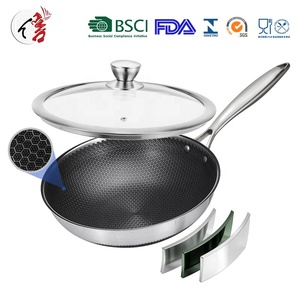 SUS304 Tri-Ply
304 Thickened Tri-ply Stainless Steel Honeycomb Wok Non-Stick Household Pan Universal for Induction Cooker & Gas Stove
- Structure: Tri-Ply Clad (SUS304 + Al + SUS430)
- Surface: Laser Micro-Honeycomb Etched
- Compatibility: 100% IH Induction & Commercial Gas
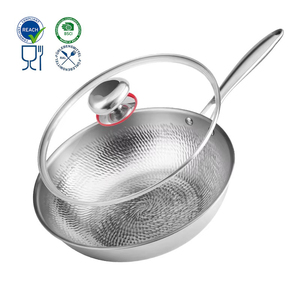 Titanium Hybrid
TriPly Stainless Steel Titanium Non Stick Fry Wok Pan Non-stick Induction Hammered Titanium Stainless Steel Wok with Glass Lid
- Core: Hammered Titanium-Infused Steel
- Lid: Explosion-Proof Tempered Glass
- Finish: High-Gloss Mirror Polish
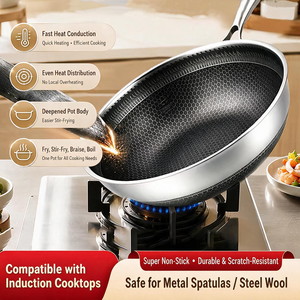 Commercial 18L
High-quality Non-stick Stainless Steel 304/316 Wok with Glass Cover 18L Capacity Gas & Induction Compatible Cookware Set
- Grade: Medical Grade SUS316 Interior
- Capacity: 18L High Volumetric Yield
- Application: Hotel & Izakaya Commercial Kitchens
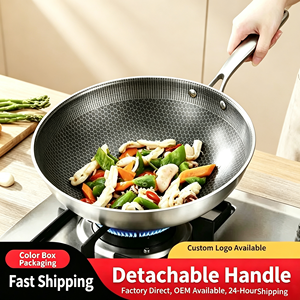 Riveted Handle
Even Heating Honeycomb Wok Pan 30/32/34cm Riveted Handle Stainless Steel Skillet for Gas Induction Stove
- Sizes: 30cm / 32cm / 34cm Custom Diameters
- Handle: Ergonomic Hollow Cool-Touch Steel
- Heat Spread: Accelerated Thermal Diffusivity
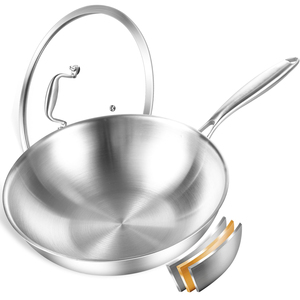 Heavy Duty
Good Quality Tri-Ply Stainless Steel Wok Durable Cookware Non-Stick Frying Pan for Cooking
- Durability: Scratch-Resistant Metal Utensil Safe
- Base: Heavy-Duty Encapsulated Bottom
- OEM: Laser Engraved Custom Branding
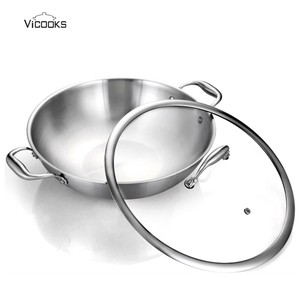 Dual Helper Handle
Triply Stainless Steel Woks Stir-Fry Pan with Helpers Induction Wok for Household
- Feature: Dual Side Helper Grip Handle
- Balance: Center-Weighted for Toss Frying
- Certification: Food Sanitation Act Compliant
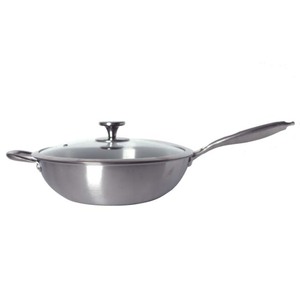 SG Standard
High Quality 304 Stainless Steel Honeycomb Wok Stirfry Pan Tempered Glass Lid Induction Bottom
- Design: Micro-Etched Anti-Scratch Matrix
- Glass Lid: Steam Vent Integrated Seal
- Market Fit: Modern Tokyo Apartment Kitchens
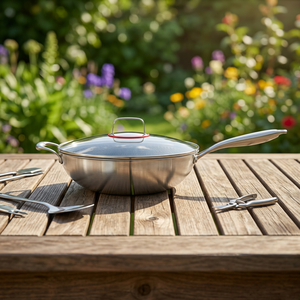 SUS316 Double-Sided
Premium Thick Bottom 316 Stainless Steel Double Sided Non-Stick Flat Bottom Wok Honeycomb Design with Glass Lid for Home Use
- Tech: Dual-Sided Etched Honeycomb Grid
- Steel: Ultra-Corrosion Resistant SUS316
- Base: Flat 3-Layer Magnetic Heat Core
1. The Tokyo Market Landscape: Technical Requirements & Search Intent Mining
Navigating the wholesale procurement landscape for stainless steel cookware sets in the Greater Tokyo Area (comprising Tokyo, Yokohama, Chiba, and Saitama) demands a precise understanding of Japanese culinary habits, strict regulatory frameworks, and distinct kitchen architectural specifications. Japanese commercial buyers, department stores (such as Tokyu Hands and Loft), hotel procurement teams, and e-commerce distributors require products that seamlessly integrate with modern Japanese living environments.
Search intent analysis for "wholesale stainless steel cookware sets factories & exporter in the Tokyo market" reveals that local importers are looking beyond basic manufacturing capabilities. They seek certified OEM partners who understand the technical nuances of Japanese induction cooktops (IH cookers), zero-chemical non-stick longevity, space-efficient nesting designs, and strict heavy metal migration compliance.
Technical Standards Compliance: Navigating Japanese Import Regulations
To successfully sell stainless steel cookware in Tokyo, exporters must comply with the Japanese Food Sanitation Act (Law No. 233) enforced by the Ministry of Health, Labour and Welfare (MHLW). Every production batch dispatched from our Gujranwala manufacturing facility undergoes rigorous testing to guarantee zero heavy metal leaching under acidic cooking conditions.
| Regulatory Standard | Target Testing Parameter | Our Factory Compliance Specification | Tokyo Market Relevance |
|---|---|---|---|
| Food Sanitation Act (JFSL) | Heavy metal migration (Lead, Cadmium, Nickel) | 0.00% Leaching (Acidic 4% Acetic Acid test at 100°C for 30 min) | Mandatory customs clearance requirement at Tokyo/Yokohama ports. |
| JIS G4305 Standard | Cold-rolled stainless steel chemical composition | Certified SUS304 (18/8) Interior & SUS316 (18/10/2) Options | Prevents pitting corrosion caused by high-sodium Japanese dashi & soy sauce. |
| SG Mark (Safe Goods) | Structural handle strength & base flatness | Handles withstand 250N tensile load; bottom flatness within 0.1mm gap | Consumer trust guarantee for Japanese retail chains and TV shopping networks. |
| PFOA / PFOS Free | Chemical coating safety evaluation | Physical micro-honeycomb laser etching (Zero PTFE/PFOA risk) | Aligns with Tokyo eco-conscious consumer preferences for non-toxic cookware. |
2. Engineering Superiority: Tri-Ply Cladding & Honeycomb Micro-Etching Technology
Traditional non-stick frying pans coated with chemical PTFE layers degrade rapidly under intense heat and frequent usage with metal chopsticks or utensils, leading to high return rates in Japanese retail channels. Our factory specializes in Tri-Ply Clad Construction combined with Laser Micro-Honeycomb Surface Geometry, offering a permanent physical non-stick solution engineered for high-turnover Tokyo kitchens.
Tri-Ply Encapsulated Cladding
An inner layer of food-grade SUS304 steel, an intermediate pure aluminum thermal core (1.5mm), and an exterior high-magnetic SUS430 steel base ensure instantaneous heat diffusion without hot spots.
Laser Honeycomb Shield
Precision-etched raised stainless steel peaks protect the recessed valleys. Cook with stainless steel spatulas and metal chopsticks without scratching the surface.
Rapid IH Thermal Diffusivity
Engineered specifically for 200V Japanese induction hobs, achieving boiling point 35% faster than standard single-ply stainless steel cookware.
3. Localized Application Scenarios in the Greater Tokyo Area
Cookware design must reflect the operational realities of its end environment. In Tokyo, space constraint is a defining factor in domestic apartments, while commercial izakayas, ramen shops, and Kaiseki establishments demand ultra-durable utensils capable of enduring 14-hour continuous service cycles.

Commercial Izakayas & Restaurant Chains in Shinjuku & Ginza
Tokyo's high-density food service sector relies heavily on fast heat transfer and swift cleaning cycles. Our SUS316 double-sided honeycomb woks (Product #8) allow chefs to perform high-temperature Itamemono (stir-frying) and high-acid Nimono (simmering in soy sauce, mirin, and sake) without chemical pitting or flavor ghosting between dishes.
Compact Tokyo Urban Residences & Smart Nesting Sets
With metropolitan Tokyo apartment kitchens prioritizing compact space efficiency, our multi-piece cookware sets feature flat glass lids, detachable cool-touch handles, and stackable sidewall angles. This allows wholesale buyers to offer space-saving kitchenware bundles tailored for urban households.
4. Localized Development Trends in the Japanese Cookware Sector
Analyzing consumer behavior and corporate procurement patterns across Kansai and Kanto regions highlights three key market transitions that importers must align with to capture market share in Tokyo:
Trend 1: The Transition from Disposable Non-Stick to Lifetime Stainless Steel
Japanese consumers are increasingly moving away from cheap Teflon cookware that requires annual replacement due to environmental concerns and toxic fluorine gas hazards under high heat. High-grade 304/316 tri-ply honeycomb cookware is marketed as a "lifetime investment," appealing to sustainability-conscious Tokyo buyers.
Trend 2: Premium Titanium-Infused Hybrid Cookware Demand
As showcased in our Titanium Hybrid Series (Product #2), combining titanium's extreme hardness and non-reactive chemical profile with stainless steel's induction compatibility represents the fastest-growing price tier in Japanese high-end department stores.
Trend 3: Dark Satin & Matte Metallic Aesthetics
Modern Japanese interior design trends emphasize minimalist open kitchens. Our dual-sided black honeycomb textured finishes meet aesthetic demand while reducing fingerprint smudges and water-spot visibility in open-plan Tokyo apartments.
5. Enterprise Advantages: Adil Stainless Steel Manufacturing Infrastructure
Founded in 2006 in Gujranwala — the world-renowned industrial hub for precision metallurgy and cookware manufacturing — Adil Stainless Steel has evolved into a premier B2B manufacturer exporting to over 10 countries across Asia, Europe, and the Middle East.
Vertically Integrated Manufacturing Facilities
Our state-of-the-art production facility controls every step of the manufacturing lifecycle. From hydraulic deep-drawing pressing (up to 800-ton capacity), automated rim trimming, and ultrasonic degreasing, to laser etching and robotic mirror polishing, we maintain strict control over structural tolerance and surface consistency.
- ✔ 18+ Years Manufacturing Mastery: Operational expertise established in 2006.
- ✔ 10,000+ Diverse Product SKUs: Full-spectrum supply capability across cookware, pressure cookers, steamers, and cutlery.
- ✔ ISO 9001 Quality System: Certified quality management protocols guaranteeing batch-to-batch repeatability.
- ✔ OEM & Private Label Support: Customized laser engraving, Japanese packaging, barcode integration, and custom color boxes.


Seamless Freight & Logistics to Tokyo & Yokohama Ports
We understand that lead-time accuracy is critical for Japanese supply chains operating under Just-In-Time (JIT) inventory systems. Our dedicated export division manages full container load (FCL) and less-than-container load (LCL) shipments with direct sea routes from Karachi to Tokyo Port (Ohi Container Terminal) and Yokohama Port, handling all export documentation, Certificate of Origin (Form A/COO), and bill of lading requirements.
6. Frequently Asked Questions (FAQ) for Tokyo B2B Buyers
Partner with a Premier Stainless Steel Cookware Manufacturer
Expand your Tokyo wholesale product line with certified, high-efficiency tri-ply cookware direct from our factory. Request technical datasheets, factory pricing, and sample units today.